

Are Car Diffusers Worth It? an Honest Aussie Guide
Yes, car diffusers are worth it if you choose the right type for your needs. Refillable options can work out at $0.72 to $1.43 per day, while disposable vent clips can cost $468 to $780 over three years, so for many Aussie drivers they make more sense both financially and for day-to-day enjoyment.
If you're reading this after opening your car door and getting hit with a mix of old takeaway chips, damp beach towel, and whatever mystery smell is living under the seat, I get it. A car can go from “my little happy place” to “absolutely not” very quickly, especially in an Australian summer when the cabin turns into an oven.
That's where a car diffuser can feel less like a gimmick and more like a tiny lifestyle upgrade. Not the old cardboard-tree kind of situation. A proper one gives you a more beautiful, more customisable scent experience, and it can make the school run, commute, or dash to Woolies feel a bit more lovely. Ultimately, the question is whether that nicer experience is worth the money, the effort, and the space in your car.
Let's have a proper look at it.
Table of Contents
- That Not-So-Fresh Feeling Your Car Knows It Too
- A Guide to Car Diffuser Types
- The Pros and Cons of a Scented Ride
- Scent Longevity and Value for Money in Australia
- A Guide to Healthy Car Fragrancing
- How to Choose the Perfect Car Diffuser for You
That Not-So-Fresh Feeling Your Car Knows It Too
You know the moment. You jump into the car with your coffee, ready to get on with the day, and instead of that nice clean feeling, you get stale air, yesterday's drive-through, and a hint of wet activewear. It's not dramatic, but it does make the whole drive feel a bit blah.
For a lot of us, the car is a second little living room. It's where we do the school pickup, sit in traffic, sing too loudly at the lights, and sometimes take five minutes alone before walking into the house. So when it smells tired, the whole mood shifts with it.
That's why car diffusers have become such a popular step up from cheap plastic fresheners. They feel more grown up, more considered, and a lot more in line with how we style the rest of our spaces. If you already care about how your home smells, it makes sense to want the same thing in your car too. If you're weighing up a more natural option, this guide to a natural car air freshener is a handy place to start.
Why it feels like more than an air freshener
A good car diffuser doesn't just try to cover smells. It helps create a feeling.
Maybe that's something soft and beachy that reminds you of sunscreen and salty air on a sticky Queensland afternoon. Maybe it's something clean and crisp that makes the inside of your car feel freshly organised, even if the boot says otherwise. The point is, it feels personal.
A car diffuser is often worth it when it turns a regular drive into a space that feels calmer, cleaner, and more like you.
The question most people are really asking
Usually, when people ask if car diffusers are worth it, they're really asking a few smaller questions:
- Will it smell nice enough? You want a fragrance you notice, but don't get sick of.
- Will it last in Aussie heat? Fair question, because our climate isn't gentle.
- Will it look tacky? For many people, that's a hard no.
- Will it be more hassle than it's worth? Refills, spills, placement, all of that matters.
Those are the bits that decide whether a diffuser becomes your new favourite little luxury, or just another thing hanging from the mirror.
A Guide to Car Diffuser Types
You type “car diffuser” into Google, hoping to find a simple way to make the cabin smell nicer before the school run or the drive to work. Half the results show car parts fitted under the rear bumper. Fair enough if you're into performance mods, but that's not the diffuser you're likely looking for.
In scent terms, a car diffuser is a device that releases fragrance into the cabin. The easiest way to sort the options is by how they spread that scent and how they cope with real Australian conditions, especially heat.
Why the word diffuser gets confusing
Cars have two very different “diffusers.”
One is a styling and airflow part on the outside of the vehicle. The other is a fragrance product for the inside. If you've landed on motorsport forums while trying to make your car smell less like wet towels, takeaway chips, or cricket gear, you've run into that naming clash.
We're talking about the fragrance kind from here on.
The main types you'll see
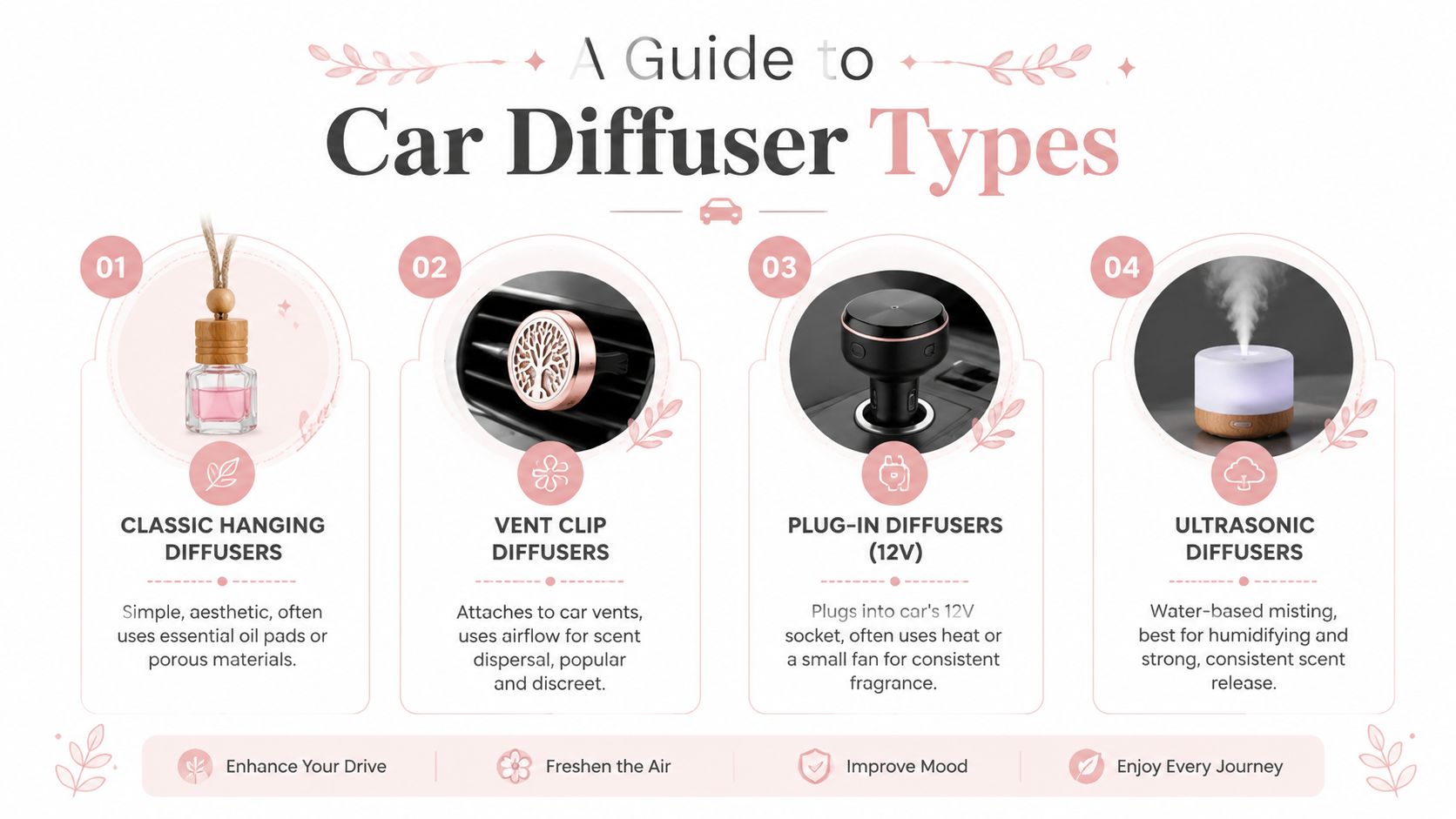
There are a few common styles, and each suits a different driver.
Classic hanging diffusers
These are the small hanging bottles or absorbent diffusers often placed near the mirror. They release fragrance slowly as the oil reaches the timber, cap, or porous material.
This style is popular for a reason. It's easy, it doesn't need batteries or a USB port, and it usually looks more considered than a bright plastic freshener from the servo. For Australian drivers, that style point matters more than people admit. If your car already gets hammered by sun and heat, cheap plastic can start to feel flimsy fast, while natural-looking materials tend to feel calmer and better suited to the space.
If you want a clearer rundown of how this format works day to day, this guide to an essential oil diffuser for car use is a helpful starting point.
Vent clip diffusers
Vent clips attach straight onto an air vent and use the airflow from your fan or air con to push scent around the cabin.
They're tidy and discreet, which many drivers like. The trade-off is consistency. If the fan is off, the scent often fades into the background. If the air con is blasting on a hot Queensland afternoon, the fragrance can feel much stronger all at once. It works a bit like perfume near an open window. Air movement changes everything.
Plug-in and ultrasonic options
These use power to disperse fragrance more actively. Some use a small fan. Others use ultrasonic mist or gentle heat.
According to Alibaba's guide to choosing a car scent diffuser, car diffusers with active dispersion methods, including fan-assisted and ultrasonic designs, distribute fragrance more evenly across the cabin, while passive styles depend more heavily on airflow and can become inconsistent when the car is idle.
The simple version is this. Active diffusers usually give you more even coverage, but they also add one more thing to charge, plug in, place securely, or keep clean. For some drivers that's fine. For others, it turns a nice little luxury into a fuss.
Passive absorbent diffusers
Some diffusers use felt, ceramic, timber, or another absorbent material to hold fragrance and release it gradually over time. These can be hanging styles, vent clips, or small pieces that sit neatly in a cup holder or console area.
They're the low-maintenance option. They also tend to suit natural fragrance blends well because the scent comes through softly rather than being forced out in a big burst. That gentler throw can be a good match for smaller car interiors, where strong synthetic smells can get cloying quickly once the cabin heats up.
Practical rule: Choose a hanging or other passive diffuser if you want something simple, stylish, and easy to live with. Choose an active diffuser if even scent coverage matters more to you than convenience.
You'll also see options like the Wild Heath Society Car Diffuser if you prefer something more refined and mature. It's a hanging style diffuser designed for cars or small spaces, with scents such as REVOLUTION, WHISKY BAR, HOLE IN ONE, BARBERSHOP, and CAMPFIRE, and the usage notes are very clear about hanging it securely, avoiding spills, and keeping oil away from interior plastics.
The Pros and Cons of a Scented Ride
Not every product deserves a glowing yes, and car diffusers are no exception. They have some very real upsides, and a few quirks you need to know before you hang one up and call it a day.
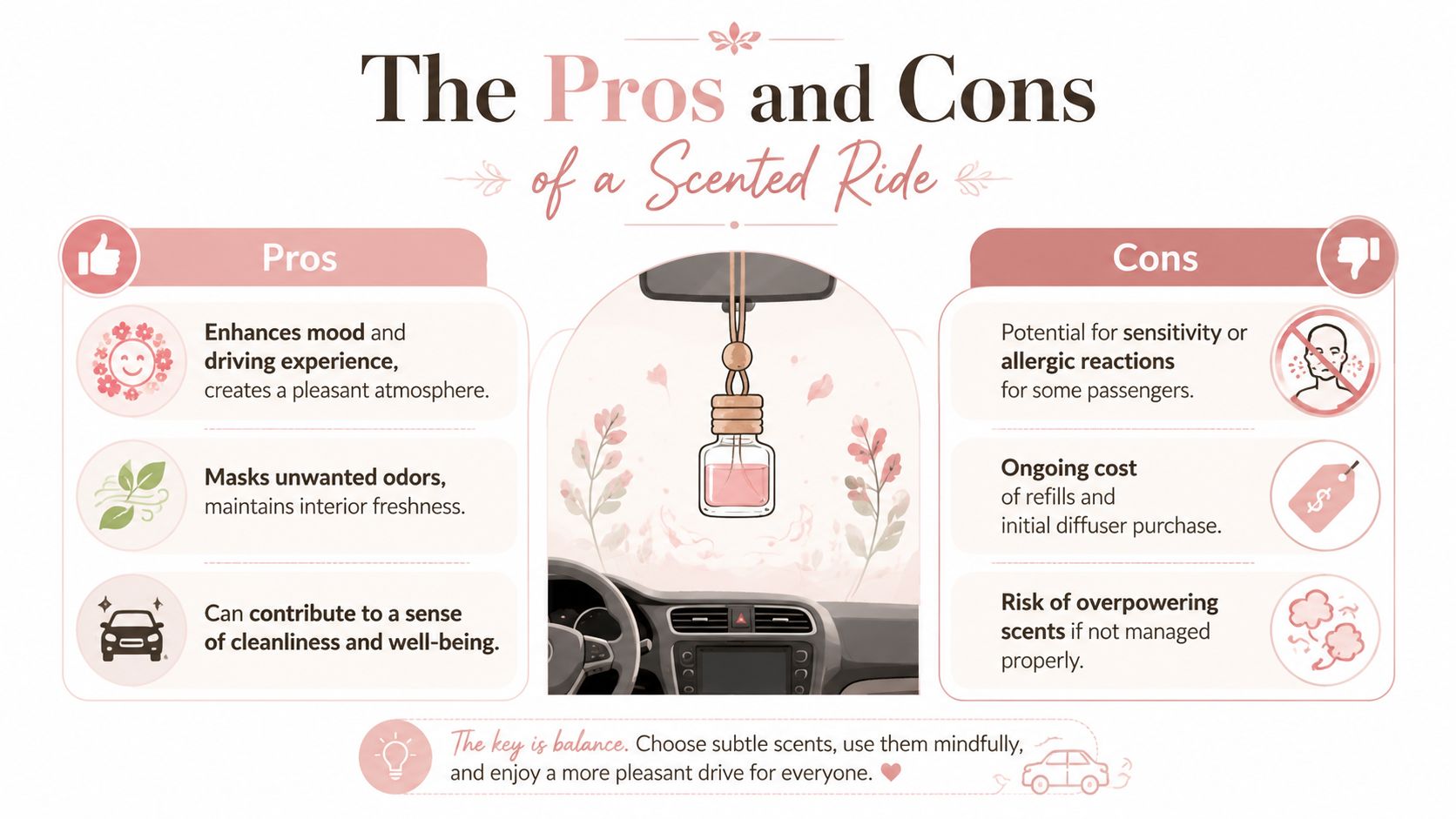
Why people love them
The biggest advantage is the atmosphere. A nice scent can make the cabin feel cleaner, calmer, and more cared for. That sounds small, but when you're in the car every day, those little sensory details matter.
There's also the style factor. A thoughtfully designed diffuser looks far nicer than a bargain-bin plastic freshener. If your car is tidy and you've chosen the interior carefully, it's nice when the fragrance fits the look instead of fighting it.
A well-chosen diffuser also gives you more control over the mood. Some days you want something fresh and airy. Other days you want something cosy, grounding, or subtly elegant.
What can be annoying
Heat is a big one in Australia. In our climate, cabin temperatures can intensify fragrance quickly, so restraint matters. As noted in Alibaba's comparison of car and home diffusers, summer cabin temperatures can intensify fragrance significantly, and users need to be careful with refill frequency because concentrated oils may damage some surfaces if placed directly on them.
That's the bit people sometimes miss. More fragrance isn't always better. In a hot car, it can become too much very fast.
A balanced look
| Side | What it means in real life |
|---|---|
| Pro | You can make the car feel fresh and inviting rather than stale or stuffy |
| Pro | Stylish diffusers suit a more polished interior |
| Pro | You can choose scent styles that feel more personal than generic fresheners |
| Con | Oils need careful placement so they don't touch plastics or trim |
| Con | Some fragrances can feel too strong in summer |
| Con | You'll need to top up, replace, or monitor them from time to time |
Start lighter than you think you need. You can always refresh a scent, but it's much harder to enjoy a car that feels over-fragranced on a warm day.
The honest verdict on pros and cons
For most drivers, the cons are manageable. They're less about the diffuser being a bad idea and more about using it properly. Secure placement, gentle use, and choosing a fragrance that suits a small enclosed space make a big difference.
If you want zero effort and don't care how it smells or looks, a cheap freshener might do. If you want your car to feel more like an extension of your home, a diffuser usually feels far more satisfying.
Scent Longevity and Value for Money in Australia
A car can smell lovely on Monday, then oddly flat by Friday after a few days parked outside in a Queensland summer. That catches plenty of drivers off guard. Fragrance inside a small cabin changes faster in Australian conditions than generic product advice often suggests.
Why Australian weather changes the game
Heat speeds things up. Humidity can make scent feel heavier. A closed car left in the sun works a bit like a warm bathroom after a shower. Everything in the air feels more concentrated, and fragrance can burn through faster than you expected.
That is why overseas claims about a diffuser lasting for months should be treated as a rough guide, not a promise. A driver in coastal Queensland, inland NSW, or Melbourne in winter may get very different results from the exact same product.
Daily habits matter too. If you run the air con hard, leave the car in direct sun, or open the windows often, the scent profile can shift from week to week. Natural diffuser blends usually smell softer and more pleasant than cheap plastic fresheners, but they can still fade faster in high heat because they are not built to bludgeon the cabin with synthetic fragrance.
A more realistic expectation comes from Aroma Luxe's guide to car diffusers, which says many hanging car diffusers last from a few weeks to a couple of months, with plenty of better-quality options sitting around the one-month mark under normal use.
What value for money actually looks like
Price on the shelf only tells part of the story. The better question is how long the scent stays pleasant, how often you need to replace it, and whether the diffuser still looks good clipped to your vent or hanging in view every day.
Cheap fresheners often win the first-price test and lose the ownership test. They can smell harsh, fade unevenly, or look out of place in a tidy interior. A natural, well-designed diffuser usually costs more upfront, but it often feels nicer to live with, especially if you spend a lot of time commuting, doing school drop-offs, or driving between job sites.
There is also the waste factor. If you keep tossing out plastic fresheners every few weeks, the running cost adds up, even before you count the annoyance of replacing them.
A practical way to judge it
- If your car sits in the sun a lot: expect faster evaporation and shorter scent life.
- If you drive every day: paying more for a diffuser that smells balanced and looks neat often makes sense.
- If you want a lower-waste option: refillable or reusable styles are usually better long term.
- If you only use the car occasionally: a simple hanging diffuser may do the job without much fuss.
For a closer look at what tends to last better in real-world use, this guide to a long-lasting car air freshener is a helpful reference.
The short version is simple. In Australia, value depends less on the label and more on heat, parking habits, and the type of fragrance you choose. A stylish natural diffuser can be better value than a cheap plastic freshener if it keeps the cabin smelling clean and pleasant without turning cloying by the second red light.
A Guide to Healthy Car Fragrancing
You hop into the car after it has been parked in the sun at Bunnings for an hour, and the cabin air hits you all at once. If the scent is too strong, what was meant to feel fresh can quickly feel stuffy, sweet, or headache-inducing.
That is the thing about car fragrance. A car is a very small space, and Australian heat makes everything behave differently. Fragrance evaporates faster in a hot cabin, and strong oils or heavily perfumed products can feel much more intense once the windows are up and the air con is on recirculate.
Why enclosed spaces need a lighter touch
Home fragrance and car fragrance are not the same job. In a lounge room, scent has space to spread out. In a car, it hangs close to you, a bit like turning up a speaker in a tiny room instead of in the backyard.
That is why subtle usually feels better. A gentle scent can make the cabin smell clean and pleasant without sitting in your nose the whole drive. If you or your passengers are prone to headaches, asthma, or scent sensitivity, this matters even more.
As noted earlier, there is not much clear local guidance around fragrance strength in cars. Common sense does a lot of the heavy lifting here. If the scent greets you before you even sit down, it is probably too much.
What healthier car fragrancing looks like
Healthy car fragrancing is less about chasing the strongest scent and more about keeping the space comfortable to breathe in.
A good rule is to treat fragrance like seasoning. A little can make the whole experience nicer. Too much overpowers everything.
- Keep the scent light: Soft, clean fragrances are usually easier to live with in a closed cabin.
- Let fresh air in when you can: Cracking the windows for a minute or two helps clear heavy air, especially after the car has been sitting in the heat.
- Choose materials carefully: Natural-looking diffusers made from wood, ceramic, or glass often feel more considered than cheap plastic fresheners, and they usually suit a tidy interior better too.
- Watch for spills and residue: Fragrance oils can mark trims, cupholders, or dashboards if they leak.
- Listen to your body: If a scent makes you feel off, swap it out. A pleasant fragrance should fade into the background, not demand attention.
Natural is often the better fit, with one catch
Natural or essential oil-based diffusers appeal to plenty of Australian drivers for good reason. They tend to smell softer and less synthetic, and the styling is often nicer too. In a hot climate, that balance matters. You want your car to smell fresh, not like a lolly shop melting into the dashboard.
The catch is simple. Natural does not automatically mean mild. Even a beautiful botanical scent can feel heavy if the blend is too strong or the diffuser releases too much in the heat.
The safest bet is a well-made diffuser that gives off scent gradually, paired with a fragrance you enjoy at close range. That last part trips people up. In a car, you are not walking past the scent for five seconds. You are sitting with it through traffic, school pickup, and the M1 roadworks.
A healthy approach is usually the nicest one as well. Keep it subtle, give the cabin some airflow, and choose a stylish diffuser that smells clean without turning the whole drive into a fog of perfume.
How to Choose the Perfect Car Diffuser for You
You finish a beach run on a hot Queensland afternoon, hop back in, and the car smells like warm upholstery, yesterday's takeaway, and whatever that old cardboard freshener has turned into. That is usually the moment people realise the question is not just whether a car diffuser is worth it. It is which kind suits an Australian car.
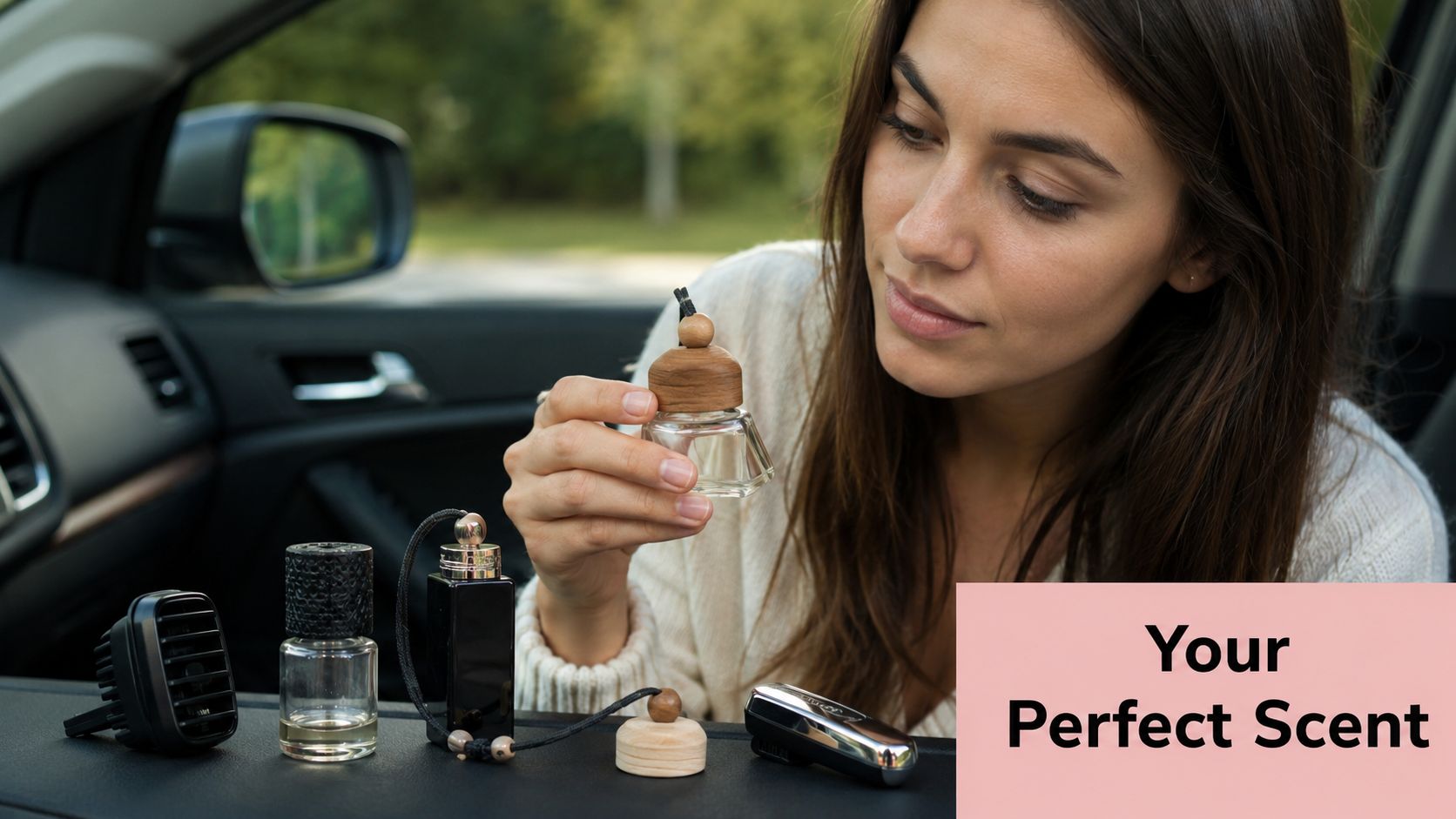
A good choice comes down to three things. How you drive, how much heat your car sits in, and how noticeable you want the scent to be. Get those right, and your car smells clean and inviting instead of overly perfumed by day three.
Match the diffuser to your driving style
If your car is more of an A-to-B space and you want something simple, a hanging diffuser is often the easiest place to start. It gives you fragrance without cords, batteries, or a bulky clip stuck on the vent. It also tends to look better, especially if you prefer timber, glass, or ceramic over shiny plastic.
If you spend a lot of time on the road and want a steadier scent from one trip to the next, an active diffuser may suit you better. It works a bit like a controlled mist compared with a passive diffuser, which releases fragrance more gradually on its own. That extra control can help if your cabin is larger or your routine is very regular.
Budget matters too, but the shelf price only tells part of the story. As noted earlier, refillable options often end up being better value over time than repeatedly buying disposable fresheners. For daily drivers, that can make the more stylish option the more practical one as well.
Choose a scent for real life, not the first sniff
Shop testing can be misleading. A fragrance that smells crisp and impressive for ten seconds can feel heavy once you are sitting with it in traffic, in school pickup, or on a long drive up the Bruce.
A car is a small space. Heat builds fast. Scent behaves differently there than it does in a lounge room.
Start by asking what you want the cabin to feel like. Fresh citrus or airy linen-style scents usually suit hot weather better because they read as cleaner and lighter. Soft florals or gentle woody blends can feel calm and pleasant if they are subtle. Rich dessert-like or very sweet scents can become a bit much in summer, especially in a car parked in full sun.
One straightforward option in this space is the Scented Car Diffuser. It's a hanging glass-bottle diffuser with a natural timber lid, designed for cars and other small spaces, and the product directions also note that it should be hung securely, used gently, and kept away from plastics if any oil may drip.
If you want a quick visual on placement and handling, this helps:
A practical shortlist before you buy
These four questions usually narrow it down quickly:
- How often do I drive? Daily use makes a refillable diffuser easier to justify.
- Where is the car parked? Full sun calls for a lighter scent and a diffuser that releases fragrance slowly.
- What matters more to me? Style, low maintenance, or stronger scent throw.
- Do I want natural materials? Wood, glass, and ceramic often look better in the cabin and feel less throwaway than cheap plastic options.
The best pick is usually the one you stop noticing after a minute or two. It quietly keeps the car feeling fresh, suits the heat, and does not clash with the rest of your interior.
If you'd like to find a scent that makes your car feel a little more like home, have a browse through Blushing Ivy Home Fragrance. We make Australian-made, Sunshine Coast-inspired fragrance for everyday spaces, and our car options are designed for people who want something stylish, natural-feeling, and easy to enjoy without the hard sell.