
Best Hand Wash for Sensitive Skin: A Friendly Guide
You've just finished washing the dishes, dried your hands, and noticed that familiar tight, papery feeling across your knuckles. A red patch is starting to itch, your fingertips feel rough, and the hand wash sitting beside the sink suddenly seems a little less innocent than it did this morning.
For sensitive hands, the bottle matters. Frequent washing exposes skin to cleansers, fragrance, preservatives and repeated wet-dry cycles, so the best hand wash for sensitive skin isn't necessarily the one with the prettiest label or the most luxurious bubbles. It's the one whose formula makes sense for your skin, your routine and the Australian guidance around irritation.
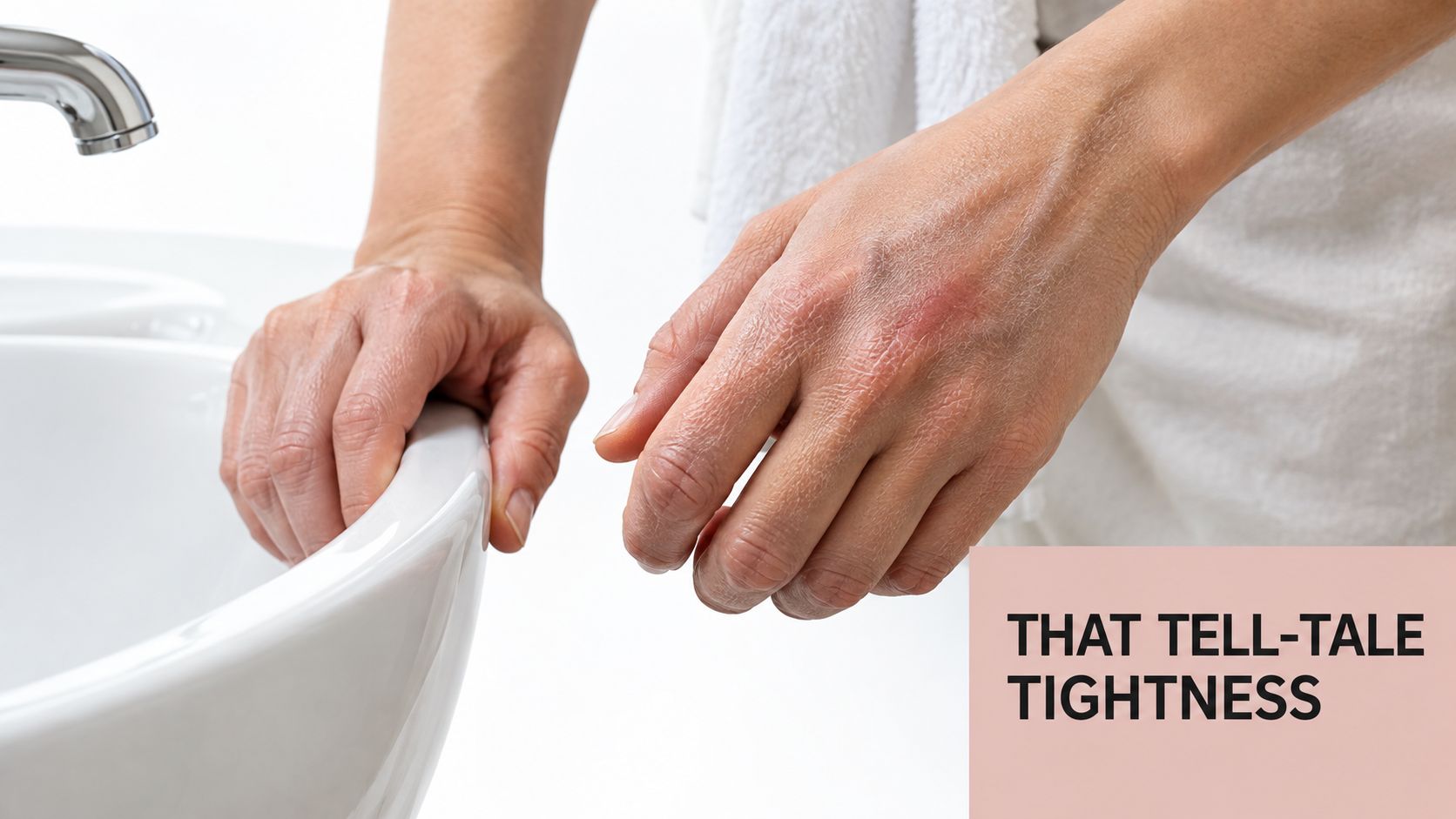
Table of Contents
- The Moment Your Hands Start Telling the Truth
- What Sensitive Skin on Hands Actually Means
- Ingredients That Comfort and Ingredients That Bite
- pH, Fragrance and Preservatives Worth a Closer Look
- Soap, Soap-Free Cleanser or Hand Rub
- Reading the Label Like a Calm Detective
- Daily Habits That Protect Your Barrier
- A Quick Shopping Checklist Before You Buy
The Moment Your Hands Start Telling the Truth
The clues often appear after an ordinary sink-up. You rinse a plate, pump soap into your palm, scrub, rinse again and reach for the tea towel. Then your hands feel stretched, almost papery. A little later, you catch yourself scratching the back of one hand while waiting for the kettle.
That doesn't automatically mean you've developed an allergy. It does suggest your skin barrier may be struggling with the combination of cleanser, water, friction and whatever else your hands meet during the day. Australian hand-hygiene guidance recognises that frequent soaps and detergents can contribute to irritant contact dermatitis, while products containing emollients can help reduce drying and irritation. Hand Hygiene Australia's guidance on hand-care issues explains why the wash itself deserves more attention when hands are cleaned repeatedly.
The Australian Competition and Consumer Commission describes skin allergies and reactions to cosmetic ingredients as common, and its consultation material cites overseas evidence estimating that about 10% of the general population experience side effects, hypersensitivity or allergy-related irritation from cosmetics. The ACCC cosmetics consultation paper identifies fragrances, preservatives and dyes as the most important cosmetic ingredients associated with contact hypersensitivity.
Why the bottle deserves a closer look
More frequent hand cleansing has made formulation choices much easier to feel. A wash that seems fine once may become uncomfortable when used again and again, particularly if your hands are already dry or reactive.
So rather than handing you another breathless list of supposedly miraculous bottles, this guide takes a calmer approach. We'll look at what sensitive skin can mean, how to read the ingredient panel, why pH and fragrance deserve attention, and how to match soap-free cleansers or hand rubs to real-life situations.
Practical rule: Let the ingredient list do more of the talking than the words printed on the front.
What Sensitive Skin on Hands Actually Means
Sensitive skin on the hands tends to make itself known in fairly practical ways. You might notice dryness, redness, fine flaking around the knuckles or fingertips, stinging after washing, or itching between washes. Some people feel tightness first, while others see small cracks or rough patches before the discomfort arrives.
Two reactions can look similar but behave differently. Irritation is often related to the amount and frequency of exposure. A cleanser may sting after repeated use, then feel less troublesome when you stop using it or change the routine. Contact allergy is an immune reaction, and even a small exposure to a particular ingredient can trigger itching, swelling or a more noticeable flare.
Common triggers include strong cleansing systems, added fragrance, repeated wet-dry cycles and cold, dry winter air. On the Sunshine Coast, warm weather and regular household chores can bring their own combination of water exposure, cleaning products and towel friction. Your hands don't need to be dramatically inflamed to tell you that something in the routine isn't agreeing with them.
A simple way to read the signs
- Occasional tightness: Your skin may be reacting to a particular wash, hot water or over-drying.
- Persistent redness or flaking: A repeated trigger deserves attention rather than another layer of scented lotion.
- Itch or swelling after small exposures: Consider the possibility of allergy and speak with a healthcare professional.
- Cracking or pain: Pause experimentation and seek advice from a GP, pharmacist or dermatologist.
A useful plain-language overview of gentle skincare choices is this clinical guide by Mesoderm RX. It can help you think about the wider routine, not just the hand wash.
Ingredients That Comfort and Ingredients That Bite
A hand wash label may resemble a small chemistry lesson, yet a few ingredient families are enough for a sensible first check. Surfactants lift oil, dirt and grime so water can rinse them away. The aim is a cleanser that removes mess without making the skin barrier feel scraped clean.
Australian guidance recommends skin emollients to help reduce irritation and dryness. For sensitive hands, look for soap-free formulas using mild surfactants such as glucosides, sarcosinates or amphoacetates, paired with humectants such as glycerine. Local ingredient panels show combinations including glycerine with sodium lauroyl sarcosinate, coco glucoside, sodium cocoyl glutamate or sodium cocoyl isethionate. The practical lesson is simple: assess the formula inside the bottle, rather than trusting a “gentle” claim on the front.
| Comforting Ingredients | Ingredients That Can Bite |
|---|---|
| Decyl glucoside and coco-glucoside, mild cleansing agents | Strong cleansing systems may feel stripping with frequent use |
| Sodium cocoyl isethionate and sodium lauroyl sarcosinate | Added fragrance or parfum can trouble reactive skin |
| Glycerine and panthenol, which help attract and hold water | Heavy fragrance blends and some essential-oil combinations |
| Squalane and ceramides, barrier-supporting lipids | Dyes and unnecessary antibacterial ingredients |
| Simple, clearly disclosed formulas | Preservatives that you already know cause a reaction |
How to scan the INCI list
Ingredient lists usually start with the formula's largest components and continue towards smaller amounts. This order provides context, though it cannot predict suitability by itself. A fragrance allergen near the end can still cause a reaction in someone who is sensitised, so the bottom of the list is not an automatic safe zone.
The ACCC's guidance directs attention to fragrances, preservatives and dyes. That is more useful than treating every unfamiliar chemical name as dangerous. For an Australian-focused guide to comparing products, read this overview of the best hand wash in Australia.
A product example is Hand & Body Wash, described as a 250g botanical wash offered in Olive Leaf & Thyme, Oakmoss & Vanilla, and Rosemary & Mint. Its product information mentions gentle cleansing, nourishing ingredients and artwork inspired by Australian flora and fauna. If fragrance is one of your known triggers, check the complete ingredient panel before choosing it, then judge the formula against your own tolerance.
pH, Fragrance and Preservatives Worth a Closer Look
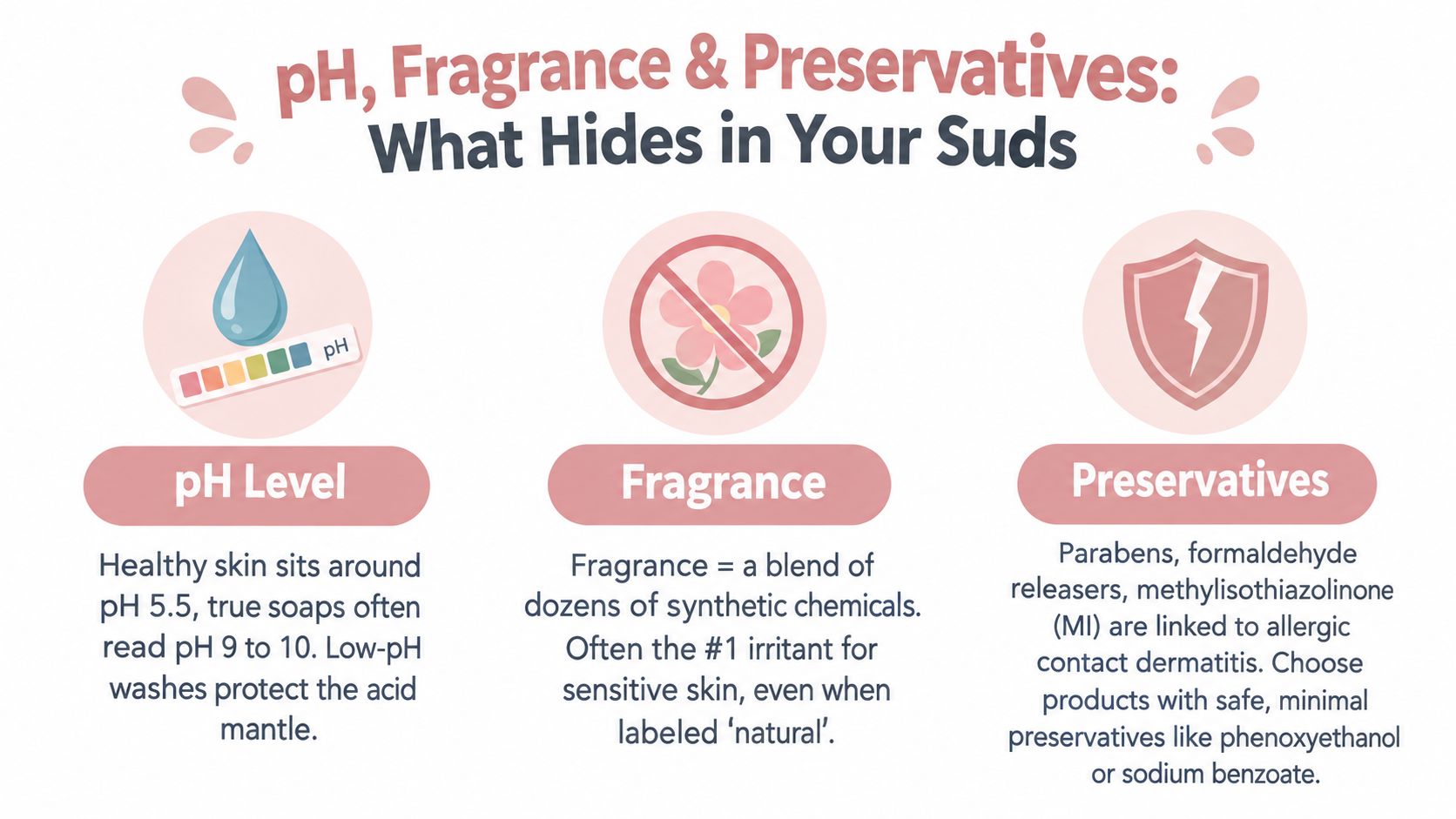
pH is a way of describing how acidic or alkaline a formula is. Healthy skin is commonly described as sitting around pH 5.5, while true soaps often read around pH 9 to 10, according to the Australian product and guidance references supplied for this topic. A cleanser closer to the skin's natural acidity is less likely to disturb the acid mantle and leave frequently washed hands feeling tight.
One Australian sensitive-hand-wash formulation explicitly targets pH 5.5 and pairs that target with aloe, chamomile, hydrolysed jojoba esters and glycerine. The product information for that pH 5.5 formulation supports the practical idea of checking for pH-balanced wording instead of assuming that “gentle” means skin-compatible.
Fragrance isn't the same as freshness
Fragrance can make a bathroom feel inviting, perhaps like a coastal morning with clean air and a leafy garden nearby. Sensitive hands may not share the enthusiasm. The ACCC identifies fragrance as a major cosmetic trigger category, so fragrance-free is a clearer choice for a reactive routine than choosing the word “natural”.
Essential oils can still contain aromatic compounds that bother some users, and “unscented” may mean a formula uses masking ingredients rather than containing no fragrance materials at all. Read the panel for terms such as fragrance, parfum and named fragrance allergens, and be cautious with strong scent if your hands are already stinging.
Preservatives have a job
Water-based hand washes need preservation to remain safe and stable. Names such as parabens, phenoxyethanol and formaldehyde releasers can look alarming in isolation, but single-ingredient panic isn't a useful way to judge a complete formula. The better question is whether the product clearly discloses its ingredients and whether you've previously reacted to a particular preservative.
For another perspective on selecting a gentle pH-balanced wash, this guide to finding a gentle pH balanced wash offers useful background on why pH language deserves more than a passing glance.
A sensible starting formula is lower pH, no added fragrance, sensible preservation and thorough rinsing. It isn't a guarantee that every person will tolerate the product, but it gives you a much more useful starting point than a picture of aloe on the front.
Soap, Soap-Free Cleanser or Hand Rub
Traditional soap and liquid soap can clean effectively, but classic soap systems are often more alkaline and may remove more of the skin's natural oils. That matters most when your hands are already reactive or you're washing frequently throughout the day.
A soap-free cleanser, sometimes called a syndet, uses a different surfactant system and can be formulated closer to skin-compatible pH. For many people with sensitive hands, it's the most comfortable everyday default, especially when the label also mentions emollients or moisturising ingredients.
Alcohol-based hand rubs have a different place in the routine. Australian clinical guidance says they're generally better for skin than frequent washing when hands aren't visibly dirty, while washing remains important when hands need physical cleaning. The National Hand Hygiene Initiative user manual also recommends warm water, thorough drying and moisturising as part of skin care.
| Option | Skin Comfort | Best Use |
|---|---|---|
| Traditional soap | Can feel drying for reactive hands | Occasional washing when a traditional soap is what's available |
| Soap-free cleanser | Often a friendlier daily choice | Regular home washing, especially with a fragrance-conscious formula |
| Alcohol-based hand rub | Convenient, but may feel drying without moisturiser | Quick top-ups when hands aren't visibly dirty and washing isn't practical |
Australian hand-hygiene guidance doesn't suggest choosing comfort instead of cleanliness. It points towards matching the method to the situation and supporting the skin afterwards. If you'd like a wider look at gentle cleansing principles, this guide on how to choose a gentle body wash is a useful companion read.
The Self Care Pack combines a face and body lotion, hand and body wash and a 400g Australiana Candle, with Kookaburra & Banksia, Australiana Fairytale and Monochrome Natives designs. It's a self-care and gifting set rather than a clinical sensitive-skin product, so check the wash ingredients if you're avoiding fragrance or specific preservatives.
Reading the Label Like a Calm Detective
The front of a bottle is written to catch your eye. The back is where the useful clues live. Words such as natural, clean, gentle and mild can sound reassuring, but they don't tell you enough about the surfactants, fragrance materials or preservatives inside.
Australian consumer guidance advises people with sensitive skin or a tendency towards allergies to check ingredients carefully and stop using a product immediately if irritation occurs. That's a much steadier approach than trying to decode every marketing phrase or assuming that a botanical illustration means a formula is fragrance-free.
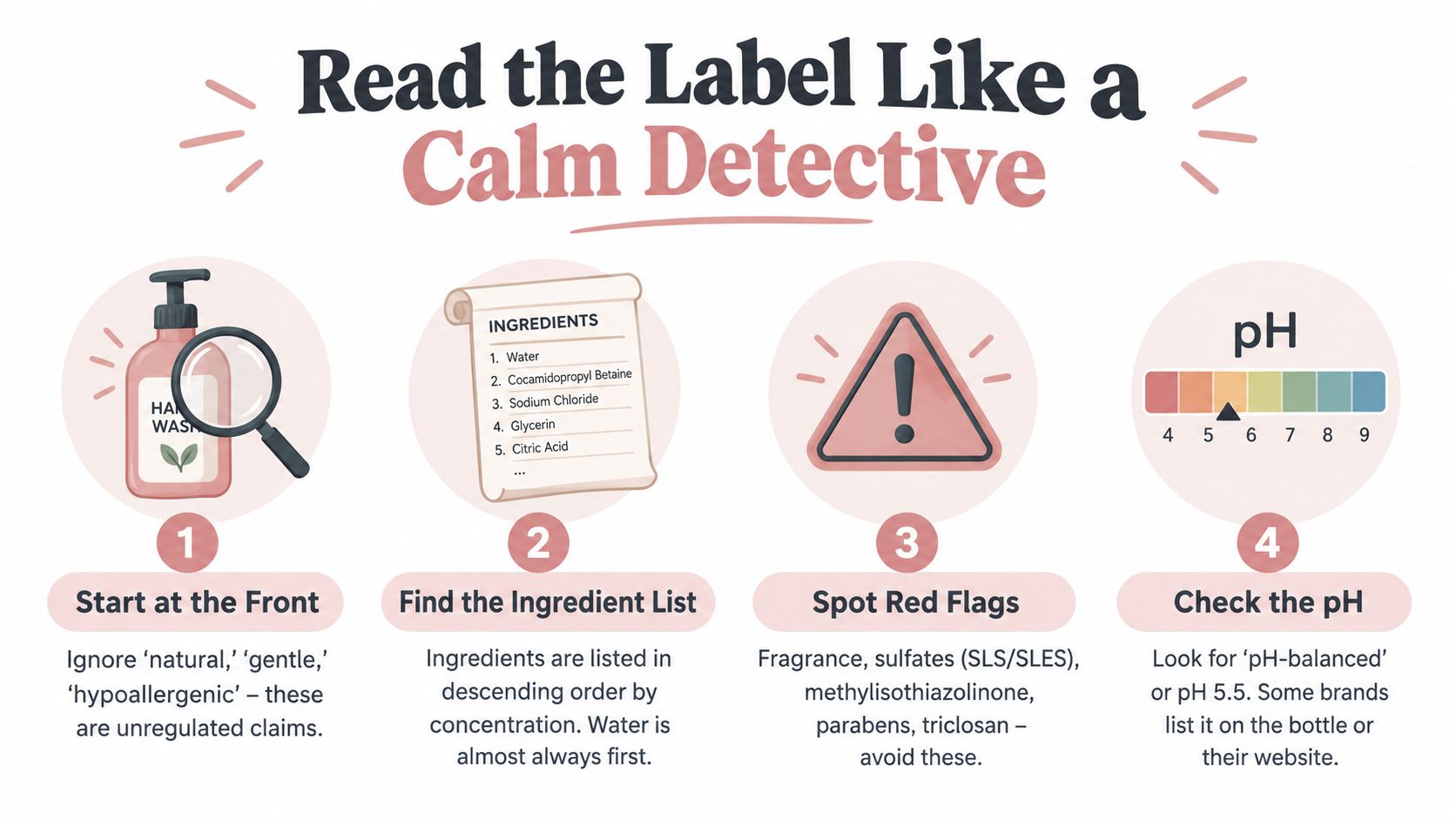
Use the same four checks each time
- Start at the front. Treat “natural”, “gentle” and “hypoallergenic” as clues to investigate, not proof that your hands will tolerate the wash. Claims such as fragrance-free, soap-free or dermatologically tested may be more useful, but the ingredients still matter.
- Find the ingredient list. Look for the full panel and read from the beginning. Ingredients are generally listed in descending order of concentration, which helps you identify the main cleansing system.
- Spot your personal red flags. Search for fragrance or parfum first, then check the surfactants. If you already know that a particular preservative or dye causes problems, look for it by name rather than relying on the product's overall branding.
- Check the pH if it's available. A stated pH near 5.5 gives you a concrete detail to work with. If the brand doesn't list pH on the bottle, check its product information before buying.
Don't turn the list into a fear exercise
A long ingredient name isn't automatically a bad ingredient, and a short list isn't automatically a mild one. Preservatives can help water-based formulas remain safe, while a fragrance-free product can still contain a surfactant that your hands dislike.
The ingredient list is the most honest paragraph on the bottle.
Keep a note on your phone of ingredients you've reacted to before. That tiny habit turns supermarket shopping from guesswork into a repeatable ten-second check.
Daily Habits That Protect Your Barrier
Even a thoughtful wash can't do all the work if the routine is rough on your hands. Australian guidance recommends warm water, thorough drying and moisturising, while emollient-containing products can help reduce the drying associated with frequent cleansing.
Use water that feels comfortably lukewarm rather than very hot. Lather properly, rinse away the product and pat your hands dry with a soft towel instead of rubbing hard across the knuckles. Apply a fragrance-free moisturiser while the skin still feels slightly hydrated, especially after a wash that leaves you tight.
A richer hand cream before bed can give dry areas more time to settle. Gloves can also help during wet chores, particularly if you're spending a long stretch cleaning, gardening or washing dishes. For an Australian-made hand-care perspective, you can read Blushing Ivy's guide to Australian hand cream.
The Wild Heath Society Deluxe Soy Candle belongs to Blushing Ivy's sister range and is separate from hand care. It's a 300g pure soy candle with listed scents including Revolution, Whisky Bar, Hole in One, Barbershop and Campfire, plus candle-care directions for trimming wicks and keeping the candle away from children and pets.
Know when a bottle isn't enough
See a GP, pharmacist or dermatologist if you have persistent redness, bleeding cracks, swelling, painful itching that disturbs sleep, or a rash spreading beyond your hands. Those signs call for proper assessment, not an endless rotation of products from the supermarket shelf.
A Quick Shopping Checklist Before You Buy
Keep this short list open while you're standing in the aisle:
- Look for pH information: A stated target near 5.5 is a useful signal.
- Choose fragrance-free where possible: Don't confuse “unscented” with “fragrance-free”.
- Check the cleanser: Mild surfactant families such as glucosides, sarcosinates or amphoacetates are worth investigating.
- Read the full panel: Note fragrance, dyes and preservatives, especially anything you've reacted to before.
- Consider testing claims carefully: “Dermatologically tested” or eczema-friendly positioning may offer context, but it doesn't replace the ingredient list.
- Choose what suits your routine: A soap-free wash for regular use and a moisturiser afterwards may be more practical than chasing a fancy front-label promise.
- Think about refills: A refill option can make it easier to keep a familiar formula at each sink. Blushing Ivy's guide to hand wash refill options can help you think through that setup.
If you're shopping for a hand and body wash with an Australian, artful feel, Blushing Ivy's botanical collection includes Olive Leaf & Thyme, Oakmoss & Vanilla, and Rosemary & Mint. Fragrance-sensitive readers should still check the full formula and choose according to their own skin history.
Blushing Ivy Home Fragrance offers Australian-made hand and body wash alongside handcrafted Sunshine Coast home fragrance and gift sets. Have a look at Blushing Ivy Home Fragrance to explore the botanical wash collection, then choose the formula and scent that fit your hands, your home and your everyday rituals.