
Best Non Toxic Candles in Australia: The 2026 Guide
The kettle ticks on the bench, the evening breeze slips across the deck, and you strike a match. Within minutes, the room feels softer. The day loosens its grip, dinner tastes better, and that little pool of light makes everything look as though it belongs in a home magazine.
Then the quieter questions arrive. What's drifting through the air? Is that dusty mark on the glass normal? Could the headache be the fragrance? Why is the dog giving the candle such a suspicious sniff?
Searching for the best non toxic candles shouldn't mean giving up beautiful scent or turning your living room into a chemistry lesson. It means looking past words such as “natural” and “clean”, then checking the wax, wick, fragrance, construction and the way you burn it. Here's the honest Australian guide to making a more confident choice.
Table of Contents
- That Lovely Candle Moment and the Quiet Worry Behind It
- What Non Toxic Really Means Beyond the Label
- Soy Wax Paraffin and What Your Wick Is Made Of
- Essential Oils Synthetic Fragrance and Sensitive Noses
- Your Shop Ready Checklist for Cleaner Candles
- A Little Aussie Made Example Worth a Look
- Care and Burning Habits That Keep the Air Lighter
-
Non Toxic Candle Questions Worth Answering
- Are soy candles genuinely safer than paraffin?
- Is paraffin toxic, or is the concern mostly soot and emissions?
- Can essential-oil candles help with sleep or stress?
- Can someone react to soy wax itself?
- Are lead-core wicks still a risk in Australia?
- How long should a candle burn, and is a 60-hour claim realistic?
- What signs suggest a candle isn't performing well?
That Lovely Candle Moment and the Quiet Worry Behind It
Candles have become part of ordinary life, not just special occasions. We light one while folding laundry, wrapping a birthday present, answering emails or settling into a quiet evening with a cup of tea. Fragrance changes the mood quickly. A coastal blend can bring back sunscreen, salty air and warm skin after a beach day, while a soft floral scent can make a messy Tuesday feel a little more considered.
That enjoyment matters. There's no prize for making your home feel clinical, and I'm certainly not suggesting you stare suspiciously at every flame. But a candle is also a product that releases combustion by-products and fragrance into an enclosed space, so it's fair to ask what you're choosing.
A good candle isn't defined by a pretty label. It's defined by what the maker can tell you about the materials inside it.
The clues are often small. A wick that mushrooms into a dark bobble, smoke that curls after you extinguish the flame, soot around the vessel or a scent that feels overpowering can all tell you the candle isn't performing beautifully. A fragrance-sensitive person may notice discomfort before anyone else in the room does. The candle may be made from plant wax and still contain a fragrance profile that doesn't suit their nose, asthma or migraine threshold.
Australian homes also have their own realities. We burn candles in bedrooms, living rooms and enclosed entertaining areas, then close the windows when it's chilly or turn on reverse-cycle heating. That makes ventilation and moderation just as important as the wax label.
This guide keeps the science simple and the advice practical. We'll look at Australian safety rules, wax choices, wick materials, fragrance disclosure, sensitivity and candle care, so you can enjoy the glow without second-guessing every breath.
What Non Toxic Really Means Beyond the Label
“Non-toxic” isn't a magic product category. It's a shopping description people use for candles made with fewer materials they'd prefer to avoid, such as lead, heavy metals, excessive soot, certain irritants, petroleum-derived waxes or undisclosed fragrance components. It doesn't mean a burning candle has zero impact on indoor air.
YourHome explains that VOCs are common in household scents and sprays, and that exposure can contribute to eye, nose and throat irritation, headaches and poorer indoor air quality. Its practical advice is refreshingly sensible: choose low-VOC products where possible, ventilate, and ask for safety documentation such as an MSDS when product information is unclear. You can read the Australian guidance on reducing VOC exposure and improving indoor air quality.
Compliance is the starting line
Australian candle safety isn't based on one all-purpose, candle-specific national standard. Consumer safety rules still provide important baselines. The ACCC states that candle wicks containing more than 0.06% lead are permanently banned for sale in Australia, including wicks sold separately. That makes lead-free wick construction a genuine safety requirement, not a fluffy marketing preference. The ACCC candle safety information is worth checking if you're buying unfamiliar imported products.
The Australian safety standard also requires candles to be designed so they don't spontaneously relight after being lit and extinguished. That reduces the chance of delayed ignition from residual heat or a remaining fuel pool. The technical wording is available in the Australian candle product safety standard.
Legal compliance doesn't automatically make a candle the best fit for your home. A compliant candle can still use a wax or fragrance style you'd rather avoid, or be too intense for someone with a sensitive respiratory system.
Look for a clean burn, not a clean-sounding label
In practical terms, a cleaner-burning candle should have a steady flame, minimal visible smoke and little soot collecting around the vessel. The jar should be designed for candle use and remain stable when lit. The fragrance should be disclosed clearly enough for you to make an informed choice.
The label “natural” doesn't answer those questions by itself. Ask what the wax is, what the wick is made from, whether the fragrance is essential-oil-based or a formulated fragrance oil, and whether the product is intended for Australian sale. For commercial fragrance chemicals, Australia's Industrial Chemicals Introduction Scheme guidance explains that fragrance ingredients must be authorised when products release industrial chemicals for commercial purposes. If you import products yourself, every ingredient needs to be checked against the Australian chemical inventory and any listing conditions.
My definition is simple: a non-toxic candle is a transparent, compliant candle that burns well and suits the people and air in your home. It's a spectrum, not a single badge.
Soy Wax Paraffin and What Your Wick Is Made Of
Wax is important, but it isn't the whole story. A soft soy candle with a well-matched cotton wick can be a lovely low-smoke option, while a beautifully marketed candle can disappoint if its wick is too large or its fragrance load is too aggressive.
Soy wax is plant-based and renewable, with Australian-grown options available. It generally burns cooler and gives fragrance a softer, more relaxed throw than many paraffin candles. It can also frost, develop a slightly uneven surface and need proper curing to perform at its best.
Paraffin comes from petroleum refining. It often supports a stronger synthetic scent throw, which is why some highly perfumed candles fill a room quickly. The trade-off is that paraffin candles may produce more soot and higher VOC readings in some studies. Coconut and rapeseed blends sit somewhere in the middle, offering different texture and scent performance, but the word “blend” means you should check exactly what's included.
The wick deserves equal attention. Lead-core wicks containing more than 0.06% lead are permanently banned for sale in Australia, according to the ACCC's candle wick safety information. Cotton, paper and wood wicks are common choices in the clean-burning category. Zinc and tin wicks can be acceptable, but the important question is always whether the wick is specified and matched properly to the wax and vessel.
Candle Wax and Wick Comparison
| Material | Source | Burn Quality | Indoor Air Notes | Best For |
|---|---|---|---|---|
| Soy wax | Plant-based wax | Cooler, often softer scent throw | Can still release particles and fragrance VOCs | Gentle everyday ambience |
| Paraffin | Petroleum refining | Strong scent performance | May create more soot and higher VOC readings in some studies | Strong fragrance preferences |
| Beeswax | Honeycomb-derived wax | Dense, steady burn with a natural aroma | Unscented options reduce added fragrance variables | Quiet, subtle scent |
| Coconut blend | Plant-based blend | Smooth texture and good scent potential | Check the full blend and fragrance disclosure | A balanced wax profile |
| Rapeseed blend | Plant-based blend | Can offer a soft, even burn | Ingredients vary by formulation | Shoppers wanting an alternative plant wax |
| Cotton wick | Natural fibre | Steady when correctly sized | No lead-core pathway | Straightforward candle construction |
| Wood wick | Wood fibre | Wider flame with a distinctive glow | Performance depends on sizing and wax | Atmosphere and gentle crackle |
| Zinc or tin wick | Metal-supported wick | Can be stable when well engineered | Ask for material details and compliance | Specific vessel and wax designs |
For a deeper wax comparison, Blushing Ivy's guide to soy wax versus paraffin wax is a useful companion.
My preference for a fragrance-sensitive household is a clearly disclosed plant wax with a lead-free cotton or wood wick, then a scent level that doesn't dominate the room. For stronger throw, a well-tested fragrance formulation matters more than merely choosing paraffin. For a softer profile, soy, beeswax or a considered plant blend is usually the more comfortable direction.
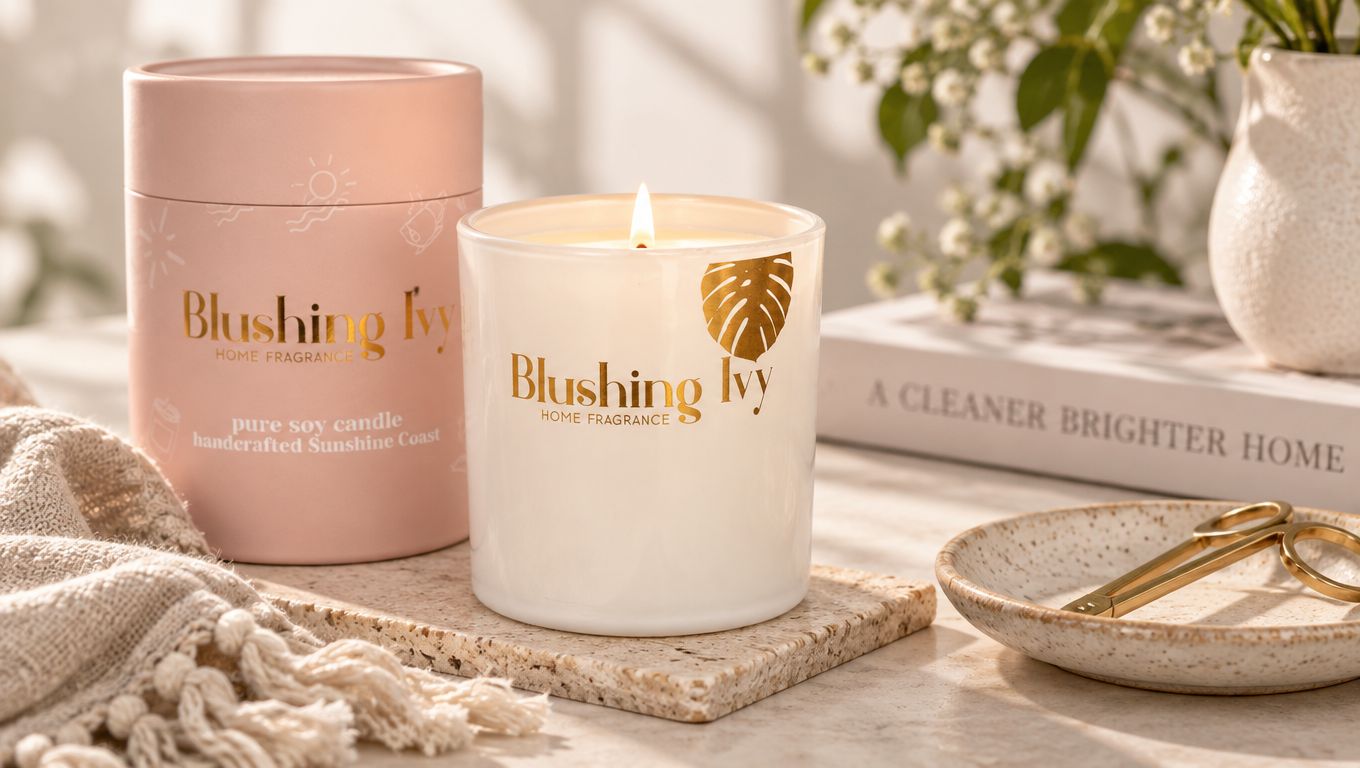
The Classic Soy Candle follows that straightforward construction with 100% pure soy wax, lead-free cotton wicks and Australian-made, essential-oil-based fragrance. It's a good example of why the full material list matters more than the front-of-box promise.
Essential Oils Synthetic Fragrance and Sensitive Noses
A fragrance doesn't stay politely inside the wax. Heat releases aromatic compounds into the room, where they reach your nose and mix with the indoor air. That's why a candle can smell delicate in the unlit jar but feel much stronger once the pool of wax warms.
Essential oils are concentrated plant extracts. A single-note candle may use an oil such as lavender, eucalyptus or citrus, while a more complex blend combines several oils to create a fuller impression. Synthetic fragrance oils are formulated from aromatic compounds and can be designed for stronger, longer-lasting or more precise scent effects.
Neither label automatically answers the sensitivity question. Natural doesn't mean universally tolerated. The Woolworths listing for an Organic Choice soy wax candle warns that fragrance and oils may cause an allergic reaction in sensitive people. Australian health reporting also highlights VOCs and indoor-air concerns around home fragrance products, including compounds such as benzene and formaldehyde. The Australian reporting on scented candles and indoor air is a worthwhile reality check.
Essential oils and synthetic fragrance side by side
| Factor | Essential Oils | Synthetic Fragrance |
|---|---|---|
| Source | Concentrated aromatic plant extracts | Formulated aromatic compounds |
| Scent character | Often botanical, layered and less forceful | Can be precise, powerful and highly consistent |
| Sensitivity | Can still irritate or trigger symptoms | May contain components that don't suit sensitive people |
| Disclosure | A brand may name the oils used | “Fragrance” may represent a complex formulation |
| Best household approach | Use lightly and ventilate | Ask for clear ingredient and safety information |
“Phthalate-free” is useful information, but it isn't a complete safety verdict. It tells you that certain plasticising chemicals aren't used. It doesn't tell you whether the candle is paraffin-based, whether the scent is too strong for your household or whether the wick burns cleanly.
IFRA standards exist to guide the safe use of fragrance materials in products, but shoppers should still ask direct questions when a label only says “fragrance” or “natural blend”. A helpful brand should be able to explain the fragrance source, whether the product is candle-grade, and how it's intended to be used. The essential oil versus fragrance oil guide offers more detail on the difference.
For asthma, migraine or allergy households, I'd begin with unscented or lightly scented candles, then test one fragrance at a time in a ventilated room. Don't light a strong candle in a shared space and assume everyone will enjoy the experience. Kids, pets and anyone already reacting to perfumes deserve a quieter option.
Your Shop Ready Checklist for Cleaner Candles
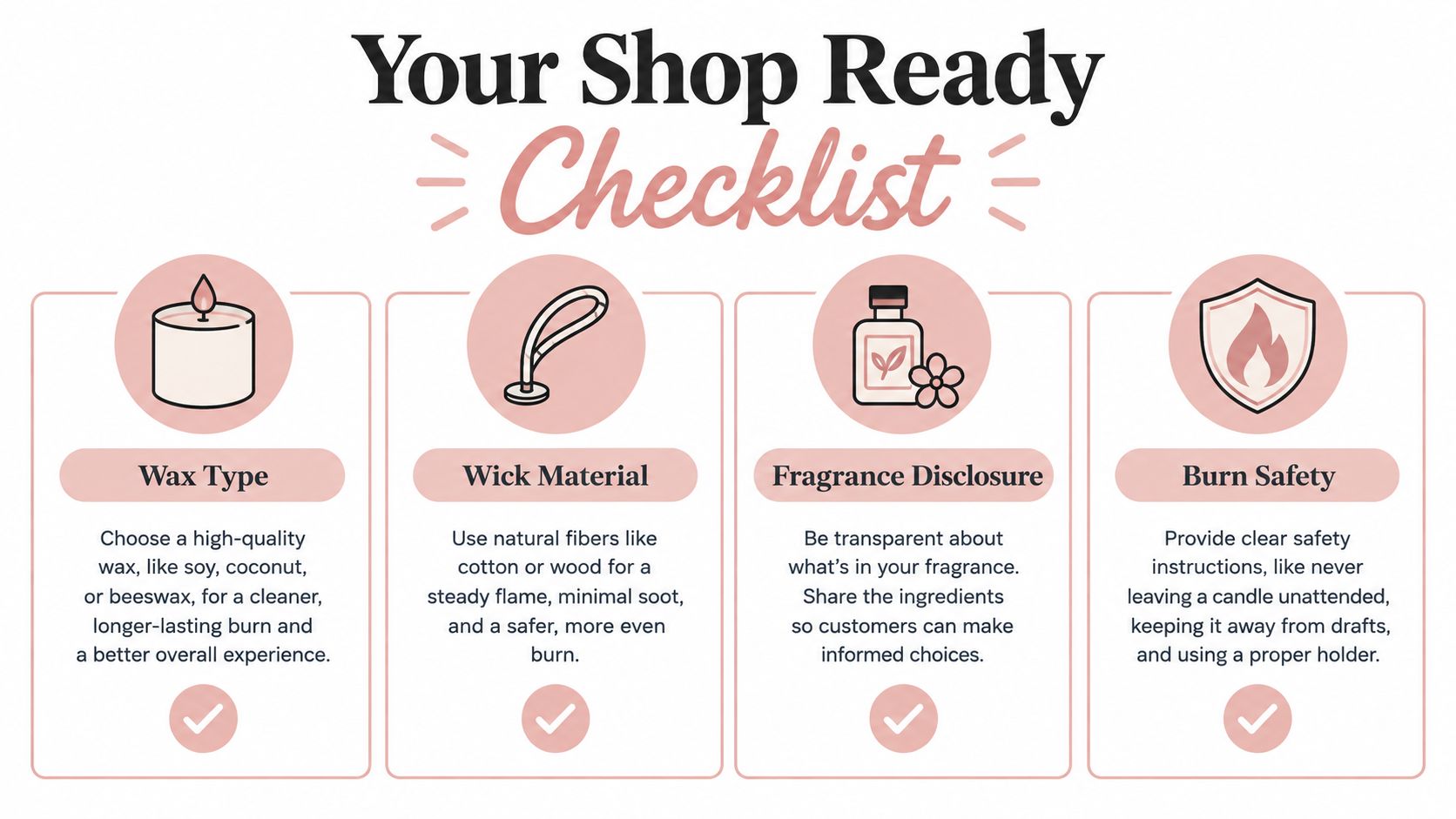
A good candle should survive a little questioning. Whether you're browsing a boutique shelf or scrolling online, use this checklist before you buy.
Ask what's actually inside
- Wax type: Look for an exact description such as 100% soy wax, beeswax or a named blend. “Natural wax” without further detail isn't enough.
- Wick material: Choose a clearly identified cotton, paper or wood wick, and avoid products that leave the wick material vague.
- Lead-free construction: Check for an explicit lead-free statement, especially when buying imported products. Australian sale rules permanently ban candle wicks containing more than 0.06% lead, as outlined by the ACCC product safety guidance.
- Fragrance source: Ask whether the scent uses essential oils, synthetic fragrance, or a combination. “Natural blend” needs more explanation.
- Australian compliance: Look for clear statements that the candle is made and sold in line with Australian requirements, including non-re-lighting construction.
- Vessel suitability: The container should be intended for candle use, stable and free from obvious cracks or damage.
- Burn instructions: A responsible maker should explain wick trimming, first-burn care, placement and extinguishing.
Red flags include “fragrance” with no supporting detail, “clean” without a material list, and “natural blend” that doesn't name the wax or scent components. None of these phrases proves a candle is dangerous, but they leave you doing unnecessary detective work.
If you're researching handmade products or considering a small fragrance business, ECORN's overview of Etsy niches for 2026 offers useful market context. For shoppers, the same principle applies: look for makers who explain their materials rather than relying on trendy wording.
Finally, remember that product choice is only half the equation. NSW Health advises regular ventilation and specifically recommends considering limits on burning candles and incense indoors. Its indoor air pollution advice is practical: good airflow matters even when your candle ticks every other box.
A Little Aussie Made Example Worth a Look
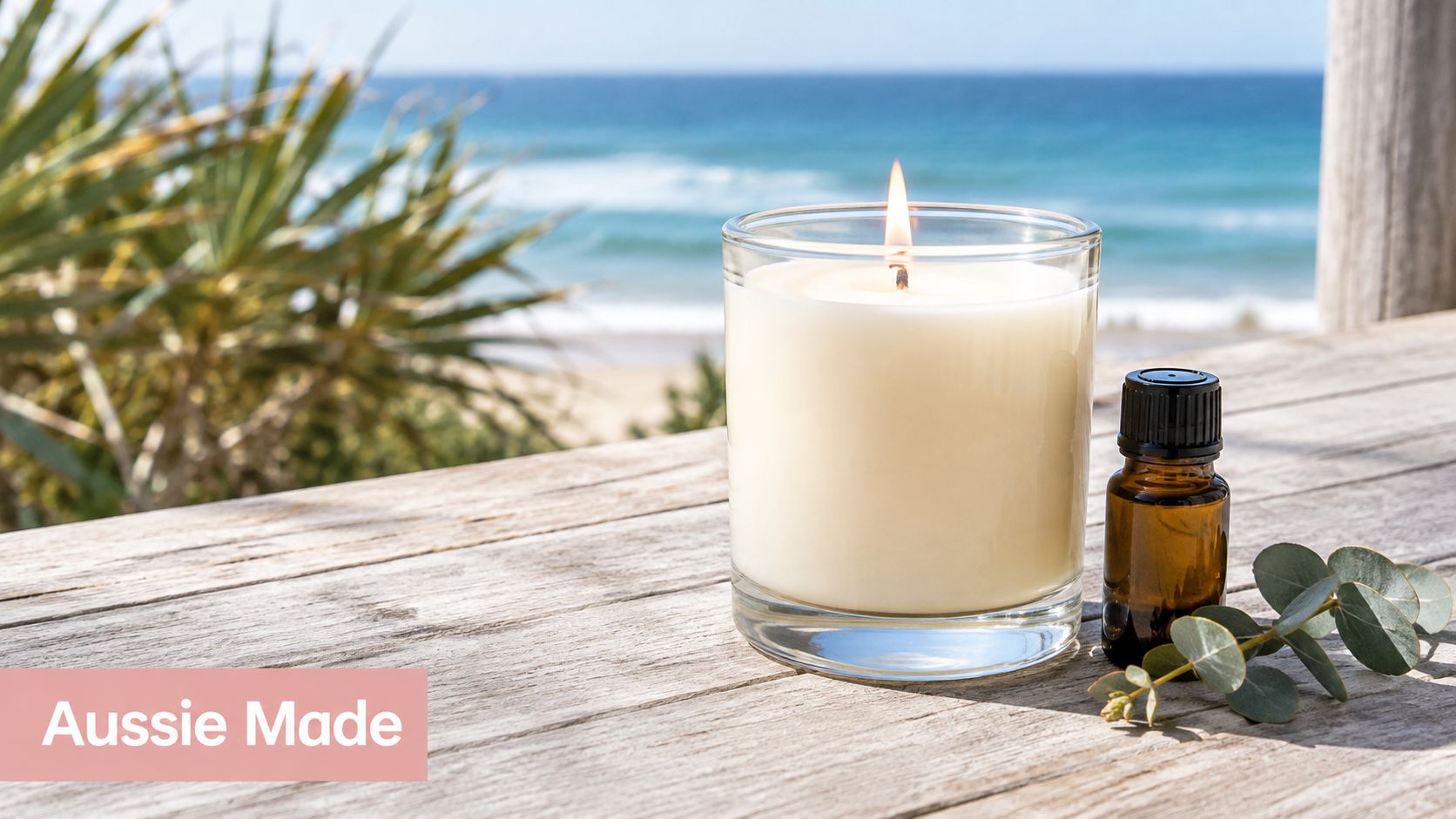
Blushing Ivy's approach is fairly easy to assess because the material story is specific. Its candles use 100% pure, vegan-friendly soy wax, lead-free cotton wicks and Australian-made, essential-oil-based fragrances. They're handcrafted in small batches on Queensland's Sunshine Coast, which gives the brand a distinctly local point of view without turning every scent into a souvenir shop.
The experience is gentle rather than shouty. Think of a warm evening after the beach, when the windows are open, the air carries a little salt and greenery, and you want the room to feel finished but not perfumed to within an inch of its life. Australian-inspired fragrances such as bush florals, native honey, banksia and golden wattle bring that sense of place beautifully.
The honest trade-off
A soy and essential-oil-based candle may throw fragrance more softly than a paraffin candle loaded with a strong synthetic blend. That's not a flaw if you're sensitive to perfume, prefer a bedroom scent that stays close to the vessel or live in a smaller room. It's a different kind of performance, more like a warm layer across the space than a dramatic entrance.
The classic Coastal range uses an opaque white glass vessel with gold detailing, while the Wild Heath Society range takes a bolder, more masculine direction. Its fragrance world includes smoky Cuban cigar, vetiver, cinnamon bark, amber, tonka, cedar, fir needle and a campfire-style blend with wood smoke and clove.
Those choices make the range useful for different homes and gifting occasions, but the same rule still applies. No candle is automatically right for every nose. Someone with fragrance sensitivity may prefer the lightest option, a shorter burn or no added scent at all. Someone wanting a room-filling aroma may choose a more expressive profile and rely on ventilation.
That balance is what I like about the checklist. It doesn't force one brand or one wax on everyone. It gives you a way to judge whether a product's construction and fragrance intensity suit your actual home.
Care and Burning Habits That Keep the Air Lighter
Even the best non toxic candles need sensible care. A badly trimmed wick can smoke, a candle in a draught can flicker and soot, and a first burn cut short can create a tunnel that makes every later burn uneven.
Start with the first-burn memory. Let the melted wax pool reach the edge of the container before extinguishing it, so the candle establishes an even melt pattern. If you stop with a narrow pool around the wick, the candle may continue burning down the centre and leave wax stranded around the sides.
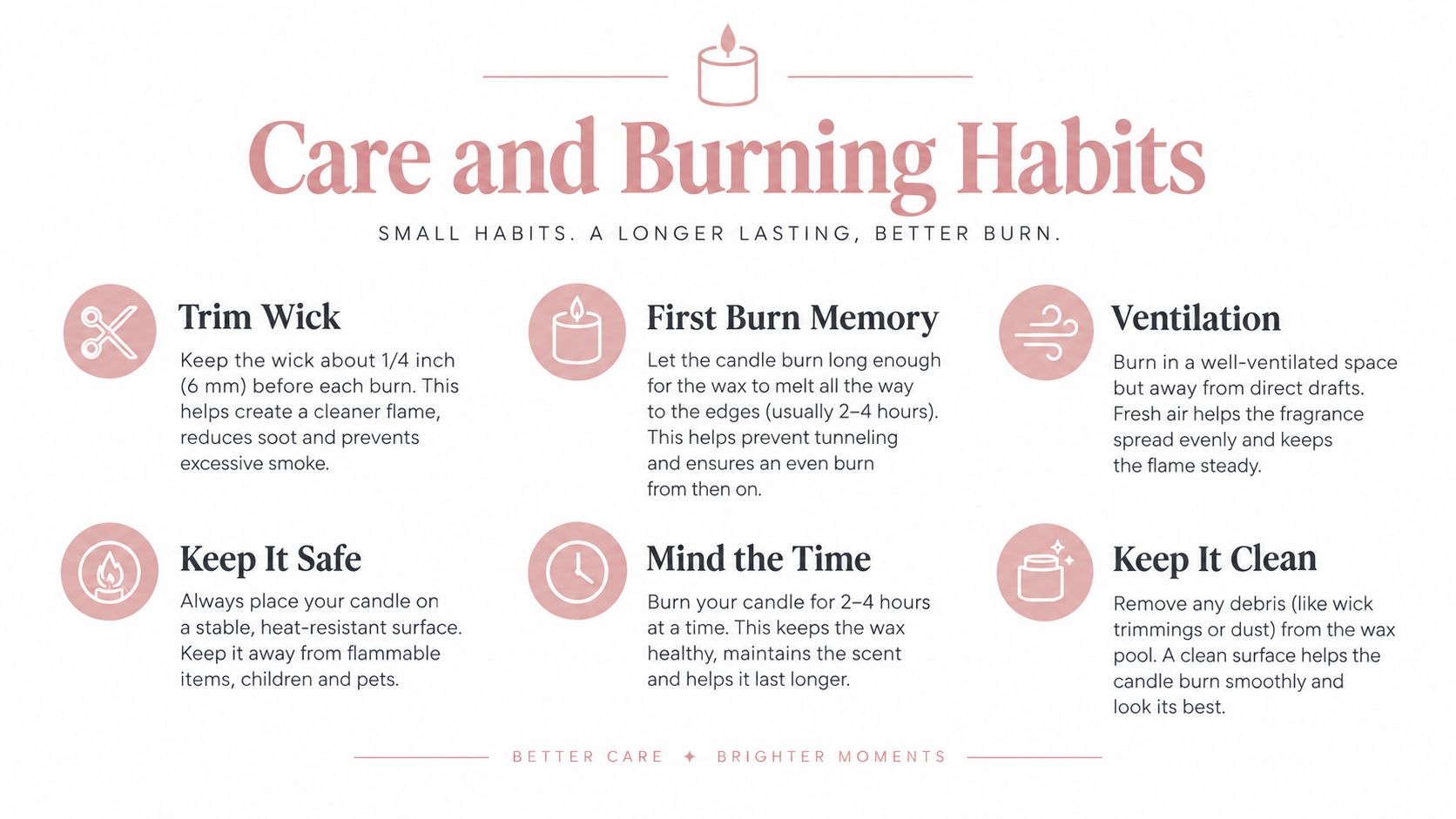
Small habits make a visible difference
- Trim before lighting: Keep the wick around 2 to 5 mm, the range recommended in Blushing Ivy's candle-care guidance, to support an effective flame and minimise soot build-up.
- Watch the flame: If it's smoking, dancing wildly or forming a large mushroom-shaped cap, extinguish it, allow the wax to cool, then trim the wick.
- Keep airflow gentle: Crack a window or door where practical, but keep the candle away from open draughts, ceiling fans and air-conditioning streams.
- Give the vessel space: Curtains, bookshelves, children and pets should stay well clear. Never leave a burning candle unattended.
- Avoid enclosed overuse: NSW Health recommends ventilating indoor spaces and considering limits on burning candles and incense. Follow that advice especially in small rooms.
- Extinguish calmly: Use a snuffer or wick dipper rather than blowing hard across the wax. A strong puff can create a plume of black smoke and disturb the melt pool.
Winter deserves a little extra thought in Australian homes. Reverse-cycle heating can make rooms feel dry and closed up, so a candle shouldn't become background noise that burns for hours without fresh air. Open the room periodically, keep the flame modest and skip the candle altogether if someone develops a headache, throat irritation or breathing discomfort.
A useful candle wick trimmer guide can help if ordinary scissors keep dropping black wick pieces into the wax. Store leftover candles somewhere cool and dark, away from direct sunlight and heat, so essential-oil scents stay closer to their intended character.
Non Toxic Candle Questions Worth Answering
Are soy candles genuinely safer than paraffin?
Soy can be a sensible choice, especially when it's clearly identified as 100% soy and paired with a suitable lead-free wick. But “soy” doesn't automatically answer the fragrance or burn-quality questions. A well-made candle needs transparent materials and good ventilation, not just a plant-based wax label.
Is paraffin toxic, or is the concern mostly soot and emissions?
The practical concern is what burning contributes to indoor air. Paraffin comes from petroleum refining and may produce more soot and higher VOC readings in some studies. That doesn't mean every paraffin candle creates the same result, but it does give shoppers a clear reason to choose alternatives if they want to reduce petroleum-derived materials and potential emissions.
Can essential-oil candles help with sleep or stress?
Scent can become part of a calming ritual, and familiar notes may feel grounding or nostalgic. That isn't the same as promising a health effect. Essential oils can still irritate sensitive people, so choose a gentle fragrance, burn it briefly and stop if it triggers symptoms.
Can someone react to soy wax itself?
A reaction may come from the fragrance or oils rather than the wax. Since fragrance and oils can cause allergic reactions in sensitive individuals, start with a lightly scented or unscented product when testing a new candle. If symptoms persist, remove the candle from the room and seek appropriate health advice.
Are lead-core wicks still a risk in Australia?
Wicks containing more than 0.06% lead are permanently banned for sale in Australia, including loose wicks, under the ACCC's consumer safety rules. That makes lead-core wicks less likely on compliant local shelves, but an explicit lead-free statement is still a sensible check for imported or poorly labelled products.
How long should a candle burn, and is a 60-hour claim realistic?
Burn time depends on wax density, vessel size, wick design, fragrance formulation and how the candle is used. A 60-hour claim can be realistic for a larger, well-made candle, but the number alone doesn't prove quality. The more useful questions are whether the flame stays steady, the wax melts evenly and the maker provides clear care instructions.
What signs suggest a candle isn't performing well?
Persistent smoking, heavy mushrooming, soot around the vessel, an unstable flame or headaches in a ventilated room are reasons to extinguish it and reassess. Don't keep burning a candle just because you've paid for it. Your home should smell inviting, not like you've lost an argument with a perfume counter.
A quick return to the checklist usually solves the uncertainty. Verify the wax, wick, fragrance disclosure, vessel and care instructions, then match the scent intensity to the most sensitive person in the room.
Blushing Ivy Home Fragrance offers handcrafted soy candles, including Australian-made, essential-oil-based fragrances, alongside reed diffusers, room and linen sprays, car diffusers and gift sets. Visit Blushing Ivy Home Fragrance to explore the collection, compare scent styles and choose a candle that feels beautiful in your home and comfortable in your air.