

Car Diffuser Perfume Guide: Choosing, Using, and Caring
Monday morning has a way of revealing every little thing your car has collected. The windscreen's frosty, coffee is balanced in one hand, and there's still a kid's footy boot wedged behind the seat from the weekend. Open the door and you get a mix of yesterday's takeaway wrappers, damp mats, sunscreen and whatever the windows-down playlist stirred up on the drive home.
Our homes get candles, reed diffusers and a spritz of linen spray before guests arrive. Even a handbag can carry that lovely leather smell. Yet the car, where we spend so much ordinary life, is often left to fend for itself. A beautiful car diffuser perfume can change the feeling of a school run, a traffic-heavy commute or a long highway stretch without making the cabin feel like a department store fragrance counter.
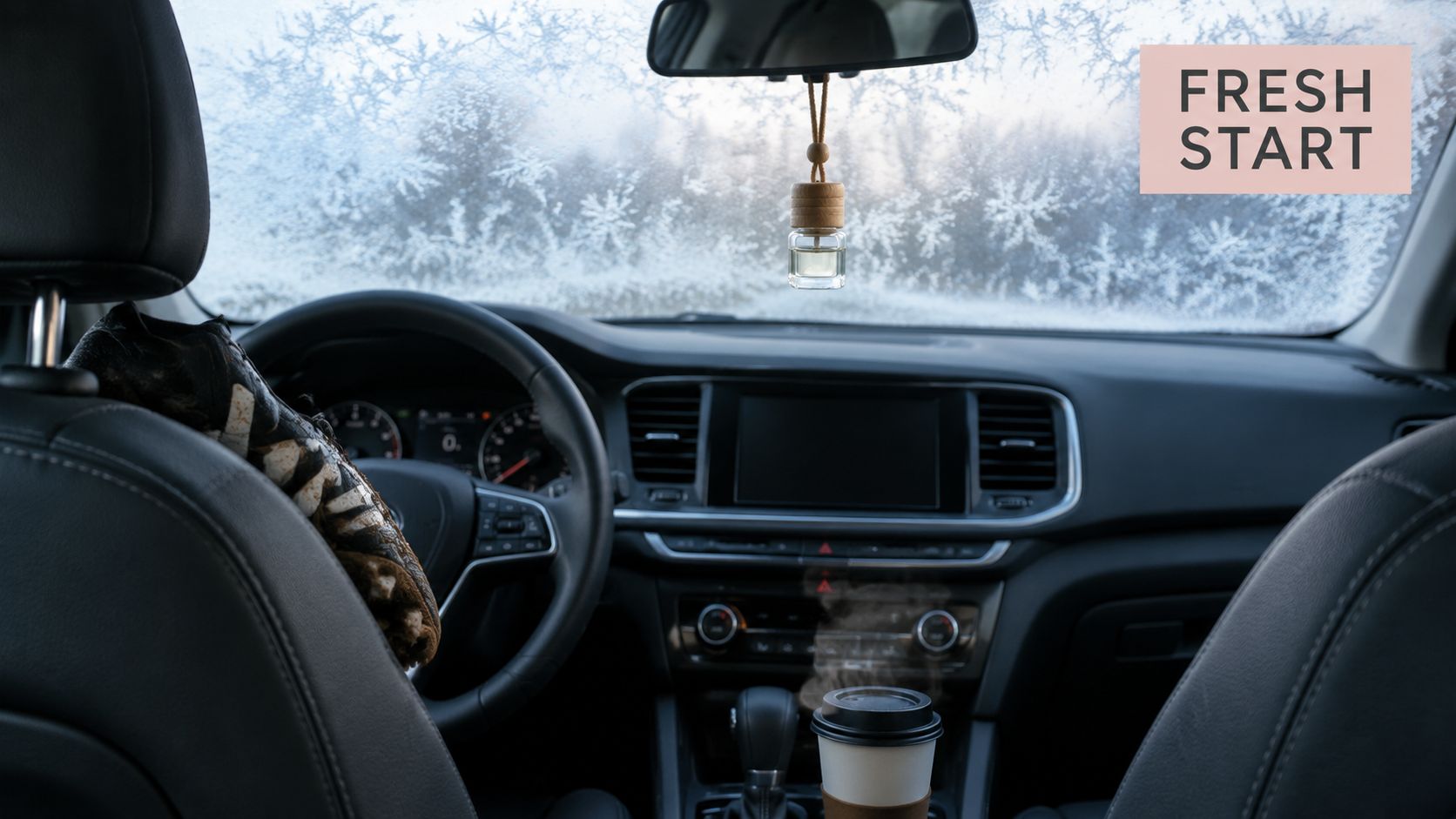
The trick is choosing the right style, using it carefully and matching the scent to your cabin and routine. I've also included the practical bits that often get skipped, especially how to protect a diffuser and your dashboard through an Australian summer. For more ideas on choosing a gentler everyday option, have a look at our guide to a natural car air freshener.
Table of Contents
- Why Your Car Deserves a Lovely Scent Too
- Different Car Diffuser Styles Worth Knowing
- Getting Your New Car Diffuser Set Up
- Matching the Scent to Your Driving Life
- Caring for Your Diffuser Through an Aussie Summer
- Finding the Right Fragrance for Your Daily Drive
Why Your Car Deserves a Lovely Scent Too
A car carries the evidence of real life. There's the beach towel that didn't quite dry, the grocery bags, the gym gear, the dog blanket and the takeaway chips someone promised they'd finish before the smell settled in. None of that means your car is dirty, but it can make the first few minutes behind the wheel feel less inviting.
Scent works in the background. A crisp green fragrance can make a short errand feel brighter, while a soft vanilla or woody blend can make a familiar commute feel calmer and more settled. You notice the difference most when you climb into the car after it's been cleaned, then compare that fresh cabin with one that's been closed up all weekend.
The overlooked room on wheels
We tend to style every other part of life. The living room gets a candle, the bathroom gets a reed diffuser and the linen cupboard gets a mist before visitors arrive. The car deserves the same attention, particularly because it's often where the day begins and ends.
A timber-lid diffuser adds a small decorative detail as well as fragrance. It doesn't need to shout. The nicest car scent is one that welcomes you when you open the door, then sits comfortably while you drive.
A good car fragrance should support the drive, not compete with it.
Australian conditions do add a practical layer. A diffuser that behaves beautifully on a mild Sunshine Coast morning still needs sensible placement when the car is parked in strong sun. Keep it away from direct heat, secure it properly, and choose a scent style that suits the people sharing the cabin.
That's the difference between buying the first air freshener on the counter and choosing a car diffuser perfume you'll enjoy using. The right format should look at home, smell gorgeous and cope with the everyday chaos of school runs, beach trips and weekend escapes.
Different Car Diffuser Styles Worth Knowing
Not every car fragrance works in the same way. The format affects where the scent sits, how quickly it travels through the cabin and how much care it needs.
| Style | Longevity | Scent Throw | Placement | Best For |
|---|---|---|---|---|
| Clip-on vent diffuser | Variable | Strong when air flows | Air vent | Drivers wanting fragrance during active airflow |
| Vent-mounted solid freshener | Shorter-lasting in strong heat | Light to moderate | Air vent | Simple, low-cost everyday use |
| Hanging timber-lid glass diffuser | Lasts for weeks with careful use | Gentle and steady | Secure hanging point | Drivers wanting décor and fragrance together |
| Reed-style mini diffuser | Variable | Subtle when upright | Glovebox or another stable spot | Small cabins and stationary spaces |
Clip-on vent diffusers rely on moving air, so they can feel effective while the fan is running and much quieter in still traffic. They may also mark vent slats or leak onto nearby plastics if the oil isn't contained properly. Solid vent fresheners are simple, but direct sun can shorten their useful life and leave you with a fragrance that disappears before you've finished enjoying it.
Hanging timber-lid glass diffusers are my pick for most drivers. They look considered rather than disposable, give a steady scent from a small vessel and suit everything from a compact hatchback to a larger family SUV. In a small car, use a restrained fragrance and hang it securely. In a 4WD, a richer profile may carry more comfortably through the larger cabin, but don't compensate for extra space by over-saturating the lid.
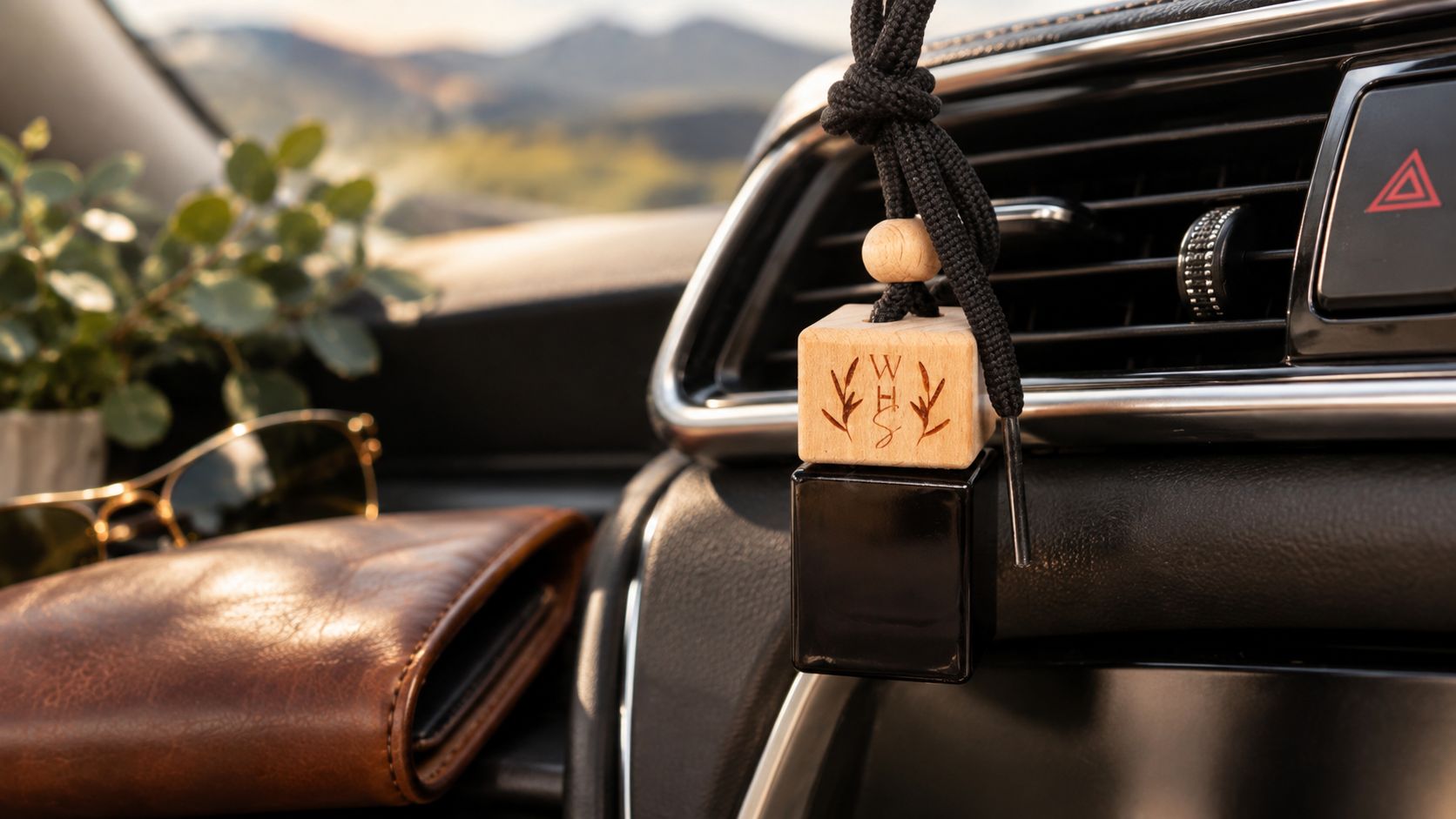
Reed-style mini vessels can work nicely in a glovebox or another stable spot, provided they stay upright. Anything loose in the cabin can become a projectile under heavy braking, so a bottle shouldn't roll around beside your phone, water bottle or sunnies.
If you're comparing fragrance with broader cabin improvements, this guide to best interior detailing extras is a useful companion. A clean interior gives your chosen scent a much fairer chance.
For a more detailed look at the format, our article on an essential oil diffuser for car covers the practical differences between diffuser types. If your taste runs refined and a little moodier, the Wild Heath Society Car Diffuser includes options such as REVOLUTION, WHISKY BAR, HOLE IN ONE, BARBERSHOP and CAMPFIRE. It's also designed for small spaces such as wardrobes and powder rooms, with a mix-and-match 3 for $30 bundle available across the relevant car diffuser range.
My clear recommendation is simple. Choose a hanging timber-lid glass diffuser for a styled, steady result, a vent clip if you want fragrance only while the fan runs, and a reed-style vessel only where it can remain upright and secure. Whatever you choose, keep it outside the driver's line of sight and away from surfaces that could be damaged by oil.
Getting Your New Car Diffuser Set Up
A timber-lid diffuser is easy to assemble, but the first few minutes matter. Rushing the setup can leave the wick dry, the scent too intense or the oil in a place it absolutely shouldn't be.
Follow the bottle, not your impatience
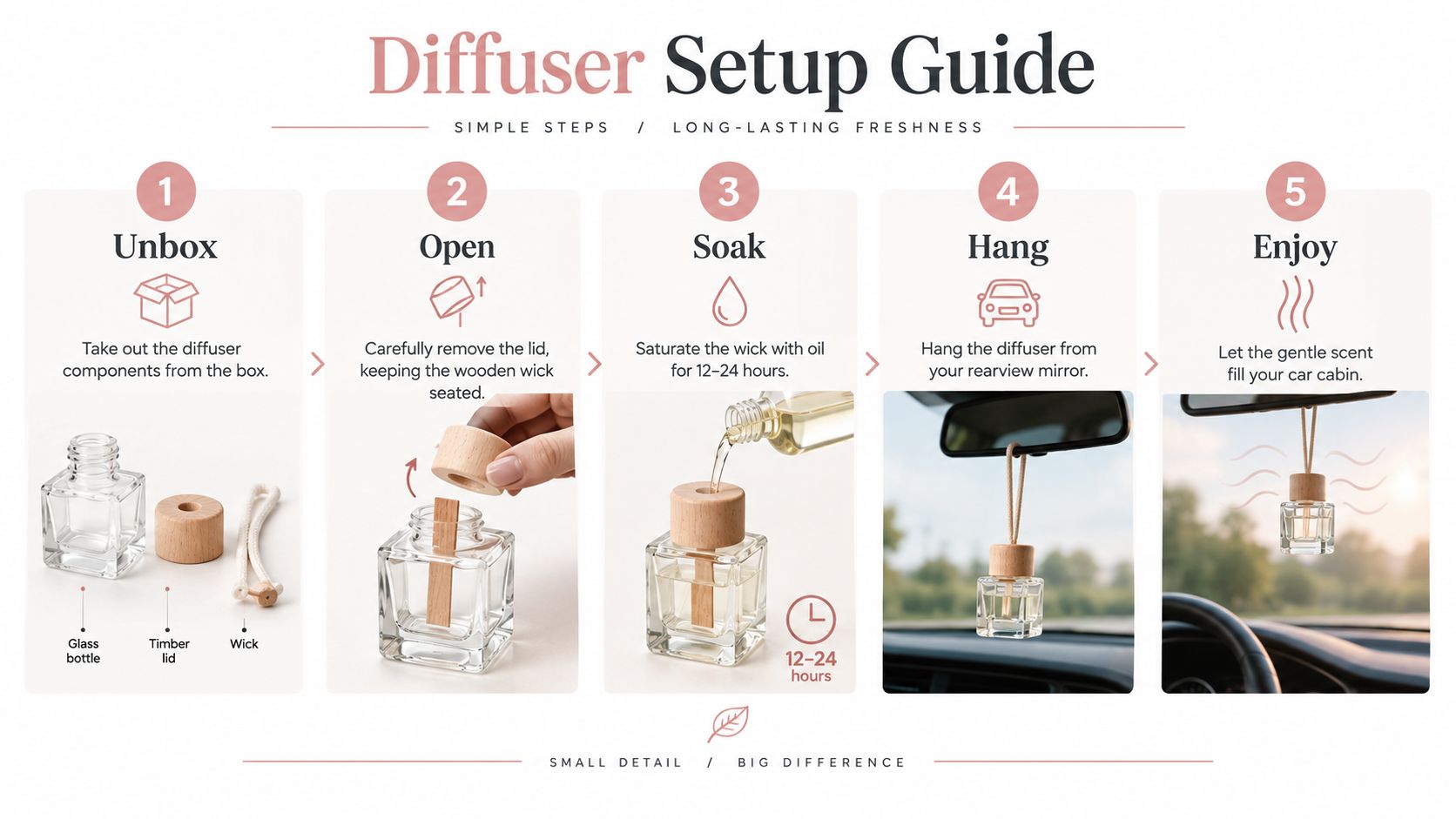
- Remove the timber lid carefully. Keep the wooden wick seated in the neck of the glass bottle. Don't pull or twist the wick out while opening the diffuser.
- Take out the plastic stopper. This small insert seals the oil during transit. If you leave it in place, the timber lid can't absorb the fragrance properly, which is why a new diffuser can seem strangely scentless.
- Saturate the wick gently. Tip the bottle just enough for a small amount of oil to reach the timber. The aim is to moisten the lid, not drench it or send liquid running down the bottle.
- Replace the lid and attach the cord. Thread the string or elastic through the loop, then hang the diffuser from a secure point such as the rearview mirror stem or a grab handle.
- Check the position. The bottle should hang vertically and sit well away from your eyeline. Make sure the string and any oil-soaked timber can't touch the dashboard, vents, trim or other plastic surfaces.
Give the fragrance time to settle before deciding whether you love it. Let the wick develop over the first day, and crack a window during the initial use if the concentration feels strong in your small cabin. Your nose can adjust quickly, so avoid repeatedly tipping the bottle because you're chasing an instant blast.
A few details that save trouble
Keep the protective sleeve or stopper available for long parking stretches. If you're leaving the car for an extended period, especially in warm conditions, remove or secure the diffuser according to its product guidance rather than leaving a saturated lid swinging in the heat.
The car diffuser hanging guide is handy if you want a visual reminder of safe placement. Wipe up any spill immediately with a damp cloth, and don't let excess liquid travel down the cord onto the interior.
Matching the Scent to Your Driving Life
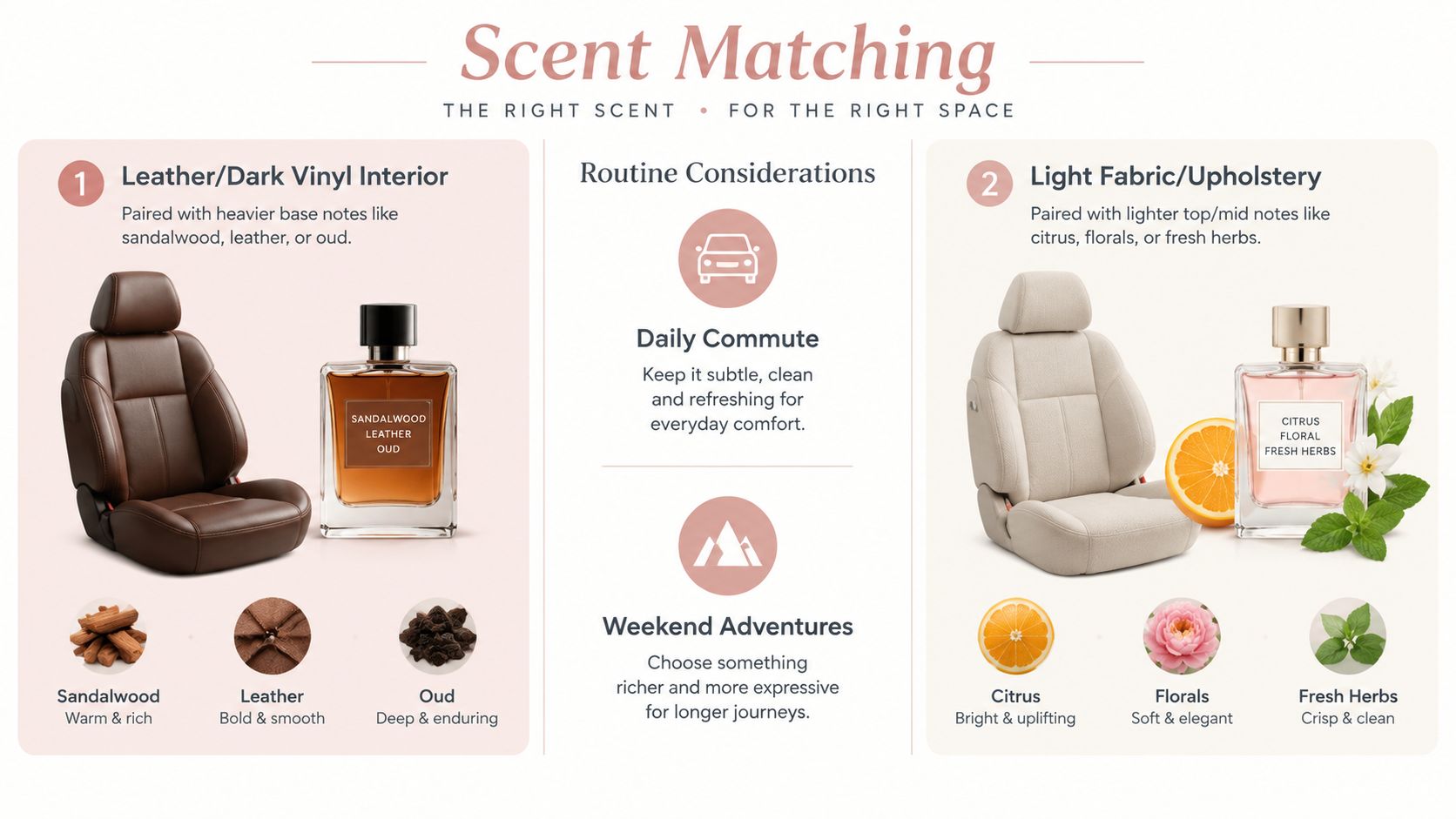
Your car's interior changes how a fragrance feels. Dark leather and vinyl tend to suit deeper notes, while pale fabric and hard plastics often feel better with something fresh and airy. Your routine matters just as much as the upholstery.
A daily commuter in a dark leather cabin might enjoy sandalwood, amber, tobacco or a polished woody blend. These notes create a grounded, grown-up atmosphere for quiet mornings and longer stretches of traffic. If your car has lighter trim and carries gym bags, sports gear or beach towels, crisp green, citrus and aquatic profiles can feel cleaner and more energising.
Choose for the passengers too
Family wagons need a little diplomacy. Warm vanilla, coconut and soft florals can soften the smell of snacks and everyday clutter without turning the cabin into a dessert shop. If passengers are sensitive to fragrance, choose a lighter profile and use less oil on the timber lid.
| Your driving life | A considered scent direction |
|---|---|
| Dark leather, regular commuting | Woody, amber, tobacco-leaning or warm spice |
| Light fabric, short errands | Citrus, fresh herbs, green leaves or aquatic notes |
| Family wagon and weekend gear | Vanilla, coconut or soft florals |
| Coastal, humid conditions | Lighter blends with a clean finish |
| Dry inland drives | Richer compositions used with restraint |
Climate changes the balance too. In humid coastal areas, a heavy sweet fragrance can become cloying inside a closed cabin, so I'd reach for something breezier. Drier inland drives may suit a richer scent, but the same rule applies. More fragrance isn't automatically better fragrance.
Before choosing, ask who rides with you, what your car carries and how you want to feel when you turn the key. For broader cabin habits beyond fragrance, this resource on long-term car smell prevention is worth bookmarking. A diffuser should complement cleaning and ventilation, not cover up a neglected source of odour.
Caring for Your Diffuser Through an Aussie Summer
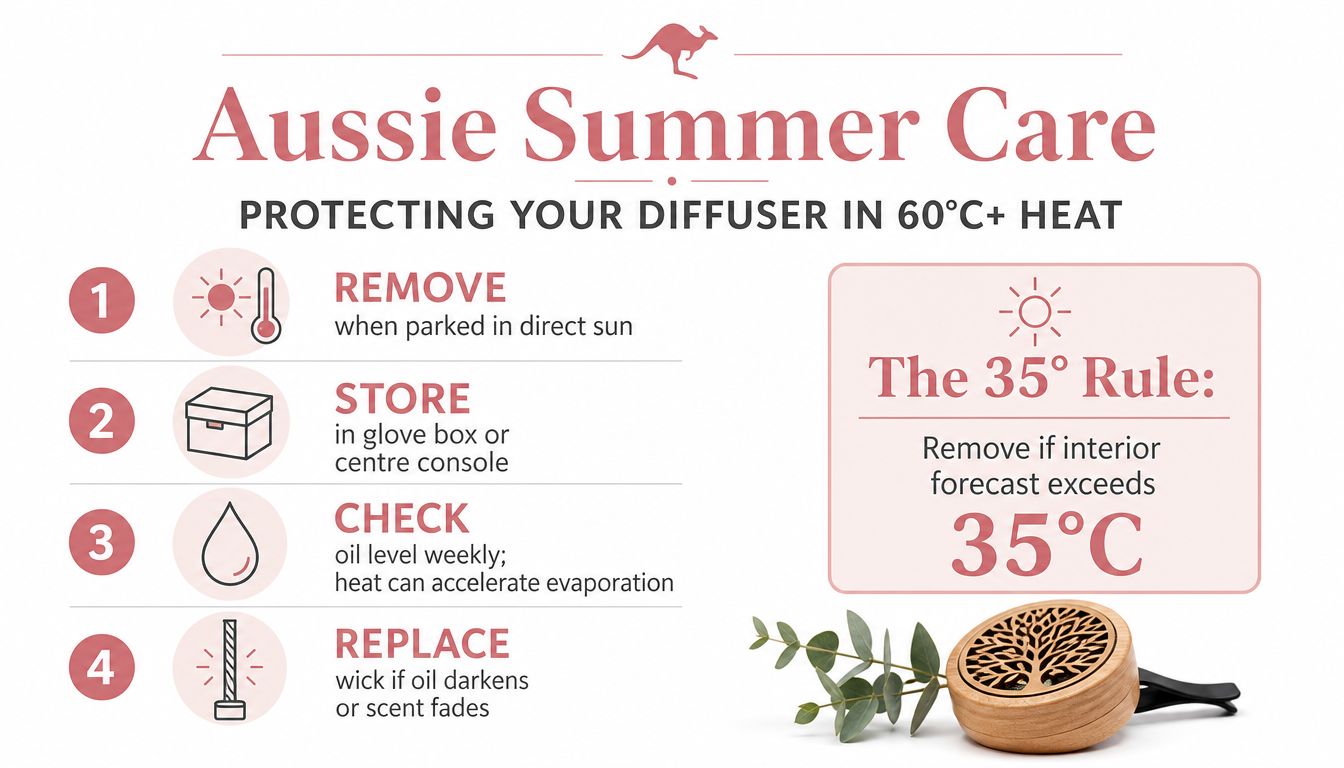
Australian heat changes the rules. A parked car can become far hotter than the outside air, and a fragrance bottle left in direct sun has to cope with heat, evaporation and movement all at once. Careful placement matters more than buying the strongest scent you can find.
Australian product guidance recommends removing a diffuser from a parked car if the interior temperature exceeds 35°C to reduce the risk of leakage or interior damage. You'll find the same practical advice in this Australian car freshener care guide.
The summer routine I actually recommend
- Park in shade when you can. A covered spot reduces direct heat on the glass and timber lid.
- Use a windscreen shade. It won't make the cabin cold, but it helps reduce the heat load on the front of the car.
- Remove the diffuser above the 35°C point. Store it upright in the glovebox or another stable, shaded place, with the opening secured as directed by the product label.
- Keep oil away from plastics. Fragrance oil can affect interior plastics, dashboards and trim if it leaks or drips.
- Never leave it near a cup holder. A drink can knock the bottle over, and a loose diffuser can move around during braking.
- Keep it out of reach of children and pets. Don't hang it where small hands or curious paws can reach the bottle or cord.
If a spill happens, blot first. Don't spread the oil across the dashboard with broad, vigorous wiping. Use a mild soapy solution and a microfibre cloth appropriate for the surface, then check the area again once it's dry.
Practical rule: If the bottle can touch the trim, the trim is too close.
Don't shake the diffuser aggressively. Shaking pushes excess oil into the timber lid and cord, increasing the chance of drips and surface damage. A gentle tip is enough to refresh the wick when the scent softens.
The Australian Safety Data Sheet for a new car air freshener identifies serious eye irritation as a hazard and advises handling the product according to its label and SDS. Australian fragrance products also commonly advise keeping items away from heat and flames, avoiding eye and skin contact, and keeping them away from children and pets. Read the label before use, and treat the oil as a chemically active fragrance product, even when the scent is built around natural or essential-oil-based ingredients.
A 2020 analysis examined 12 car air fresheners and 24 essential oils, finding 546 VOC occurrences across 275 VOC identities. The analysis recorded 30 occurrences representing 9 potentially hazardous VOC identities, with limonene, benzyl acetate, acetone and ethanol among the most common compounds, and acetaldehyde and methanol among the most common potentially hazardous VOCs. You can read the full car air freshener emissions analysis.
That's why “natural” shouldn't be treated as a shortcut for “no care required”. The same analysis reported that fewer than 2% of VOCs were disclosed on labels or safety data sheets, and none of the potentially hazardous VOCs were disclosed. Good product handling means following the label, allowing ventilation, using sensible doses and choosing brands that take ingredient transparency seriously. Some Australian suppliers also state that their fragrance oils are IFRA-compliant, reflecting an industry standard for fragrance ingredient use, as noted by Overtake.
Finding the Right Fragrance for Your Daily Drive
Start with three honest questions. Do you want your car scent to energise you, calm you, or just neutralise everyday odours? Is the car shared with passengers who have strong preferences? Do you need one fragrance to work for weekday errands and long weekend drives, or would you rather rotate between moods?
I like comparing two or three fragrance profiles side by side rather than committing immediately. A tester in a working diffuser format tells you more than a paper strip because airflow, cabin size and upholstery all change the experience. Let each scent sit for a while before deciding. The first impression can be bright, while the dry-down may become softer, warmer or more woody.
Three directions to try
Coastal Drift suits the driver who wants a breezy, open-window feeling. Think salty air, clean light and the lift of a coastal road.
Sandalwood Vanille is warmer and more enveloping. It belongs in a darker cabin or on a commute where a soft, polished sweetness makes the traffic feel less dreary.
Eucalyptus Rain brings an Australian-inspired freshness, like cool leaves and rain settling over the bush after a hot day. It's a good choice when you want the cabin to feel clear and invigorating without leaning sugary.
The Blushing Ivy and Wild Heath Society ranges make it easy to rotate fragrance with mood and season. The car diffuser bundle offers 3 for $30, so you can choose a fresh option for summer, a cosy one for cooler drives and a more refined blend for the weeks when your car doubles as your mobile office.
For a thoughtful approach to choosing a personal scent, this guide on how to discover your fragrance offers useful prompts that work just as well for a car as they do for perfume. If you're choosing for a gift, stocking a boutique or selecting fragrances for a shared fleet of vehicles, ask us for a recommendation. We can help with gifting ideas, wholesale enquiries and scent combinations that feel distinctly you.
Blushing Ivy Home Fragrance offers handcrafted car diffusers alongside soy candles, reed diffusers, Room & Linen Spray and gift sets, all made on Queensland's Sunshine Coast. Visit Blushing Ivy Home Fragrance to choose a car diffuser perfume that makes the school run, the commute and the weekend escape smell a little more gorgeous.