
Essential Oil Benefits for Everyday Home Fragrance
The kettle has just clicked off, the afternoon light is turning honey-coloured, and one soft breath of lavender can make the whole room feel a little less hectic. That's often where the conversation about essential oil benefits begins, not with a miracle cure, but with a scent that helps you pause long enough to notice you're home.
Here's the honest version. Essential oils can bring comfort, atmosphere, and a lovely sense of ritual to everyday life. Some uses have promising research behind them, while others are mainly personal experiences that feel meaningful without being medically proven. Australian evidence reviews urge caution because confidence in benefits remains limited overall, so we'll look at what the oils can and can't reasonably do, without dismissing the joy they bring.
If you're creating a peaceful corner for stretching, journalling or quiet breathing, resources such as yoga meditation supplies for home practitioners can help make that space feel intentional. Add a gentle fragrance, a warm cup of tea and a few unhurried minutes, and you've got a ritual that belongs entirely to you.
Table of Contents
- A Small Breath of Calm to Start
- What Essential Oils Actually Are
- The Benefits People Talk About Most
- How the Way You Use Them Changes Everything
- Staying Safe and Playing by the Rules
- Australian Botanicals Worth Falling For
- How to Spot a Quality Essential Oil Product
- A Soft Place to Land
A Small Breath of Calm to Start
A friend once told me she lights a candle while packing away the day's dishes. Nothing dramatic happens. The washing-up still needs doing, the school bags still need sorting and tomorrow's list hasn't disappeared. But the glow, the fragrance and the familiar little routine tell her body that work mode is finished.
That distinction matters. A scent can support an experience without treating a health condition. You might feel calmer with lavender nearby, more cheerful when citrus fills the kitchen, or comforted by a warm woody blend at night. Those responses are real as personal experiences, even when research can't confidently promise the same result for everyone.
Australians are already very familiar with this kind of self-care. An Australian Government evidence review reported that a 2017 survey found 11% of Australians had used aromatherapy oils in the previous year, while 3.9% had visited an aromatherapist. Among people who used oils, 43% self-prescribed, with pharmacists and general practitioners among the common sources of advice. You can read the Australian Government aromatherapy evidence evaluation for the full context.
That tells us two useful things. Essential oils aren't some tiny fringe category in Australian homes, and shoppers deserve guidance that's both enthusiastic and careful. We can enjoy a eucalyptus-inspired laundry moment, a coastal candle or a soothing pillow ritual without claiming that fragrance cures insomnia, anxiety or pain.
A gentle rule for scent: choose fragrance for the feeling and setting you want to create, then keep medical promises out of the room.
What Essential Oils Actually Are
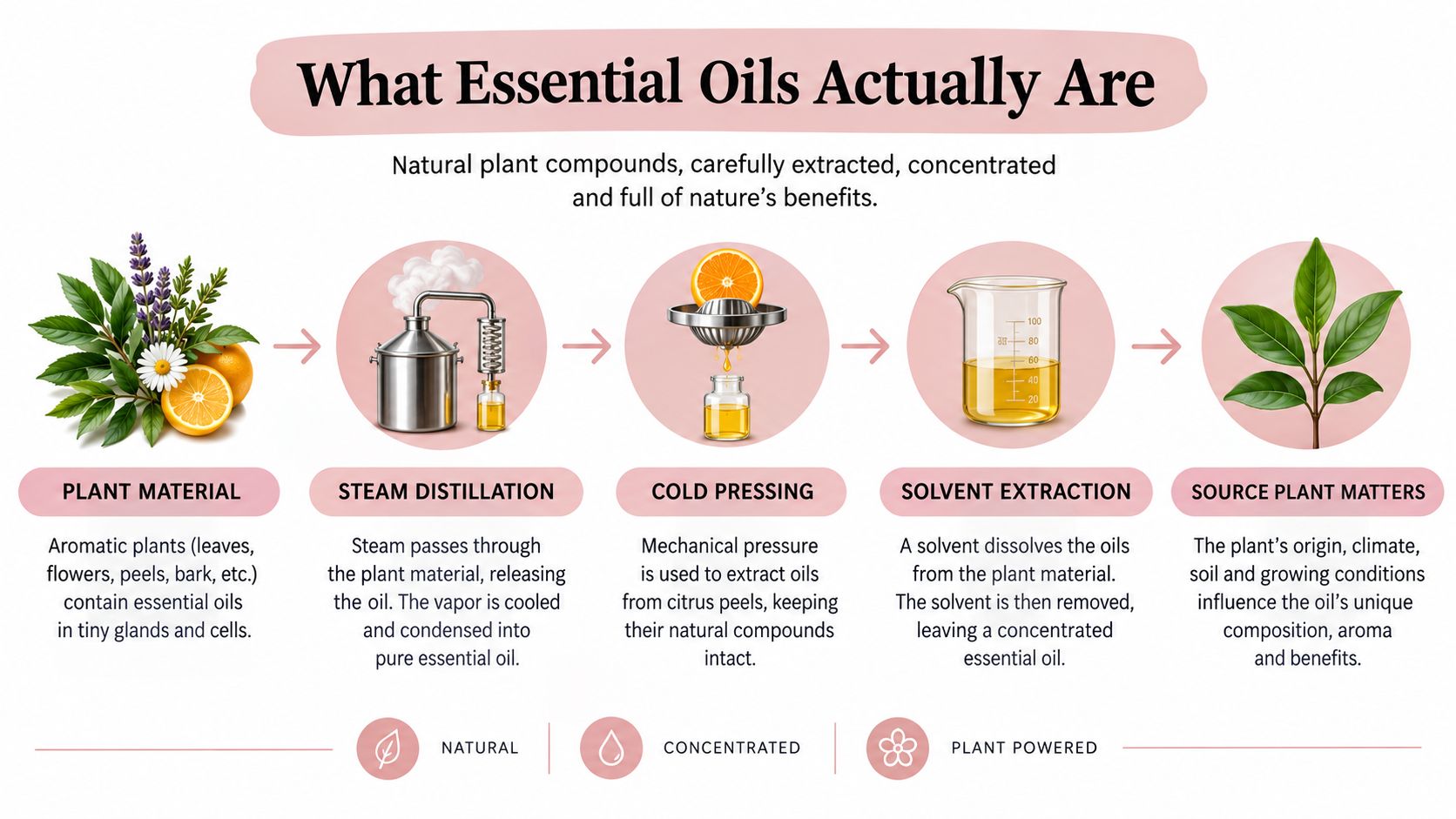
An essential oil is a concentrated collection of aromatic compounds from a plant. These volatile molecules evaporate readily, which is why a small amount can release a noticeable scent into the air. They're not the same thing as the whole plant, a herbal tea or a fixed carrier oil.
The journey from plant to bottle can happen in different ways:
- Steam distillation: steam passes through plant material and carries aromatic compounds into a collection vessel, where the oil separates from the water.
- Cold pressing: commonly associated with citrus peels, this process uses mechanical pressure to release fragrant oil.
- Solvent extraction: a solvent draws aromatic material from delicate plant parts that may not tolerate heat, producing an aromatic extract that may be used in fragrance work.
The method affects the final aroma and composition. So does the plant itself. Lavender grown in Tasmania won't necessarily smell identical to lavender grown in Provence, because climate, soil, harvest timing and the plant's chemistry can differ. That doesn't automatically make one superior. It means “lavender” describes a starting point, not a guarantee of one identical oil.
Why the label matters
A useful label should help you understand what you're buying. Look for the plant's common name, and where available, its botanical name. The source plant and extraction method can tell you more about why two oils with similar names have different aromas, strengths and intended uses.
This is also why a finished home-fragrance product shouldn't be judged as though it's a bottle of undiluted oil. A candle includes wax, a diffuser includes a fragrance base and a room spray has its own formulation. The delivery system changes how the aroma reaches you and how strongly it fills a space.
The Classic Soy Candle is one example of a finished home-fragrance format. It uses 100% pure soy wax, lead-free cotton wicks and Australian-made, essential-oil-based fragrances. Its Coastal range comes in an opaque white glass container, with customised blush-pink packaging and a gold logo.
The Benefits People Talk About Most
People usually ask about essential oil benefits in a very practical way. Can lavender help with sleep? Does eucalyptus make breathing feel easier? Will citrus help with focus? The kind answer is to separate what you notice, what laboratory research suggests and what controlled human evidence can support.
Mood and emotional comfort
Scent is closely tied to memory, so a familiar aroma can feel uplifting, grounding or reassuring. A citrus blend might make a morning kitchen feel brighter, while lavender can become part of a slower evening routine. Those mood effects are often individual and experiential rather than a firm promise that an oil will change mental health.
Sleep and winding down
The Australian Government's review found the most encouraging nuance around sleep quality, health-related quality of life and physical function, but it also judged the certainty of evidence limited overall. That means lavender may be a lovely cue for bedtime, especially when paired with dim lighting and a consistent routine, but it shouldn't be presented as a treatment for sleeplessness.
Focus and clarity
Fresh, green or citrusy scents can help a room feel alert and organised. You might enjoy lemon, peppermint or eucalyptus while working, but personal preference and context do a lot of the heavy lifting here. Claims that an oil reliably improves concentration should be treated carefully unless they're supported by appropriate evidence.
Respiratory comfort
Eucalyptus has a familiar clearing sensation for many Australians. That sensory impression can make a bathroom, laundry or study feel fresh, but feeling clearer isn't the same as treating a respiratory illness. Ventilation, hydration and appropriate medical care still matter.
Antimicrobial interest
Native Australian oils have been studied for functional activity beyond scent. A review of Australian essential oils describes possible antiseptic, anti-inflammatory, antidepressant and insect-repellent applications, while research on lemon myrtle oil examined activity against organisms including Staphylococcus aureus, Escherichia coli, Pseudomonas aeruginosa, Candida albicans and MRSA in research settings. That's interesting chemistry, not permission to use a home fragrance product as a disinfectant or medicine. The background is discussed in this review of purely Australian essential oils.
Ambience, the benefit we can feel
The most dependable benefit is often the simplest one: a room smells the way you want it to smell. Fragrance can make a home feel coastal, cosy, clean, nostalgic or ready for guests. You don't need to turn that everyday pleasure into a medical claim for it to matter.
| Benefit Category | Evidence Strength | Example Oils |
|---|---|---|
| Mood and emotional comfort | Personal experience is common, while evidence varies | Lavender, citrus, native botanicals |
| Sleep quality | Promising but limited-certainty evidence | Lavender |
| Focus and alertness | Mostly experiential and context-dependent | Citrus, peppermint, eucalyptus |
| Respiratory sensation | Familiar sensory effect, not a treatment claim | Eucalyptus |
| Antimicrobial activity | Laboratory findings do not equal proven household outcomes | Tea tree, lemon myrtle |
| Home ambience | A direct sensory and aesthetic benefit | Any fragrance you enjoy |
How the Way You Use Them Changes Everything
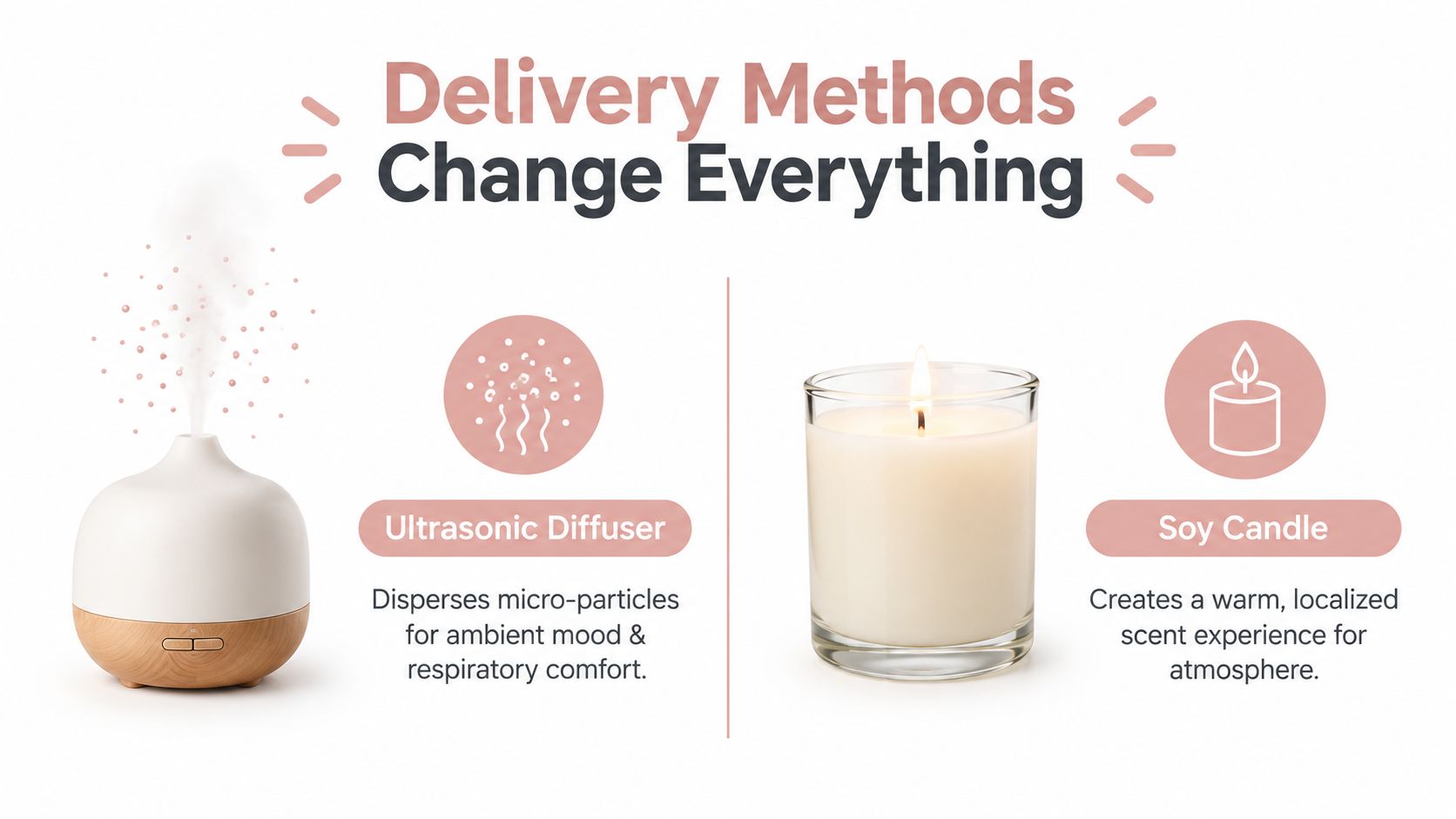
The same aromatic idea can feel completely different depending on how it reaches you. A diffuser creates a moving cloud of scent, a candle adds warmth and light, and a linen spray places fragrance close to the fabric you're about to use. The oil matters, but the format shapes the experience.
An ultrasonic diffuser disperses a fine mist into the room, making it useful for an ambient scent ritual. It suits a living area, meditation nook or home office, although room size, airflow and the diffuser itself affect how far the fragrance travels.
Match the format to the moment
A soy candle offers a slower, more ceremonial release. The flame becomes part of the ritual, so it's a natural fit for dinner, reading or the end of a long day. Always follow candle-care guidance, keep the wick trimmed and never leave a burning candle unattended.
A Room & Linen Spray lands closer to the body and fabric. A light spritz on suitable linens can make a bedtime routine feel finished, while a room spray gives you a quick refresh before visitors arrive. Test delicate fabrics first and follow the product directions.
A Scented Car Diffuser is more contained, which suits a commute or a small personal space. It's a focused fragrance moment rather than a whole-home experience, and you can choose something bright for the morning or warm for the drive home.
Natural incense brings smoke, ritual and a more noticeable sensory presence. It can suit meditation, but it needs careful placement, ventilation and supervision. For a deeper look at how different aromas work together, explore these essential oil blend ideas.
Choose by setting first: a bedroom ritual, a whole-room atmosphere and a short car commute each call for a different kind of scent delivery.
Staying Safe and Playing by the Rules
Essential oils are concentrated, so more isn't better. Never ingest essential oils, and don't apply them directly to your skin unless they've been properly formulated or diluted for that purpose. Australian health authorities warn that essential oils can cause significant poisoning even in small ingested amounts. If someone swallows an oil in Australia, contact the WA Health essential oil safety guidance and the Poison Information Centre on 13 11 26, which operates 24 hours a day, seven days a week across Australia.
For topical aromatherapy, dilution is a safety step, not a fussy extra. Common guidance often sits around 1% to 3%, depending on the person, oil and intended use, but a finished product should be used according to its label. Children, pregnant people, people with allergies and anyone managing a health condition should seek suitable professional advice before using oils on the body.
Keep the home environment sensible
Use diffusers intermittently rather than filling a room continuously. A practical approach is around 30 to 60 minutes followed by a break, with ventilation and attention to how everyone in the home responds. Stop if anyone develops headache, nausea, coughing, skin irritation or breathing discomfort.
Store bottles away from heat and sunlight, and keep them out of reach of children. Pets need special consideration too, particularly cats, which can be sensitive to certain aromatic compounds. Don't assume that “natural” means harmless for every animal.
Understand Australian claims
In Australia, the claim on the label can change how a product is regulated. The TGA explains that a product making cosmetic or relaxation claims may be treated differently from one claiming to relieve sleeplessness or pre-menstrual symptoms. A product making therapeutic claims may need to be listed or registered on the ARTG before supply and must meet relevant quality and labelling requirements. The TGA guidance on therapeutic goods and essential oils is a helpful place to start.
The safest home-fragrance language is clear and modest: fresh, calming, uplifting, cosy, coastal or grounding. Saying a fragrance creates ambience is very different from saying it cures, treats or diagnoses a condition.
Australian Botanicals Worth Falling For
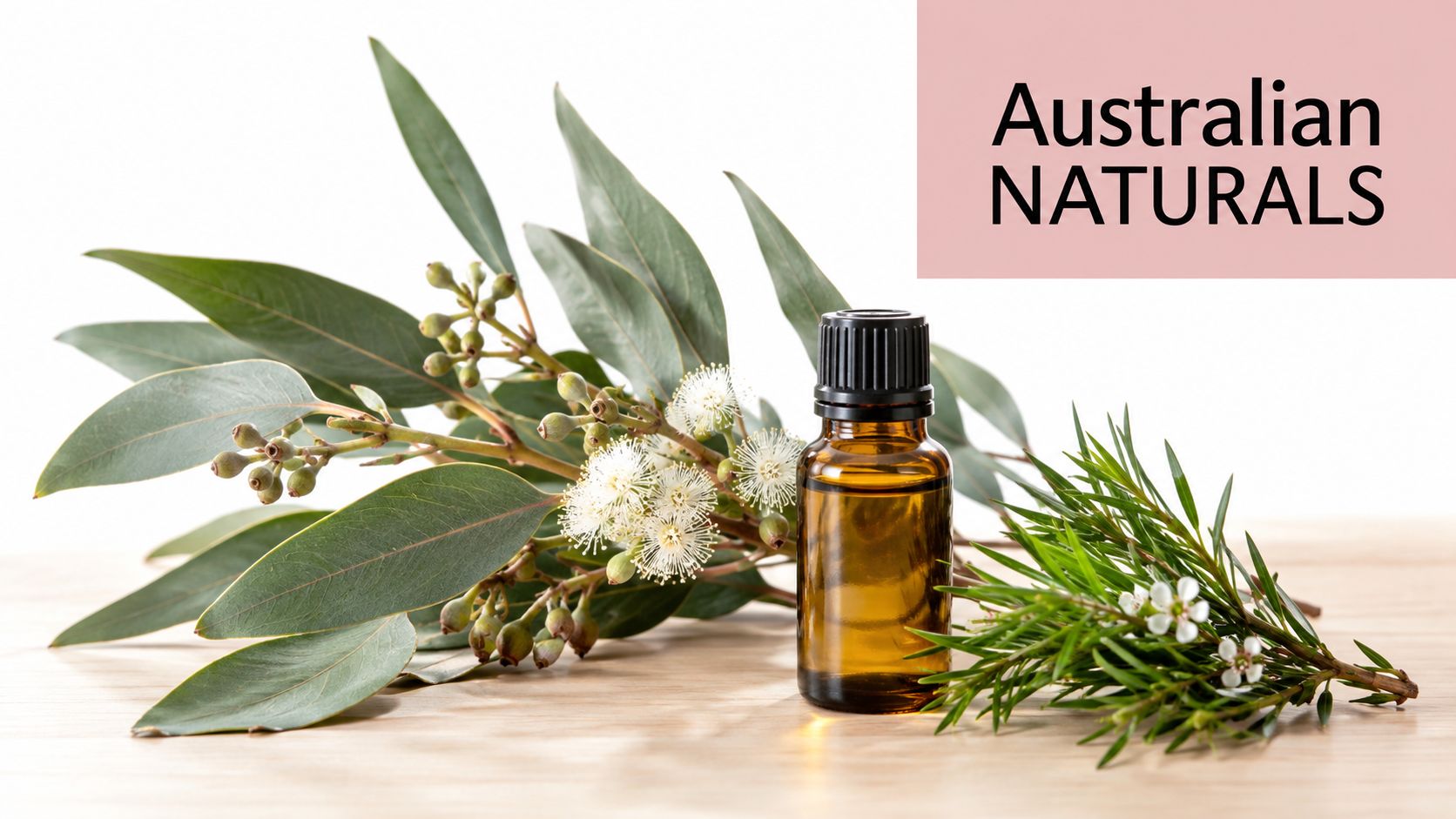
Australian botanicals give home fragrance a voice that feels unmistakably local. Tea tree brings a clean, medicinal brightness. Eucalyptus carries that cool, leafy freshness we recognise from bushland and winter cupboards. Lemon myrtle adds a sharp citrus lift that feels like sunlight on a Queensland morning.
These plants also have a deeper story. A review of purely Australian essential oils notes that Aboriginal Australians recognised the therapeutic and aesthetic value of aromatic species, and that many native oils share chemical features with plants used in other traditional materia medica. That history deserves respect, and it's another reason to avoid reducing every native ingredient to a sweeping “better” or “more natural” claim.
Scent as a sense of place
Lavender isn't strictly native, but it has a beautiful place in Australian gardens and calming evening blends. Sandalwood brings a deep, earthy base note with a long ceremonial history. Together with eucalyptus, tea tree, citrus and native florals, these notes can create a scent that feels grounded without becoming heavy.
Blushing Ivy's Kookaburra & Banksia Candle leans into a woody, honeyed Australian character, with the warmth of dry grasses and golden native blooms. Bush Florals & Native Honey offers a softer interpretation, layering floral sweetness with the feeling of warm sunlight and a jar of local honey on the kitchen bench.
The point isn't that an Australian botanical automatically delivers stronger essential oil benefits. Laboratory activity can be interesting, but it doesn't prove a finished candle or diffuser will produce a medical outcome in your home. The Australian native oil research summary makes that distinction especially important.
For a closer look at the familiar leafy note behind so many Australian scent memories, explore eucalyptus essential oil. Then choose the fragrance that makes your own home feel most like home.
How to Spot a Quality Essential Oil Product
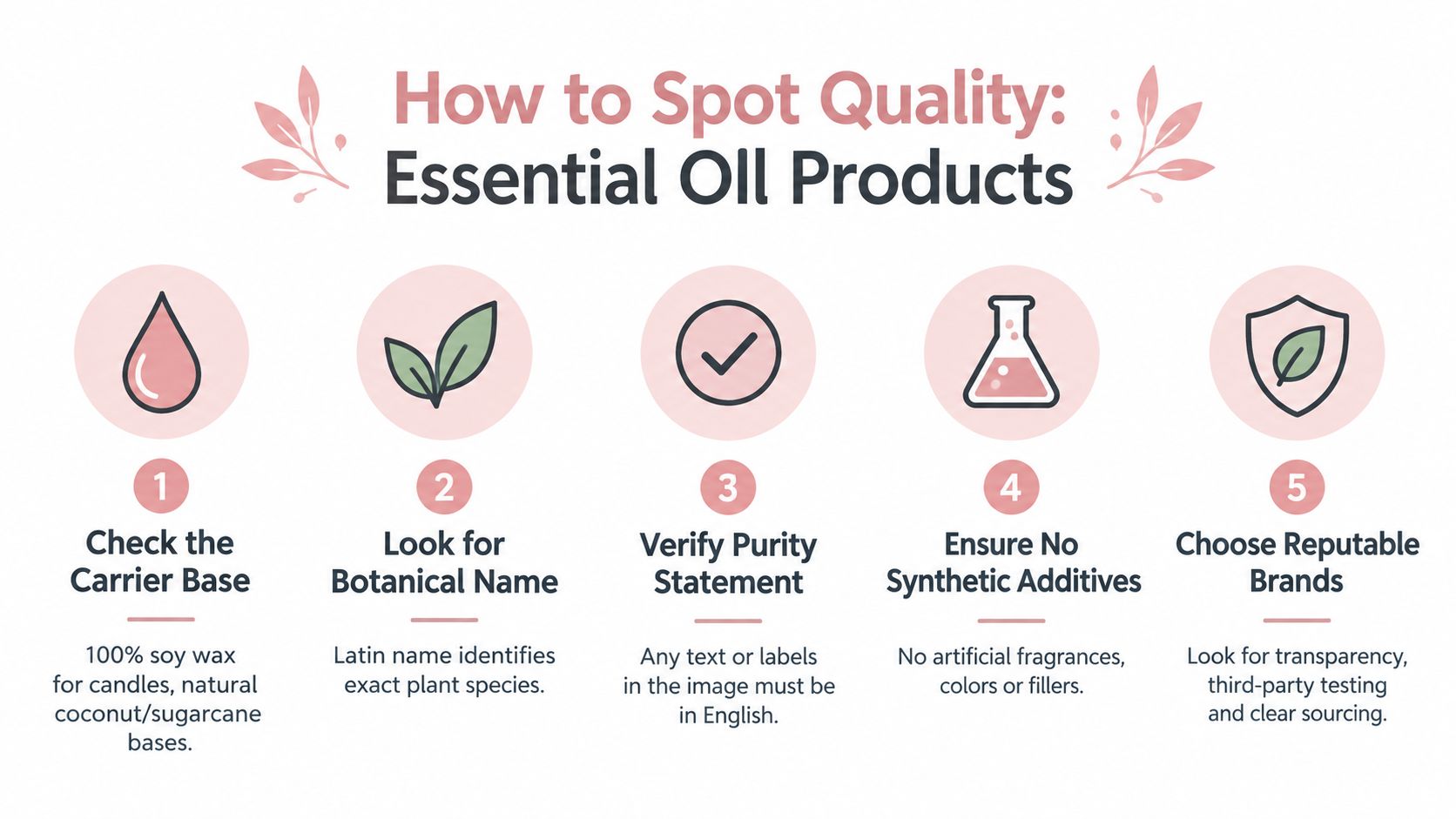
A pretty label is lovely, but it isn't enough to judge a home-fragrance product. Start with the base, then look at the wick, the fragrance description and the maker's information. This little checklist works whether you're comparing a candle online or reassessing something already sitting on your shelf.
- Check the carrier base: For candles, look for 100% soy wax if that's your preference. For diffusers, look for a clearly described base rather than assuming every “natural” product uses the same ingredients.
- Look for the botanical name: A Latin name identifies the plant more precisely than a broad common name. It helps you understand what the maker means by “lavender”, “eucalyptus” or another botanical.
- Verify the fragrance statement: “Essential-oil-based” tells you something different from “100% essential oil”. Some products combine essential oils with other fragrance materials, while “fragrance oil” may leave the composition less clear.
- Inspect the wick and burn guidance: Lead-free cotton or wood wicks are useful details to look for. A clean, even melt pool and clear care instructions suggest the maker has thought about how the product performs.
- Find the maker's details: Australian-made labelling, contact information and batch details can make it easier to ask questions about sourcing, ingredients or safe use.
Natural doesn't mean identical
Essential-oil-based fragrance can smell more nuanced than a single-note oil because a maker may build a rounded blend. A synthetic note isn't automatically unsafe, and an essential oil isn't automatically suitable for every person or pet. The useful question is whether the product explains what it contains and makes claims that match the evidence.
For Blushing Ivy products, the maker describes 100% natural soy wax, lead-free cotton wicks and Australian-made, essential-oil-based fragrances. You can also read the brand's guide to essential oil purity while you compare labels from different makers.
A Soft Place to Land
Return to that first small moment. The kettle clicks off, the room settles, and the fragrance gives you a reason to slow down before the next task calls. That's where the most believable essential oil benefits live, in the everyday details that make a home feel more comfortable, personal and cared for.
Start with the mood you want rather than a promise you need fulfilled. Kookaburra & Banksia brings bright Australian character with woody, honeyed warmth, while Bush Florals & Native Honey feels softer and more comforting for an evening at home. If you're drawn to a more polished, deeper style, the Wild Heath Society range offers refined, masculine-leaning fragrance stories for shared spaces and gifting.
You don't need to build an elaborate ritual straight away. Try one room fragrance, a travel-sized candle or a linen spray and notice how it fits into your day. Maybe it becomes the scent you use while folding washing, reading on the sofa or enjoying that gloriously quiet cup of tea after everyone else has gone to bed.
Home fragrance isn't a performance, and it doesn't need to promise more than it can deliver. A beautiful aroma, a familiar memory and a few minutes of calm are generous little things in their own right.
Blushing Ivy Home Fragrance creates Australian-made, handcrafted soy candles and essential-oil-based home fragrances for those everyday pauses. Visit Blushing Ivy Home Fragrance to explore candles, diffusers, sprays and giftable scents inspired by the coast, Australian botanicals and the simple pleasure of feeling at home.