
The Blushing Ivy Guide to Essential Oil Candles
You're probably here because you've done that familiar little ritual. Tidy the kitchen. Put the kettle on. Light a candle. Then, somewhere between the first flicker and that lovely first waft of scent, you've wondered what's in this thing?
That's such a fair question.
A beautiful home fragrance can make a room feel softer, warmer, more like you. But with essential oil candles, there's also a lot of confusing marketing floating around. Some labels sound wonderfully natural, yet don't tell you much. Others make “essential oil” sound like an automatic tick of approval, when the real story is a bit more nuanced.
As a candle maker on the Sunshine Coast, I think you deserve the honest version. Not the scary version, and not the fluffy version either. Just a clear, friendly guide to essential oil candles, what they are, what they aren't, and what makes one worth bringing into your home.
Table of Contents
- Let's Talk About Essential Oil Candles
- Essential Oil vs Fragrance Oil Candles
- The True Benefits of Natural Candle Scents
- Finding a Genuinely Good Essential Oil Candle
- Matching Scents to Your Mood and Home
- Your Guide to a Perfect Candle Burn Every Time
- Gifting, Styling, and Wholesale Enquiries
Let's Talk About Essential Oil Candles
A lot of us buy candles for the feeling first. We want the bedroom to feel calm at the end of a long day. We want the entryway to smell fresh when friends pop over. We want the lounge room to feel cosy without trying too hard.
That's where essential oil candles become so appealing. The phrase sounds clean, natural, and comforting. It brings to mind botanicals, soft florals, citrus peel, eucalyptus after rain, all those scents that feel grounded and familiar in an Australian home.
But not all candles carrying that language are made the same way. One may be formulated thoughtfully for a safe, steady burn. Another may sound lovely on the label but perform poorly once the flame is lit. Some smell gorgeous cold in the jar, then disappear once burning. Some are overloaded and end up smoky or harsh.
A good candle doesn't just smell nice in the jar. It burns evenly, carries scent properly, and feels pleasant to live with.
When I talk about candles, I always come back to that balance between scent, safety, and performance. You shouldn't have to choose between a beautiful aroma and a well-made product.
And because this whole space can get a bit jargon-heavy, let's keep it simple. We'll sort out the difference between essential oil and fragrance oil candles, discuss the “natural equals better” myth, look at what quality really means, and then get to the fun part, choosing scents that suit your home and mood.
Essential Oil vs Fragrance Oil Candles
Some of the confusion starts with language. “Natural”, “essential oil”, “essential oil-based”, and “fragrance” are often tossed around like they all mean the same thing. They don't.
What people usually mean
Think of it a bit like orange juice.
A 100% essential oil candle is closer to juice pressed straight from the fruit. It comes directly from plant material and carries the aromatic compounds from that source. That can create beautiful, layered scents, but those oils can also be delicate when exposed to heat.
An essential oil-based candle usually means the fragrance includes essential oils as part of the blend. That matters because candle making isn't only about what sounds pure on paper. It's also about whether the scent behaves properly in wax and during burning.
Then there are synthetic fragrance oil candles, which are created for scent performance and range. They can offer highly specific or imaginative scents that nature doesn't neatly provide on its own.
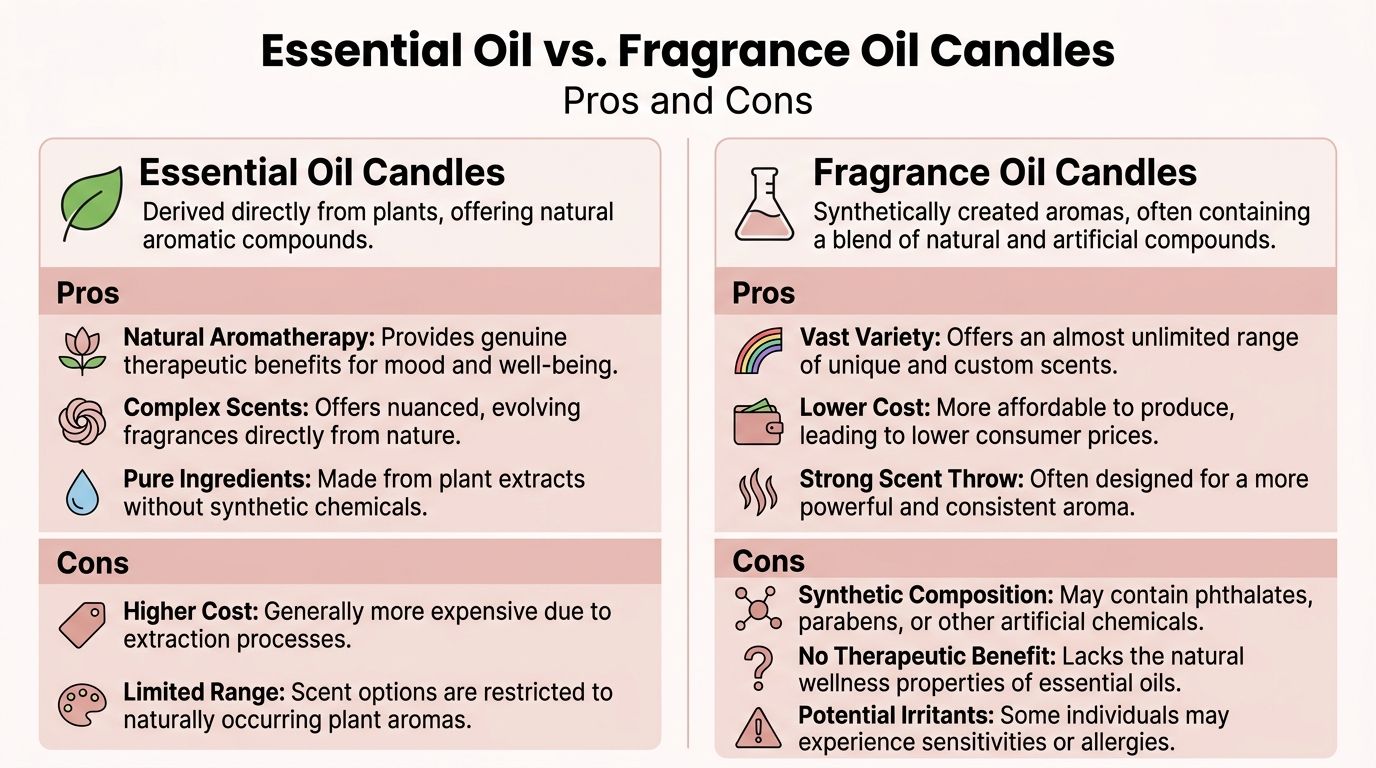
Here's the plain-English comparison:
| Candle type | What it usually means | Strengths | Watch-outs |
|---|---|---|---|
| 100% essential oil | Scent comes from plant-derived essential oils | Botanical character, often more nuanced | Can be heat-sensitive and less stable |
| Essential oil-based | Fragrance blend includes essential oils | Better balance of scent throw and consistency when well formulated | Quality varies a lot by maker |
| Synthetic fragrance oil | Aroma compounds created for performance | Wide scent variety and often stronger throw | Not everyone wants synthetic components in the home |
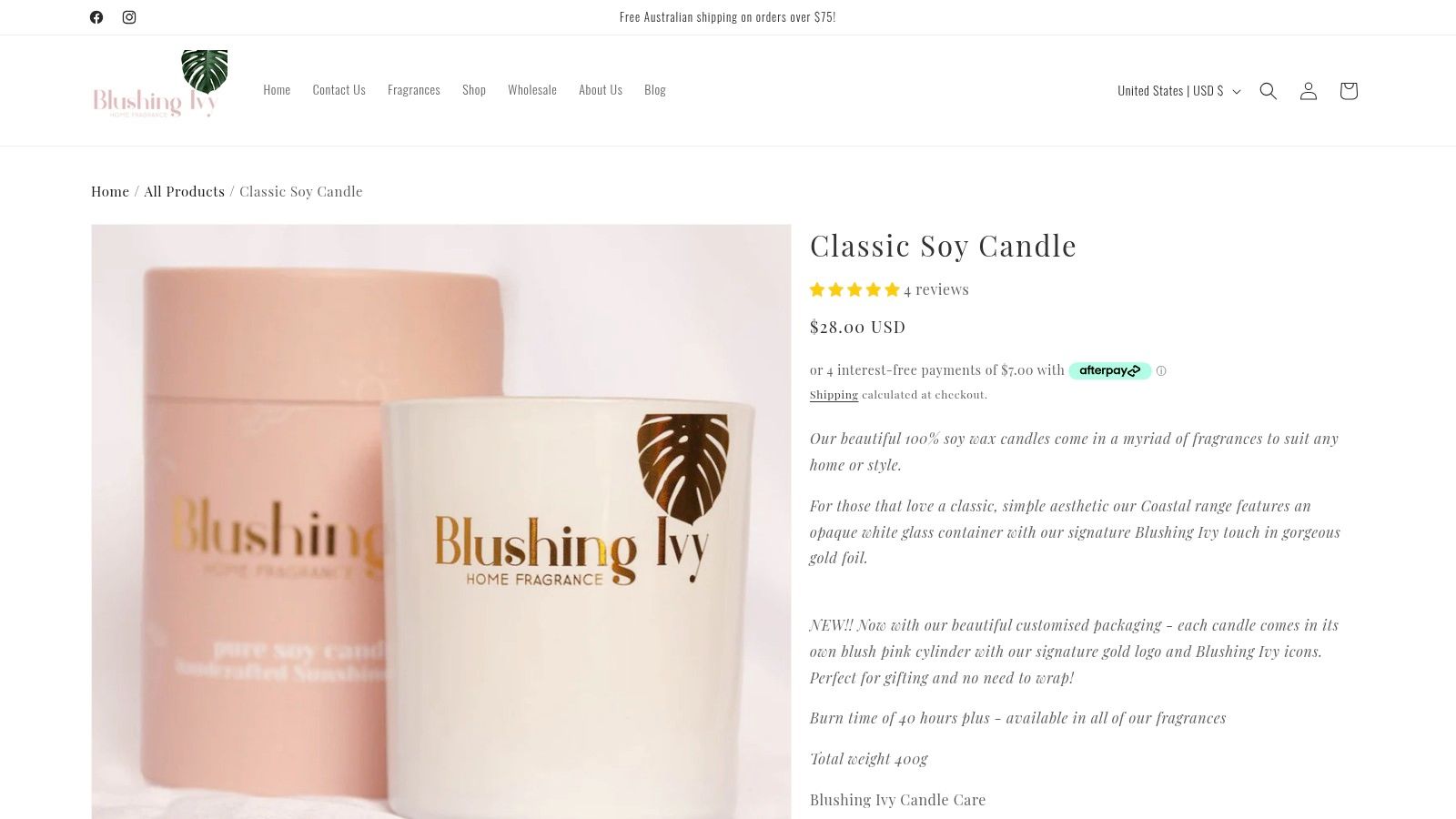
A factual example from our own range is the Classic Soy Candle. It uses 100% pure, vegan friendly soy wax, lead free cotton wicks, and Australian made, essential oil based fragrances. That “essential oil-based” wording matters because it tells you the product isn't pretending to be something else.
The health halo can be misleading
This is the bit many brands skip over.
As noted in this discussion of myths and misconceptions around candle oils, many marketers promote essential oil candles as safer, but that ignores the reality that essential oils are heat-unstable and can degrade when burned. Poor formulation is the issue, not the oil type itself, and some essential oils can be toxic to pets or irritating when combusted improperly.
So no, “natural” doesn't automatically mean perfect.
What matters more is whether the candle maker understands how the oil behaves in wax, how much to use, what wick suits it, and how the finished candle performs once lit. A thoughtfully formulated essential oil-based candle can make much more sense for everyday use than a poorly made candle chasing a natural label.
Practical rule: judge candles by the full formulation, not by one comforting phrase on the front label.
The True Benefits of Natural Candle Scents
When natural candle scents are done well, they have a softness that many people really love. They don't always hit you over the head. Instead, they can feel like part of the room, almost like the scent belongs there.
Scent can shift the mood of a room
A lavender-leaning candle can make a bedroom feel gentler by evening. Citrus can make a kitchen feel freshly opened up, like sunlight through clean windows. Eucalyptus and herbal notes often bring that spa-like, exhale-and-drop-your-shoulders feeling.
That's part of the charm of essential oil candles and essential oil-based fragrances. They often connect beautifully with memory and mood. One scent can take you straight back to a beach holiday, a bush walk, a garden after summer rain, or your nan's linen cupboard in the nicest possible way.
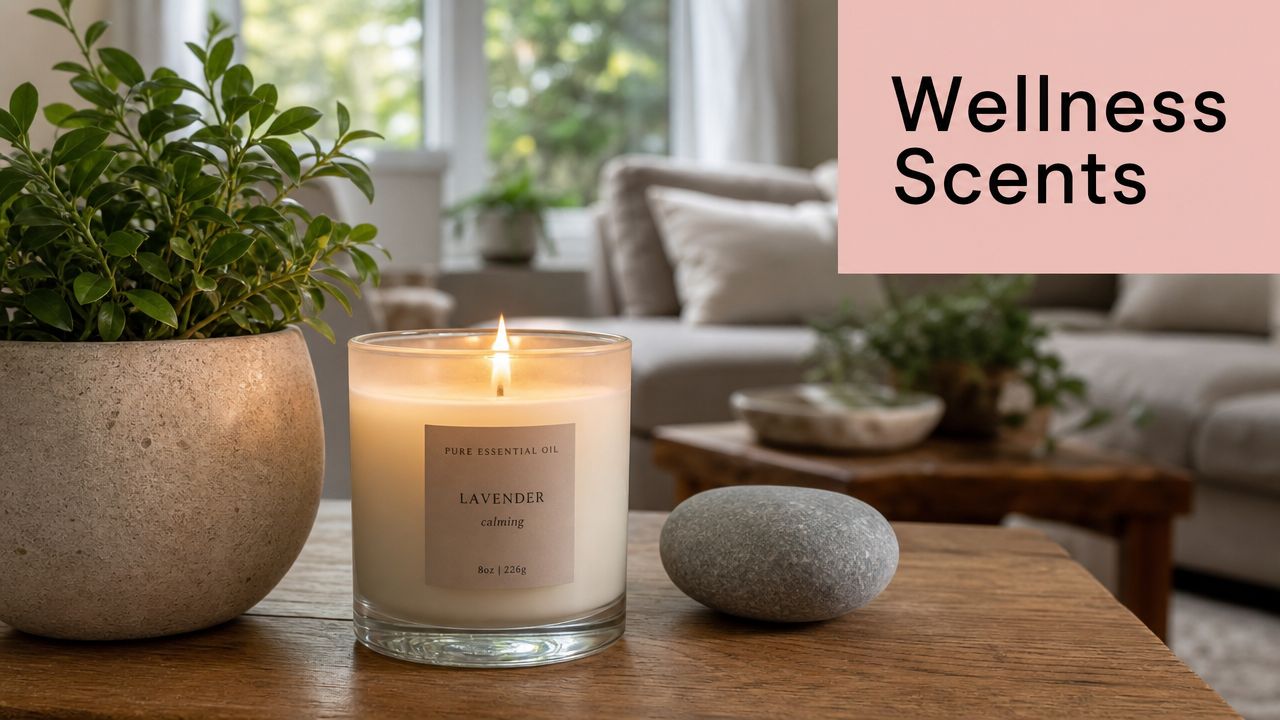
That said, informed wellness matters more than buzzwords. In a study including Australia, 15.2% of scented candle users reported headaches and 8.9% experienced shortness of breath, according to ABC reporting on fragranced products and indoor air quality. That's a good reminder to choose candles carefully, ventilate your space, and be mindful if you or someone in your home is sensitive to fragrance.
Subtle can be a good thing
One thing that catches people off guard is that natural-smelling candles can be gentler than highly synthetic scents. Some shoppers expect the whole room to explode with fragrance the second the wick is lit. But a softer throw isn't always a flaw.
Sometimes a more measured scent feels calmer, more elegant, and easier to live with every day.
A few signs you're choosing well:
- Balanced aroma: The scent feels present without becoming sharp or cloying.
- Comfort in the room: You can enjoy it while reading, cooking, or chatting without feeling overwhelmed.
- Cleaner ingredient story: Many people prefer options free from parabens, phthalates, and heavy synthetic blends.
- Better fit for rituals: Gentle fragrance often suits winding down, bathing, journalling, or slow weekend mornings.
Natural candle scents can be lovely. They just need to be chosen with open eyes, not rosy assumptions.
Finding a Genuinely Good Essential Oil Candle
If you're standing in front of a shelf or scrolling online, the label can look beautiful and still tell you very little. A quality candle gives you clues about how it's made.
A simple quality checklist
Start with the basics. They matter more than fancy copy.
- Wax matters: Look for 100% soy wax if that's what you prefer, rather than vague wording that only says “soy blend”.
- Wick matters too: A lead-free cotton wick is a strong sign the maker has thought about burn quality.
- Fragrance wording should be clear: “Essential oil-based” is more transparent than a dreamy label that never explains the scent system at all.
- Care instructions are a good sign: Makers who include burn guidance usually care how the candle performs in your home, not just how it looks in a product photo.
If you'd like a closer look at how makers talk about ingredient quality, this piece on essential oil purity is a helpful read.
The technical bits that matter
Now, candle making gets nerdy, but I promise it's useful.
For an essential oil candle to be safe in Australia, the oil's flashpoint must be above 65°C to reduce ignition risk, and the oils should be added only after the wax has cooled to 49–54°C so the scent doesn't evaporate too quickly, according to Landema's technical guidance on essential oils for candle making.
That sounds very laboratory-meets-kitchen, but here's what it means for you.
If the maker adds the oils at the wrong temperature, a candle can lose a lot of its fragrance before it even sets in the jar. If the oil itself isn't suited to heat, the scent can turn weak, odd, or unstable during burning.
The amount of oil matters too. For soy-based essential oil candles, the recommended fragrance load is 1–5% of total net weight, with 2–10g of essential oil blend for a 200g candle, according to Lemon Canary's guidance on essential oil blends in handmade natural candles. More oil doesn't always mean a better candle. Go too heavy and you can end up with excessive smoking and poor combustion.
The best candle formulas are often restrained, not overloaded.
A few questions worth asking before you buy:
- Is the wax clearly identified?
- Does the brand explain the wick?
- Does the scent language sound transparent, or just trendy?
- Are there clear candle care instructions?
- Does the maker seem to understand performance, not only aesthetics?
That's usually where the quality difference shows up.
Matching Scents to Your Mood and Home
Once you know what makes a candle well made, choosing the scent becomes much more fun. This part is less about rules and more about atmosphere.
Choose by feeling, not just fragrance family
Some people shop by category. Floral, woody, citrus, fresh. That's fine, but I think it helps to start with the mood you want the room to hold.
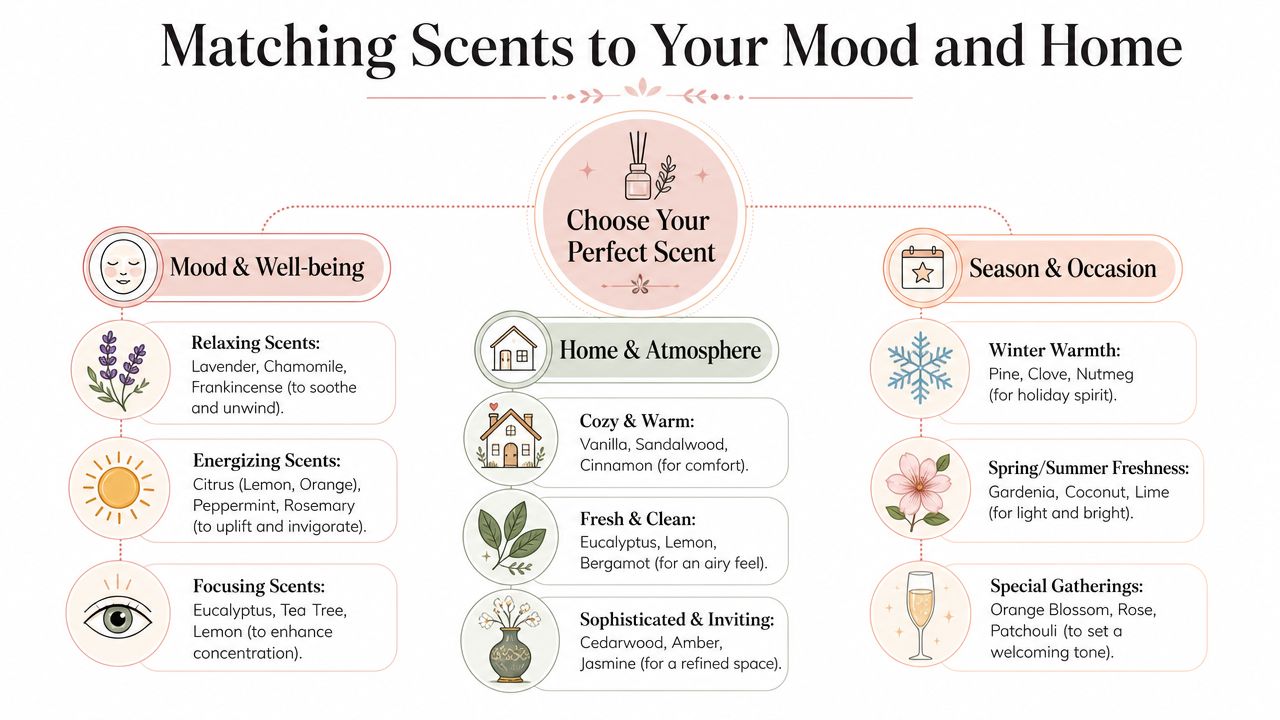
If you want the house to feel calm, reach for soft florals, lavender-style notes, or something resinous and grounding. If you want energy, look for crisp citrus, herbs, or a bright eucalyptus edge. For evenings, woods and warmer creamy notes often make a room feel settled and intimate.
For readers who love fresh Australian-feeling fragrance, this article on eucalyptus essential oil is a lovely place to start thinking about that clean, airy scent profile.
A few very Australian scent moments
I always love scents that feel tied to place.
A candle like Kookaburra & Banksia Candle suits homes that lean earthy, textured, and relaxed. It feels right beside timber, linen, and a big bowl of gum leaves on the table. Australiana Fairytale Candle has that transportive quality too. The kind of scent that feels like dusk, warm air, and the soft rustle of the garden settling down.
Then there's the Wild Heath Society range, which has a more masculine and refined mood. Think moodier corners of the home, a study, a guest room, or a shelf styled with darker ceramics and old books.
Here's an easy way to match scent to space:
- Bedroom: Choose gentle, soothing notes that help the room exhale.
- Kitchen or entryway: Fresh, citrusy, or herbal scents keep things lively and clean-feeling.
- Living room: Go for rounded, welcoming scents with warmth and depth.
- Gift giving: Pick something versatile and polished, especially if you're not sure what the recipient normally burns.
Some scents are statement-makers. Others are quiet background music. Both have their place.
A home doesn't need every room to smell the same. In fact, it's often nicer when each space has its own little personality.
Your Guide to a Perfect Candle Burn Every Time
A beautiful candle can still disappoint if it isn't burned properly. Most candle problems people blame on the product are burn-care issues, especially on that very first light.
The golden rules
The first burn sets the tone. If you blow the candle out too early, you can create tunnelling. That's when the wax burns straight down the middle and leaves a ring around the sides.
For the first burn, let the wax pool reach the edge of the container. In the Classic Soy Candle care notes, that's described as helping to “set the memory” of your candle, and it's such a simple tip that makes a big difference.
A few more habits are worth keeping:
- Trim the wick: Keep it at 2–5mm before lighting. That helps minimise soot and keeps the flame more controlled.
- Keep it out of draughts: Air movement can make the candle burn unevenly and too quickly.
- Burn with care: Keep candles away from children and pets, and never leave a burning candle unattended.
- Reuse mindfully: Once finished, many candle containers can be cleaned and reused beautifully around the home.
If you want a handy tool for this little ritual, take a look at a candle wick trimmer. It's one of those small things that makes candle care feel much easier.
A quick visual guide
Sometimes it helps to see proper candle care in action.
Good candle care isn't fussy. It's just a few small habits that help you get the scent, burn quality, and life out of the candle that the maker intended.
Gifting, Styling, and Wholesale Enquiries
Candles sit in that lovely sweet spot between practical and personal. They're useful, yes, but they also feel thoughtful. They say, “I wanted you to have something beautiful for your space.”
Candles as gifts and home styling pieces
If you're gifting, a candle works for birthdays, housewarmings, thank-yous, and those quiet “just because” moments. Packaging matters here, and so does presentation on the shelf at home. A candle can become part of a bedside table, a bathroom tray, or a coffee table grouping with a stack of books and a little ceramic dish.
For styling, I like keeping it simple:
- Pair with texture: Linen, stone, timber, and glass all make candles look more at home.
- Use odd-number groupings: A candle with a small vase and a tray often looks balanced without feeling overdone.
- Match the mood of the room: Fresh scents in airy spaces. Richer scents where you want warmth and depth.
For a more statement-style piece, the Crystal Palace Candle is a double wicked candle made with 100% pure soy wax, lead free, sustainably sourced cotton wicks, and essential oil based, Australian made fragrance. It's described as a table centrepiece, which gives you a good sense of where it fits in the home.
For boutiques and wholesale buyers
If you own a boutique or curate products for a lifestyle space, home fragrance is a category worth watching. The Australian home fragrance market was valued at USD 231.8 million in 2024 and is projected to grow at a 10.91% CAGR through 2035, with scented candles holding the largest revenue share, according to Decision Advisors' Australia home fragrance market overview.
That lines up with what many shoppers already want. Products that feel premium, giftable, and aligned with a more considered home.
Small-batch, Australian-made candles can be especially appealing in that setting because they give customers a stronger sense of story and place. Sunshine Coast-made fragrance, Australiana-inspired scents, and thoughtfully presented vessels all help a product feel distinct on the shelf.
Retailers don't just stock a scent. They stock a mood, a gift option, and a reason for customers to linger.
If you're buying for your shop, it makes sense to look for a clear brand point of view, consistent product presentation, and a fragrance range that can suit different customers without feeling generic.
If you'd like to explore the collection, browse gift-ready pieces, or chat about stocking our range, you're warmly invited to visit Blushing Ivy Home Fragrance. There's plenty to discover, from candles and diffusers to room scents and Australiana-inspired favourites, all handcrafted on the Sunshine Coast.