
Essential Oil Candles Australia Your Feel Good Guide
There's a particular sort of happiness in walking through the front door after a salty afternoon by the coast, dropping your beach bag, and lighting a candle while the windows let in a soft Queensland breeze. Perhaps you want something fresh and green after a busy day, or something warm and woody while rain taps against the roof. Either way, scent can turn an ordinary room into a place that feels more like yours.
That's the appeal of essential oil candles in Australia. They bring fragrance, glow and a little ritual into everyday life, whether you're styling a coffee table, winding down in the evening or choosing a thoughtful gift. But “natural” doesn't mean every candle behaves in the same way, and a beautiful scent still needs careful formulation and safe burning.
This guide keeps things simple. We'll look at what essential oil-based candles are, how soy wax affects the experience, why scent throw can be gentler than expected, how to choose a fragrance that suits your home, and what to check before buying. There'll be a little Australian bushland, a little scent memory and plenty of practical candle care along the way.
Table of Contents
- Introduction to Essential Oil Candles in Australia
- What Essential Oil Candles Are and How They Work
- Essential Oil Candles Versus Other Candle Types
- How to Burn Essential Oil Candles Safely and Cleanly
- How to Choose Scents and Blends You Will Love
- Sustainability and Ingredient Checks for Australian Shoppers
- Buying and Gifting Essential Oil Candles in Australia
Introduction to Essential Oil Candles in Australia
An essential oil candle combines wax, a wick and fragrance derived from aromatic plant materials. At Blushing Ivy, the fragrance is essential oil-based and Australian-made, paired with 100% natural soy wax. The result is designed for atmosphere rather than a perfume-shop blast. Think of fragrance moving through a room like a gentle coastal wave, building gradually as the wax melts.
Australian shoppers are increasingly drawn to candles that feel connected to wellness, gifting and interior style. That interest sits within a growing home fragrance market. Australia's home fragrance market was valued at USD 264.5 million in 2025 and is projected to reach USD 588.3 million by 2033, with a projected 10.5% CAGR from 2026 to 2033, according to Grand View Research's Australia home fragrance market outlook. Scented candles are identified there as the fastest-growing product segment.
The wider Australian candles market is also projected to grow from USD 316.9 million in 2025 to USD 627.1 million by 2034, at a projected 7.64% CAGR, showing that demand has room to develop beyond a short-lived decorating fad. For a small Australian brand, that creates lovely possibilities, from a Sunshine Coast-inspired candle on a bedside table to an Australiana gift sent interstate.
A gentle truth: an essential oil candle isn't a substitute for ventilation, and it shouldn't be sold as a health treatment. It's a sensory product, a mood-setting object and a small pleasure to enjoy responsibly.
The most satisfying choice usually comes from matching three things: the scent you love, the space where you'll burn it and the way you'll use it. A bright citrus blend may suit the kitchen after cleaning, while a floral or woody profile can make an evening feel slower and softer. Once you understand the basics, choosing becomes much less mysterious.
What Essential Oil Candles Are and How They Work
A candle looks wonderfully simple, but several small decisions determine how it behaves.
The ingredients have different jobs
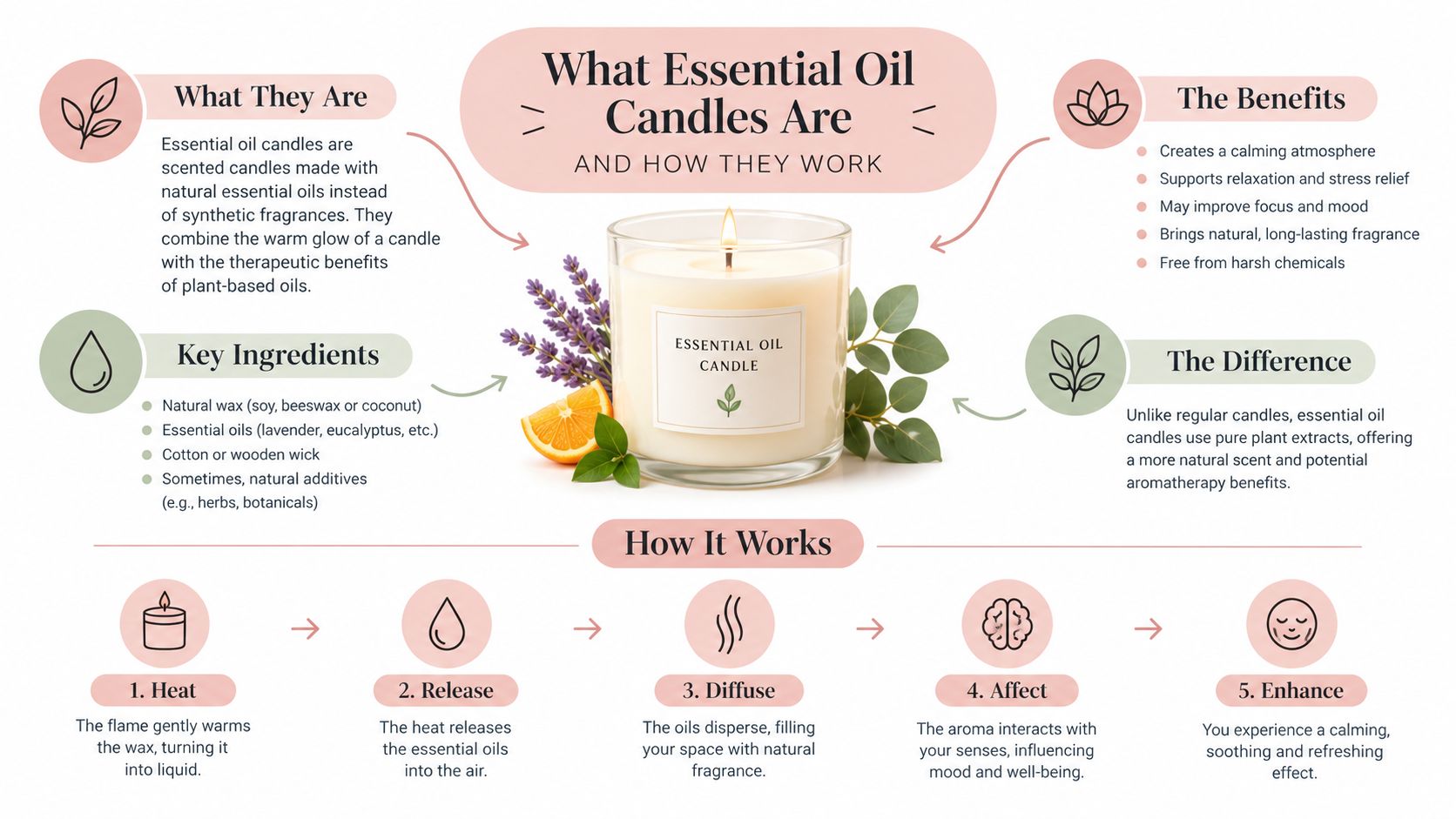
Soy wax is the fuel. It melts around the wick and creates the liquid pool that carries fragrance into the air. Soy is renewable and biodegradable, and Australian candle-making guidance commonly describes it as producing very little soot compared with petroleum-based waxes. That doesn't make any candle emission-free, but it explains why soy is often chosen by people who prefer a plant-based wax.
Essential oil-based fragrance provides the character. Plant-derived aromatic materials can smell fresh, herbaceous, floral, woody or citrusy, depending on the blend. They can also behave differently under heat, so a formulator has to consider more than whether an oil smells gorgeous in the bottle.
The wick controls the flame and the rate at which wax reaches it. Blushing Ivy candles use lead-free cotton wicks. Wick size needs to suit the vessel, wax and fragrance load. Too small, and the candle may struggle to melt evenly. Too large, and the flame and melt pool may become excessive.
Why the melt pool matters
When you light the candle, the flame warms the wax around the wick. That liquid wax travels up the wick, where heat releases fragrance into the room. The scent you notice while the candle is burning is often called hot throw. It depends on the fragrance materials, wax, wick, vessel shape, room size and airflow.
A wide, open vessel may release scent differently from a narrow jar. A double-wicked centrepiece can create a larger melt pool than a small single-wick candle. The amount of fragrance also matters, but more isn't automatically better. With essential oils, a higher load can increase combustion risk, so careful dosing and documented burn testing are more sensible than chasing maximum strength.
The Classic Soy Candle illustrates the everyday format clearly. It uses 100% soy wax, a lead-free cotton wick and Australian-made essential oil-based fragrance in a 400g candle with a stated burn time of 40 hours plus. Its care guidance recommends allowing the first wax pool to reach the container's edge, keeping the wick between 2 and 5mm, and burning it away from draughts, children and pets.
A candle is a small piece of engineering
The prettiest vessel won't compensate for an unsuitable wick, and a beautiful oil blend won't perform well if the wax pool can't develop properly. Good candle-making balances scent character, flame behaviour, vessel design and burn testing.
That's why a well-made essential oil candle may offer a softer, more nuanced experience than a heavily fragranced alternative. It can be enough to make the living room feel fresh after a warm day, without turning the room into a fragrance fog.
Essential Oil Candles Versus Other Candle Types
Choosing between candle types is easier when you separate materials from expectations. A soy candle with essential oil-based fragrance can feel gentle and plant-focused, while a paraffin or blended fragrance candle may offer a stronger or more familiar scent profile. Neither label tells you everything about the finished product.
Soy is often preferred because it's renewable, biodegradable and commonly associated with low soot compared with petroleum-based waxes. However, “clean-burning” isn't the same as “no emissions”. Australian indoor air quality reporting notes that burning candles can generate ultra-fine particulate matter, while essential oils can contribute to nanoparticles and pollutants such as formaldehyde once released into indoor air. The same ABC News explainer on candle scents and indoor air quality recommends moderation and ventilation, including when using non-paraffin candles.
| Feature | Essential Oil Soy Candle | Paraffin or Blended Candle |
|---|---|---|
| Wax character | Plant-based soy wax is renewable and biodegradable | Paraffin is petroleum-based, while blends combine different waxes |
| Fragrance feel | Often nuanced, botanical and layered | May be broader, stronger or more perfume-like |
| Scent throw | Can be softer and more variable, depending on formulation | Can be stronger, though performance still depends on wick, wax and fragrance |
| Soot expectations | Soy is commonly chosen for very low soot compared with petroleum-based waxes | Burn behaviour varies by wax, wick, vessel and care |
| Formulation priority | Conservative fragrance loading and burn testing matter because essential oils can affect combustion | Fragrance and wax compatibility still require testing |
| Best suited to | People seeking plant-based materials and a gentler scent ritual | People prioritising a particular scent strength or fragrance style |
Essential oils also aren't automatically safer or healthier because they come from plants. The technical issue is heat. Essential oils have relatively low flash points, and Australian candle-making guidance warns that high concentrations of pure essential oils can increase the chance of self-ignition or catching fire during burning. For a fuller discussion of how the two fragrance approaches differ, Blushing Ivy's article on essential oil versus fragrance oil is a useful companion read.
If you're exploring natural gifting ideas, a resource on natural skincare candles for moms can also help you think about the wider appeal of plant-led personal and home products. Just keep the promise realistic. A candle can smell beautiful and use thoughtful materials, but it shouldn't make medical or indoor-air claims that the product can't support.
How to Burn Essential Oil Candles Safely and Cleanly
Candle care starts before the first evening burn. The first melt pool helps establish the candle's “memory”, which is the pattern the wax follows as it melts. If you extinguish the candle before the pool reaches the edge, it may later keep melting in that smaller shape and leave wax around the sides.
Your easy care routine
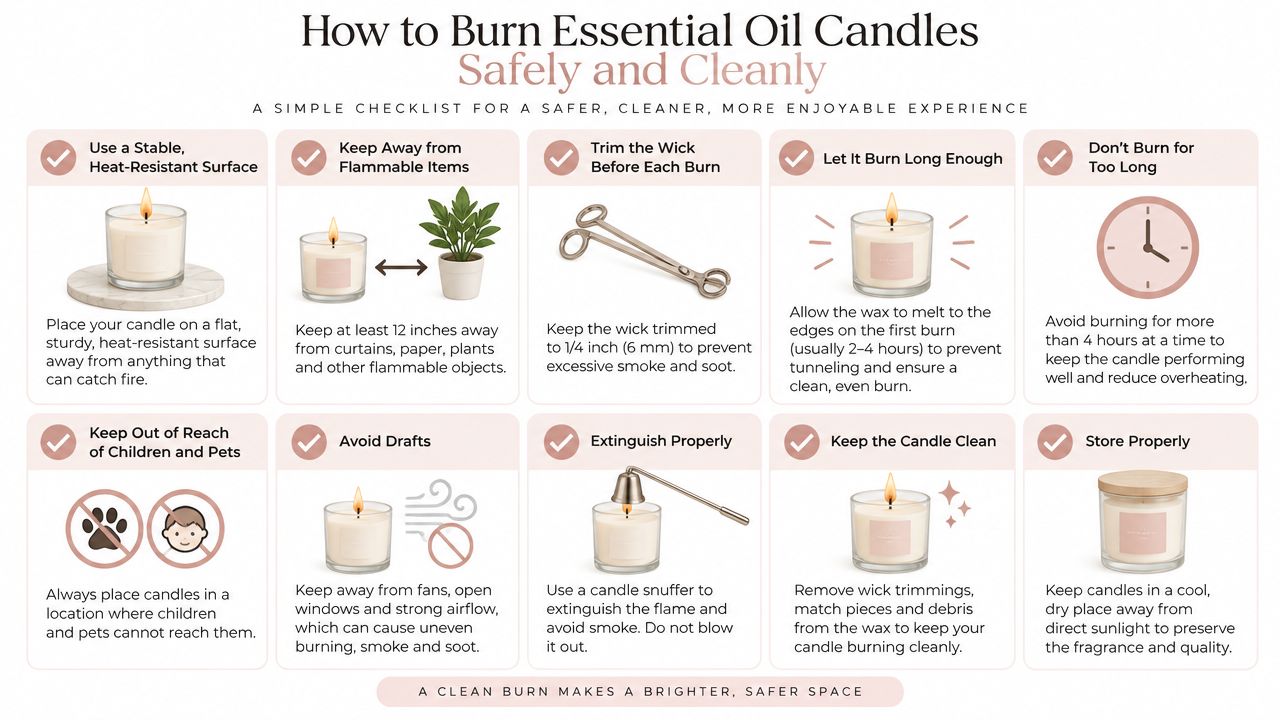
- Prepare the wick. Trim it to 2 to 5mm before lighting. This supports effective burning and helps minimise soot build-up.
- Choose a calm position. Keep the candle on a stable, heat-resistant surface, away from draughts, curtains, paper, children and pets. A breeze can make the flame flicker, create uneven melting and increase the risk of nearby materials catching heat.
- Let the first pool reach the edge. Give the wax time to melt evenly across the container before extinguishing the first burn. Don't rush this part. A candle with a wonky memory is a little like a beach towel that never quite dries properly.
- Keep watch. Never leave a burning candle unattended, even if you're only stepping outside to bring in the washing.
Airflow is part of the experience
A candle can be made with soy, beeswax or another non-paraffin wax and still affect indoor air. Ventilation matters because burning candles can produce fine particles, and fragrance compounds interact with indoor air. Moderate use, an open window when practical or suitable indoor air filtration can help keep the room feeling comfortable.
Pay attention to the room rather than treating every scent as interchangeable. A small bedroom, a large open-plan living area and a boutique display space have different airflow and fragrance needs. If the scent feels too intense, extinguish the candle and air the room. A lovely fragrance should invite you to linger, not make you hunt for the nearest window.
For more background on why soy wax is popular with Australian makers, see this guide to soy wax candles in Australia.
The Victoria fire-safety guidance summarised in Australian candle business advice is clear about keeping candles unattended, draughts, children, pets and combustible materials. There's no need to be anxious, just attentive. A candle is a live flame, and treating it with respect lets you enjoy the glow properly.
Here's a practical visual reminder for the next time you light one:
How to Choose Scents and Blends You Will Love
Scent names can be helpful, but your nose usually makes the final decision. A fragrance may list citrus, floral or wood notes, yet what matters is the little scene it creates in your mind. Does it feel like lemon zest on a sunny kitchen bench, eucalyptus after rain or warm timber in a quiet room?
Read a fragrance like a landscape
Top notes are usually the first impression. Citrus, eucalyptus and fresh herbs can feel bright and airy, like opening the doors to let a coastal breeze through.
Middle notes give the scent its personality. Florals, soft spices and green botanicals can create the heart of a blend, much like flowering shrubs along a bush track.
Base notes linger underneath. Woods, amber, musk-like botanical tones and creamy accords can make an evening fragrance feel grounded and cosy.
Match the scent to the room
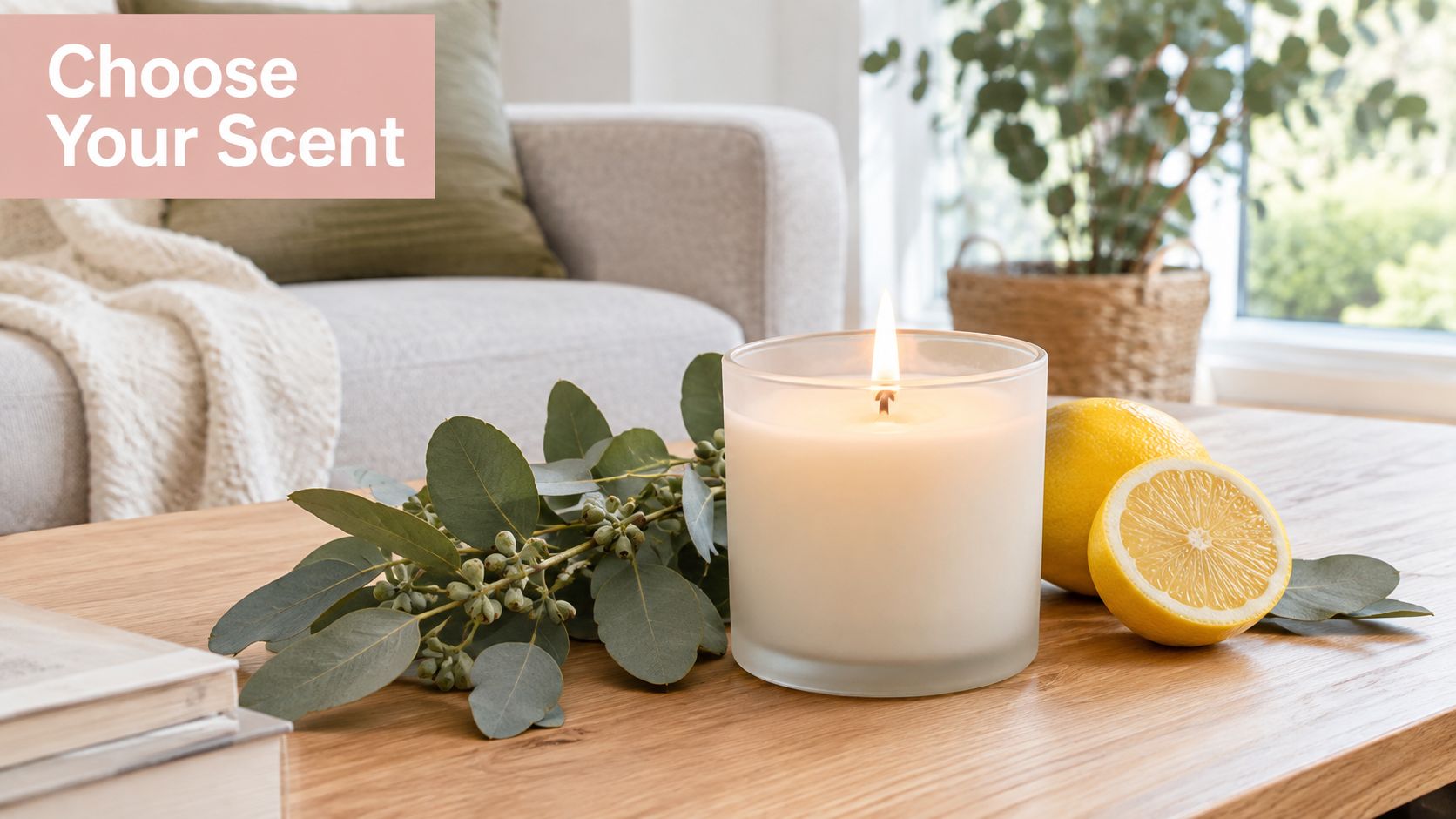
For a kitchen or entryway, try a fresh citrus or herbal direction. Lemon, lemongrass and eucalyptus can feel uplifting after cooking or cleaning, especially when the room has good airflow.
A bedroom or reading nook may suit lavender, soft florals or a gentle woody blend. These scents don't need to announce themselves from the driveway. They can sit in the background while you fold laundry, read a few pages or settle in after sunset.
For a living room, look for a fragrance with layers. Bush Florals and Native Honey can suggest warm Australian flora and golden sweetness. Kookaburra and Banksia brings a more distinctly local story, like a dry bush track bordered by textured banksia blooms and bright afternoon light. Golden Wattle can feel sunny and nostalgic, with the cheerful character of an Australian spring morning.
Let memory do some of the choosing
The best scent isn't always the trendiest one. It might be the fragrance that reminds you of your grandmother's linen cupboard, a family holiday, a garden after rain or sunscreen and salty air on a hot summer afternoon.
If you're shopping online, start with the room and mood you want, then choose the note family. For gifting, select a scent with a sense of place or an easy everyday character. You can also rotate fragrances with the seasons, using lighter citrus and green profiles in warm weather and creamy, floral or woody blends during cooler evenings.
Scent memory is personal. Choose the candle that takes you somewhere lovely, not simply the one with the most impressive list of notes.
Sustainability and Ingredient Checks for Australian Shoppers
A candle's sustainability story should give you details you can check. Words such as “natural”, “clean” and “eco” may sound reassuring, yet they do not identify the wax, wick, fragrance, packaging or plan for the finished vessel. A clear label makes comparison easier.
Look for these practical clues:
- Wax clarity: Check whether the product names 100% natural soy wax or another specific wax. A clear description is more useful than leaving you to guess about blends.
- Wick information: Lead-free cotton wicks are useful to see in the product details. Australia permanently bans lead-wicked candles with lead content above 0.06% by weight, as explained in this ACCC product safety notice on banned lead-wick candles.
- Fragrance description: Essential oil-based ingredients and Australian-made fragrance information tell you more than a label that says “fresh scent”.
- Packaging choices: Recyclable glass, limited plastic and packaging that can be reused can reduce household waste.
- Care instructions: Guidance about wick trimming, draughts, children, pets and unattended flames shows that safe use has been considered.
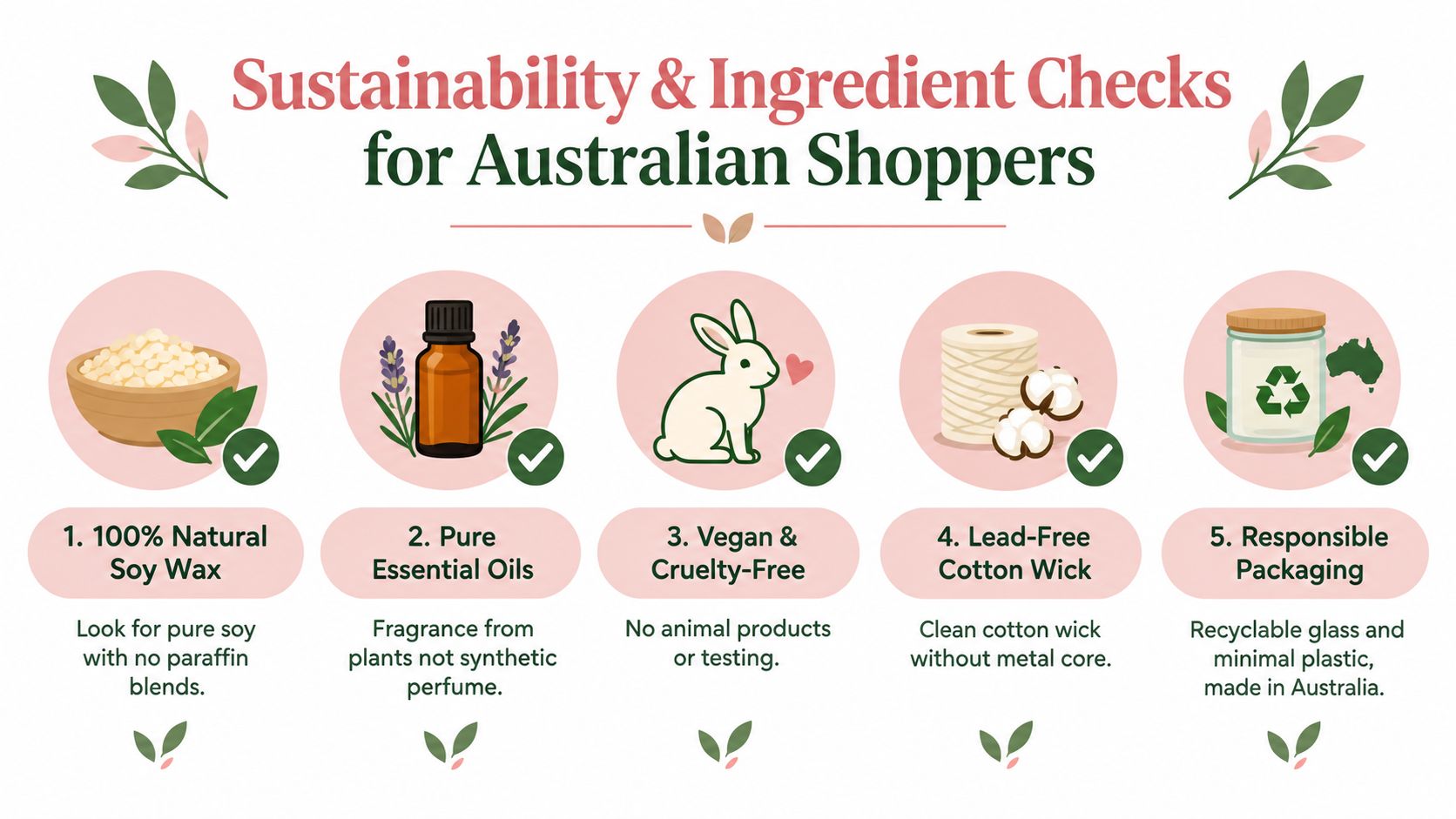
Australia has no single federal candle licence or universal mandatory candle-label format. Candle businesses still need to meet general Australian Consumer Law safety expectations, while clear warnings and usage instructions are widely treated as good practice. For a deeper materials and labelling checklist, read this guide to non-toxic candles in Australia.
The Australian Consumer Law candle business checklist explains the practical expectations for businesses. For shoppers, the takeaway is simple: “natural” describes an ingredient story, not a promise of safer burning. Flame control, ventilation and responsible use still matter.
Sustainability can be ordinary and useful. Clean a finished vessel properly, then reuse it for cotton tips, jewellery or a small plant if the glass suits that purpose. Some makers offer refills or take-back options. For wider ethical home choices, this fair trade home decor guide provides context beyond candles.
The ACCC and Product Safety Australia also oversee unsafe candle-related products, including combustible holders and decorations. Unsafe products can be reported through the national product safety and recalls system, as outlined in this ACCC warning about dangerous candle holders.
Buying and Gifting Essential Oil Candles in Australia
The right candle depends on the moment. For a bedside table or small shelf, choose a format that fits the space and won't crowd the room. For a dining table or generous living area, a larger statement vessel can become part of the styling, as well as a source of fragrance.
A Classic Soy Candle offers an everyday gifting format, with a stated burn time of 40 hours plus. A travel-sized Australiana Fairytale Candle is listed with a stated burn time of 35 hours plus, making it a sweet option for a desk, guest room or someone who enjoys changing scents around the home. Always check the current product page for the available fragrance and product details before ordering.
Presentation matters, particularly when the gift is heading to a friend who lives nowhere near you. Blushing Ivy candles are presented in branded packaging, and selected products are designed to be ready for gifting without an extra wrapping scramble. It's the difference between a thoughtful present and a thoughtful present that has you searching for scissors five minutes before leaving the house.
Gifts with a sense of place
An Australiana-inspired fragrance can suit a housewarming, birthday or thank-you gift because it carries more than a generic sweet scent. Bush florals, banksia, native honey and wattle can evoke gardens, bushland and bright Australian afternoons. For a more refined, masculine direction, the Wild Heath Society range offers an edge with a different visual and scent personality.
For shoppers comparing options, this scented candle range provides another perspective on candle styling and gifting. If you're buying for a boutique, salon or gift shop, consider how the story will sit on the shelf. Australian-made, Sunshine Coast handcrafted fragrance gives staff an easy starting point for conversation, while gift sets and complementary formats such as Room & Linen Spray, Fragrance Diffusers and Scented Car Diffuser can help customers build a whole-home ritual.
Australia-wide free shipping is available on orders over $75, according to the publisher information provided for Blushing Ivy Home Fragrance. Shipping terms can change, so check the current store details before purchasing.
Blushing Ivy Home Fragrance creates small-batch soy candles, essential oil-based fragrances, diffusers, sprays, car fragrances and gift sets on Queensland's Sunshine Coast. Explore the Blushing Ivy Home Fragrance collection, choose the scent that feels like home, and make your next quiet evening a little more golden.