
How to Make Linen Spray Last Longer Naturally
You've just made the bed with crisp sheets, fluffed the pillows and given everything a cheerful spritz. The room smells like clean cotton, coastal air and a little bit of calm. Then, by evening, you're wondering where that lovely fragrance wandered off to. Probably somewhere near the laundry basket, enjoying a holiday.
Learning how to make linen spray last longer naturally comes down to two separate jobs. You want the scent to linger on fabric, and you want the bottle itself to last longer before it needs replacing. The answer isn't usually more spraying. It's choosing the right surface, using a lighter and more targeted mist, and protecting the fragrance from Queensland's heat, humidity, sunlight and unnecessary air exposure.
Table of Contents
- Why Your Beautiful Linen Spray Scent Fades So Fast
- How Linen Spray Actually Works on Fabric and in the Air
- How to Apply Linen Spray So Scent Lingers Longer
- Smart Storage and Everyday Habits That Extend Every Bottle
- Formulation Tips and Gentle DIY Notes for Natural Sprays
- Your Simple Refresh Routine to Keep Linen Smelling Lovely
Why Your Beautiful Linen Spray Scent Fades So Fast
You spray the bed in the morning, enjoy that clean, gentle fragrance, then open a window or switch on the ceiling fan. By lunchtime, the scent seems to have vanished. It usually hasn't failed. Volatile fragrance molecules have evaporated, moved into the air and drifted beyond the spot where you first noticed them.
Natural linen sprays are lighter than heavy synthetic perfume clouds. Essential-oil-based ingredients contain volatile compounds, so warmth, airflow and humidity can speed up their release. A cool, still bedroom gives the aroma more time to settle. Warm air, a moving fan or a damp summer breeze carries it away sooner.
The formula matters, too. Fabric can absorb and hold some fragrance, while open air spreads it thinly. A fine mist on porous cotton, linen, upholstery or a towel gives the scent somewhere to rest. Spraying repeatedly into the room creates an instant lift, but uses liquid without giving many fragrance molecules a textile surface to cling to.
Two meanings of lasting longer
Fabric persistence means helping the aroma remain in sheets, pillowcases, towels, cushions or upholstery for as long as the material can hold it. A light, even application works better than soaking one patch, which may dry unevenly and waste product.
Bottle longevity means using less spray per refresh, so the bottle lasts through more uses. Keep the bottle tightly capped and store it away from heat, sunlight and humidity. Australian perfume storage guidance recommends a cool, dry and dark place, principles that also suit a linen spray, even though its formula and use differ from perfume. Australian perfume storage guidance
These aims overlap, but the habits are slightly different:
- For longer-lasting fabric scent, mist porous textiles lightly and allow them to dry.
- For a longer-lasting bottle, spray the fabric directly instead of filling open air with fragrance, and avoid repeated heavy applications.
- For better shelf life, limit heat, light, moisture and unnecessary air exposure.
The practical shift: Ask whether you are extending the scent on the fabric, protecting the liquid in the bottle, or doing both.
Blushing Ivy's natural, Australian-made fragrance approach suits this lighter-touch method. A beautiful scent should feel like a soft finishing detail, not a chemical foghorn. A few targeted sprays can bring back that just-made-bed feeling without turning every refresh into a full spray session.
How Linen Spray Actually Works on Fabric and in the Air
A mist sprayed above the bed can smell lovely for a moment, then disappear as it mixes with moving air. The same fragrance placed on a cotton sheet, linen pillowcase or upholstered cushion behaves differently. Porous fibres catch some fragrance molecules and release them gradually, giving the scent more time to linger.
Fabric also holds fragrance differently from skin. It has less warmth, moisture and natural oil to speed evaporation, so the fibres provide a steadier surface for the aroma to settle into. Heat and humidity can still encourage faster evaporation, while air movement carries volatile compounds away.
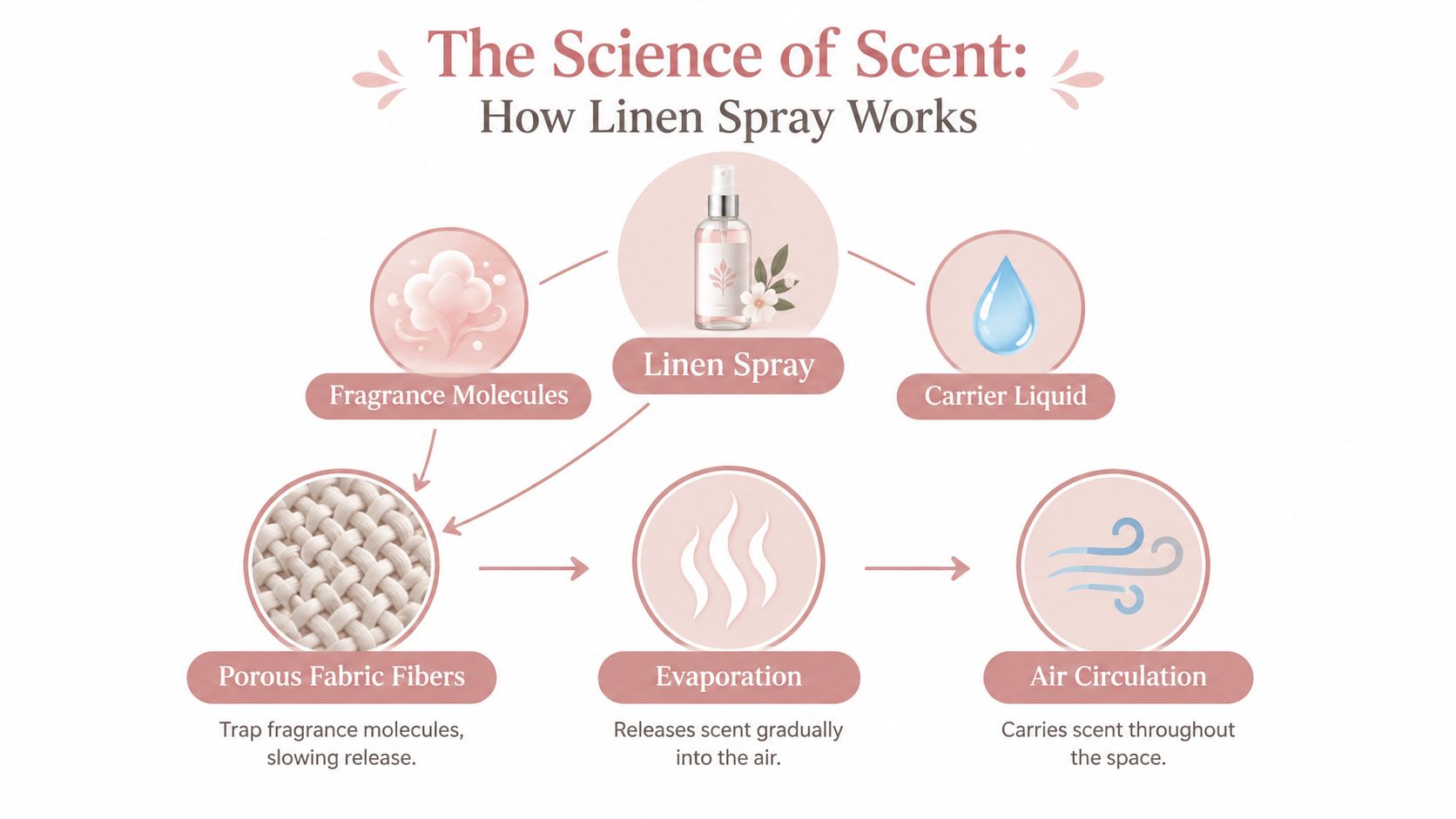
Fabric holds, air carries
The process follows four simple stages:
- The carrier liquid spreads fragrance across the textile.
- Porous fibres catch some fragrance molecules.
- Evaporation releases the aroma over time.
- Air circulation carries that aroma through the room.
A light mist distributes the fragrance more evenly. One very wet patch may smell stronger at first, but it can dry unevenly and use more product than necessary. Spraying into open air creates an immediate room effect, yet gives the fragrance fewer fibres to settle into.
Direct application suits sheets, pillows, mattress surfaces, clothing and upholstery, provided the product directions and fabric care instructions allow it. Let textiles air-dry before contact. For everyday fabric care, the linen maintenance guide is a useful reference alongside the product label. This explanation of why fragrance lasts longer on fabric than in open air supports the same fabric-first principle.
Fragrance also fades because different compounds evaporate at different rates. Bright citrus notes often lift quickly, while some woody or resinous notes stay closer to the fibres for longer. Heat, humidity and strong airflow can speed that change, so a sunny, steamy room will not hold scent like a cool, dry bedroom.
There is another reason to avoid repeatedly pumping spray into the room. Fragranced products contain volatile organic compounds, and the Australian fragrance product discussion shows why scent longevity deserves more thought than “spray more until I can smell it”. More mist in the air does not automatically mean a longer-lasting result.
Where fragrance choice matters
Essential-oil-based blends can feel more layered than a single-note air freshener. Green eucalyptus may make a bathroom feel crisp, while bush florals or native honey can give a bedroom a warm Australian garden character. A woody blend from the essential oil and fragrance oil guide may behave differently from a bright citrus blend because each composition has its own volatility.
The practical rule is simple: fabric, not open air, should do most of the holding. Use a fine mist, choose the right textile and let the fibres release the fragrance at their own pace.
How to Apply Linen Spray So Scent Lingers Longer
The most efficient method is a fabric-first application. Instead of filling the room with mist, aim for clean, dry textiles that can absorb and release the scent gradually.
Give the bottle a gentle shake
Essential-oil-based blends can need a little encouragement before use. Shake gently so the ingredients are distributed, then remove the cap and spray promptly rather than leaving the bottle open beside the bed.
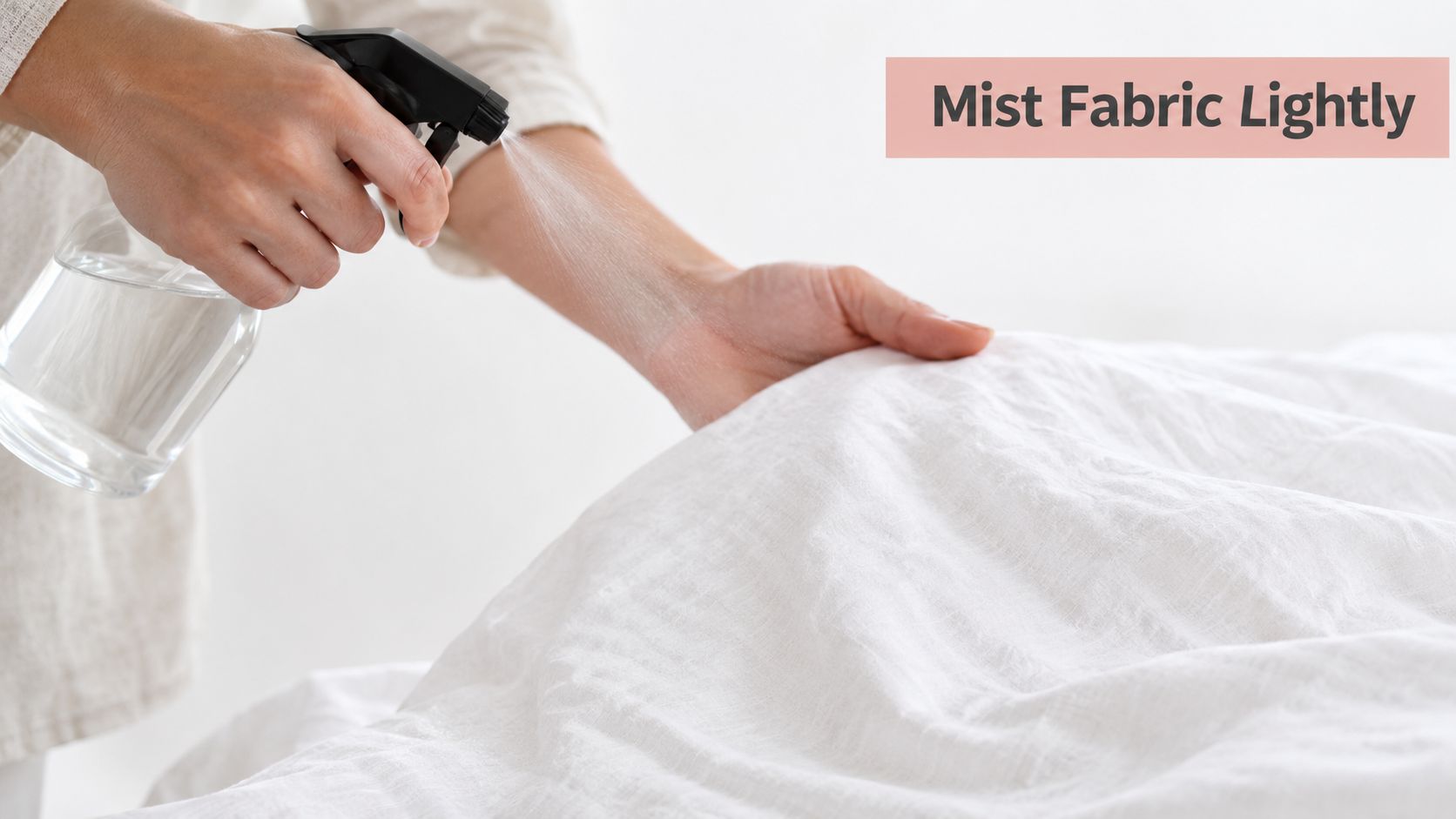
Hold the bottle away from the textile and use a sweeping motion. A fine, even mist is better than concentrating several pumps in one spot. You're refreshing the surface, not giving the pillow a tiny bath.
Aim for the fabric
Sheets, pillowcases, mattress surfaces, clothing, curtains, cushions and upholstery can all be useful targets, provided the product directions allow it and the material is suitable. Australian linen-spray guidance recommends misting these surfaces directly, then letting them air-dry before contact. This practical guide to natural linen spray application also links targeted fabric application with better persistence than room dispersion.
Try this sequence on a freshly made bed:
- Mist the top sheet lightly, moving across the surface rather than stopping in one area.
- Refresh pillowcases sparingly, especially around the area where your face rests.
- Add a delicate pass over the duvet or coverlet if the fabric is suitable.
- Leave the bed uncovered while it dries, allowing the fragrance to settle before you climb in.
A guest bedroom only needs a restrained touch before visitors arrive. For a wardrobe, mist a clean garment or a fabric sachet rather than spraying into the whole cupboard. Lounge cushions benefit from a light pass across the upholstery, while towels can take a subtle refresh between washes when they're clean and fully dry.
A good linen spray finish should smell present, not wet. If the fabric feels damp or the fragrance overwhelms the room, you've used more than the fibres need.
Patch-test before refreshing delicate fabric
Test an unseen section before applying spray to silk, velvet, pale upholstery, vintage textiles or anything prone to water marks. Let the test area dry completely and check the fabric before continuing. Avoid spraying directly onto skin, and follow the product label for any materials it excludes.
Timing matters too. Spraying after changing sheets gives the fragrance a clean surface and plenty of time to settle. A between-washes refresh can work beautifully on bedding, throws and cushions, but it shouldn't replace proper laundering when fabric is dirty, sweaty or musty.
The numbers provide a useful reality check. Euclove states that a 500 mL linen spray lasts about 2 months when used regularly, recommending use whenever sheets and bed linen are changed. Its linen spray usage benchmark implies roughly 8.3 mL per day across that period, which shows how quickly frequent, generous spraying can use a bottle.
For a closer look at light misting and fabric refresh habits, use the short demonstration below.
Use enough to create a soft scent trail when you move the sheets, then stop. Your nose adapts quickly, so adding more because you can't smell it immediately can lead to over-application and a rapidly shrinking bottle.
Smart Storage and Everyday Habits That Extend Every Bottle
A bottle left on a sunny bathroom shelf can lose its fresh character before you expect it. Heat speeds evaporation, light can weaken aromatic compounds, and humidity adds extra stress around the cap and nozzle. In an Australian summer, a steamy room is a particularly poor home for a natural linen spray.
Use the simple storage rule: cool, dark, dry and tightly capped. Keep the bottle upright in a bedroom drawer or cupboard, away from windows, heaters, hot cars and warm appliances. A dry linen cupboard works too, provided it is not beside a hot window.
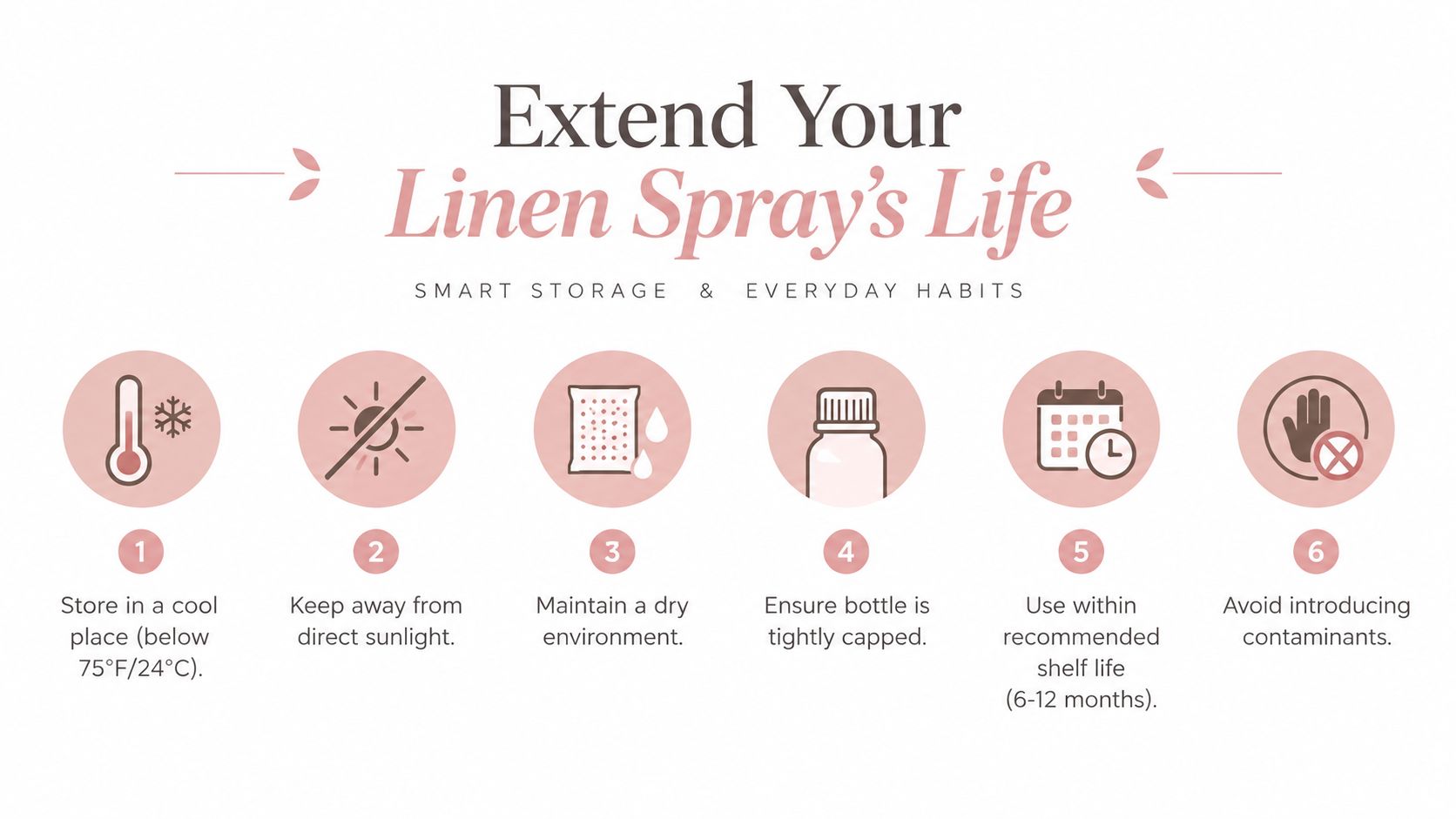
Small habits protect the fragrance
Close the cap straight after spraying. Each opening allows air exchange, which can encourage evaporation and oxidation over time. Wipe the nozzle if residue gathers, but keep water, dust and other materials out of the bottle.
The bathroom is convenient, yet repeated steam and humidity make it a less stable environment for fragrance. A bedroom drawer is usually kinder to the blend, especially during sticky coastal weather. Check an opened product from time to time, particularly if the scent has changed in colour, clarity or character. Australian fragrance storage guidance also recommends avoiding heat, light and damp conditions.
Protect shelf life and bottle life separately
Shelf life describes how long the fragrance stays in good condition. Bottle life describes how quickly the liquid gets used. Even perfect storage cannot stretch a bottle if you spray the air, soak broad areas or reapply every few minutes.
Notice where the mist goes:
- Open air: creates an immediate room effect, but gives the fragrance little fabric to hold it.
- Large wet applications: smell stronger at first and use more product.
- Light targeted misting: places scent where it can linger while using less liquid.
- Repeated testing: can lead to overspraying once your nose has adjusted.
Natural essential-oil sprays contain volatile aromatic compounds, so the first bright notes can lift away quickly. Fabric holds onto some fragrance, while warm moving air carries it off. Storage cannot change that behaviour, but it can prevent unnecessary loss before the spray reaches your linen.
Store the bottle for its future self, and spray for the moment you're actually creating.
Let a well-kept blend unfold gently across clean textiles instead of chasing a stronger first impression. In a warm Sunshine Coast home, a shaded cupboard and a measured mist can make the bottle last longer without leaving the room smelling flat or overloaded.
Formulation Tips and Gentle DIY Notes for Natural Sprays
What's inside the bottle affects how fragrance moves, dries and stays fresh. Water gives a light, clean base, while alcohol can help disperse aromatic ingredients and support a quicker dry-down. A fixative may slow evaporation, but it won't turn a surface spray into a wash-proof perfume.
For essential-oil-based blends, the balance matters. Too much aromatic material can make the spray feel heavy or leave an oily impression. Too little may produce a delicate scent that disappears quickly, particularly in a breezy room. Natural fragrance often rewards restraint, because the aim is a comfortable, layered atmosphere rather than a cloud that announces itself from the driveway.
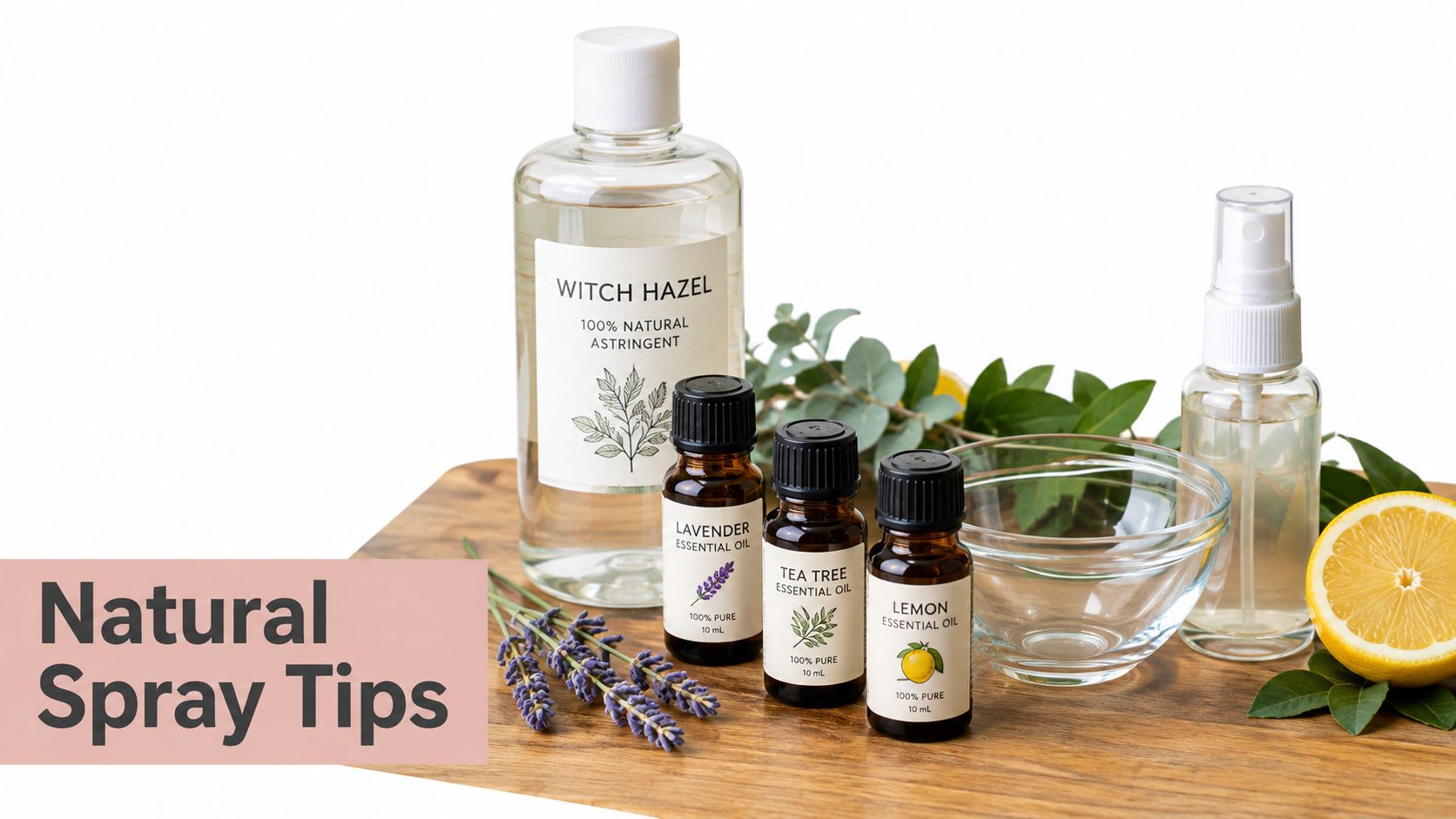
A straightforward DIY base
A commonly cited DIY linen-spray formula uses:
- 3 ounces of unflavoured vodka or rubbing alcohol
- 20 to 30 drops of essential oil
- 1 1/2 cups of distilled water
This DIY linen spray formula reports that properly stored sprays can last about six months to a year. Distilled water is the sensible choice for a cleaner base, and a freshly cleaned bottle helps prevent unwanted contamination. Label the bottle with the blend and date, then store it in the same cool, dark, dry conditions used for ready-made fragrance.
The scent itself is where the fun lives. Citrus can feel like sunlight on a kitchen bench, eucalyptus brings a clean bush-walk freshness and a floral blend can make a linen cupboard feel like a cottage garden after rain. Blending essential oils changes the character, but it doesn't remove the need for patch-testing or careful use on fabrics.
For readers who enjoy pairing fragrance with low-waste home habits, these green cleaning solutions offer useful context around keeping textiles and rooms fresh without relying on an overpowering scent layer.
What fixatives can and can't do
A fixative helps slow the release of fragrance, but it involves a trade-off. The scent may last longer on the surface, while the spray may dry differently or feel less airy. Ingredients also need to suit the fabric, the bottle and the intended use, so adding a random oil, glycerine or other kitchen-cupboard ingredient isn't a reliable shortcut.
Laundering creates another firm boundary. Surface-applied fragrance on textiles generally doesn't survive washing well, and topical sprays or padding finishes can lose most of their fragrance payload within the first wash or wear cycle. Textile microencapsulation information explains why formulators treat textile fragrance durability as a technical challenge.
That's why linen spray works best as a between-washes refresh, not a promise of permanently scented bedding. If you'd rather skip the home lab, Blushing Ivy Home Fragrance offers a pet-friendly Room & Linen Spray in recyclable 120 mL bottles, made for controlled home fragrance use. You can also read how to make room spray before choosing between a DIY project and a ready-made blend.
Your Simple Refresh Routine to Keep Linen Smelling Lovely
The easiest routine is the one that doesn't feel like another household chore. Keep the bottle in a cool, dry drawer, shake it gently before use and reach for it when the fabric is clean, dry and ready for a little finishing touch.
On sheet-change day, mist the top sheet, pillowcases and coverlet lightly. Let everything air-dry before making the final cosy adjustments. Towels can have a delicate refresh between washes, while cushions, throws and curtains may only need attention when the room feels a little flat.
Heat and humidity speed evaporation, so a dry, cool room helps fabric retain its scent for longer. This fabric-use guidance is especially relevant in Queensland, where a warm, damp afternoon can undo the best intentions of a heavy spray.
A gentle weekly rhythm
- Fresh bedding: Apply a light, sweeping mist after changing the sheets.
- Pillows: Use a restrained spray on the pillowcase, then allow it to dry fully.
- Towels: Refresh only clean, dry towels between laundering.
- Soft furnishings: Target cushions and throws instead of spraying the whole room.
- Wardrobes: Mist a suitable fabric item, not the enclosed air.
- Bottle care: Cap it straight away and return it to its cupboard.
For musty or stubborn textile odours, fragrance should come after proper cleaning rather than cover the problem. This resource on safe odour removal for textiles is a handy companion when fabric needs more than a pretty finishing note.
You can also create a gentle scent rhythm through the home by pairing a light Room & Linen Spray refresh with Fragrance Diffusers or a soy candle. Use room spray for home for ideas on extending that feeling beyond the bedroom, without asking one spray to scent every corner at once.
The lovely part is that how to make linen spray last longer isn't about making fragrance louder. It's about placing it thoughtfully, protecting the bottle and allowing the fabric to do its quiet, fragrant work.
Blushing Ivy Home Fragrance creates Australian-made, handcrafted home fragrance for those small moments that make a house feel like yours, including Room & Linen Spray, soy candles, diffusers and gift-ready favourites. Visit Blushing Ivy Home Fragrance to explore the scents and choose a gentle finishing touch for your sheets, cushions or everyday rituals.