

How to Make Reed Diffuser Smell Stronger: 7 Tips
Your reed diffuser looked gorgeous on the hallway table, but the room still smells like absolutely nothing. You've flipped the reeds, leaned over the bottle for a hopeful sniff, and wondered whether your nose has just packed up for the day. In a sunny Queensland home, heat, airflow, placement and reed maintenance all change how much fragrance reaches the room.
The honest answer to how to make a reed diffuser smell stronger isn't always “add more reeds”. More reeds can increase throw, but they can also use the oil faster. The better approach is to balance scent strength, room coverage and longevity, then make one small adjustment at a time.
Table of Contents
- Why Your Reed Diffuser Smells Weaker Than You Expected
- Choosing and Using the Right Reeds
- Flipping Frequency and Scent Bursts
- Room Placement for Australian Homes
- Oil, Formula and Refill Decisions
- Maintenance and Safety Essentials
- A Warmer, Longer-Lasting Scent From Here
Why Your Reed Diffuser Smells Weaker Than You Expected
You walk into the room, expect fragrance, and get almost nothing. The diffuser may still be working. In a sunny Queensland home, heat, airflow, air-conditioning and placement decide how much scent reaches your nose.
A reed diffuser is a passive fragrance system. Porous reeds draw oil upwards through capillary action and release fragrance into the air. Air movement carries it further, while heat speeds evaporation. Unlike a spray, it builds gradually and can scent a space over weeks or months. Amberly's reed-diffuser guidance explains why direct sunlight and air-conditioning vents can disturb that balance.
Check the setup before blaming the fragrance. A bottle hidden behind books or placed in a still corner has little airflow to carry its scent. A sunny window can make it empty faster without creating a fuller, more even room fragrance. Large or open-plan rooms may also overwhelm a small bottle.
Throw and longevity are a trade-off
More scent in the air usually means more oil leaving the bottle. Adding reeds or flipping saturated ones exposes more oil to the air. You get a stronger burst, but the diffuser reaches the end of its useful life sooner. Treat a weak result as a setup problem first, not automatic proof that the product has failed.
Bottle size provides a useful reality check. According to Amberly's product care information, a 100 mL diffuser at roughly 6–10 weeks and a 500 mL bottle at around 4–6 months are possible, depending on conditions and care. Oil volume, room temperature and maintenance all affect how long noticeable scent lasts.
Leave the room, then return later. Your nose can adjust to a fragrance that visitors notice immediately. If the liquid level is falling, the reeds are absorbing oil and the diffuser is working. Adjust placement or replace tired reeds before adding oil at random.
Practical rule: Aim for a scent you notice when entering the room, not an aroma that follows you around the house all afternoon.
Choosing and Using the Right Reeds
A diffuser in a warm Queensland room can smell strong for a week, then fade quickly. The reed setup often controls that balance between throw and longevity more than decorative styling. Fibre reeds create consistent channels for oil movement, while rattan reeds provide a more traditional, often gentler release. Use reeds made for fragrance, not bamboo skewers from the kitchen drawer.
Thicker or more absorbent reeds move more oil and produce a fuller scent, so they also shorten the diffuser's useful life. Reed count has the same effect. An Australian care guide states that more reeds create a stronger scent, while warning that they reduce overall diffuser life. House of Kirri's reed-diffuser advice supports a practical approach: choose enough reeds to notice the fragrance when entering the room, then stop before consumption becomes wasteful.
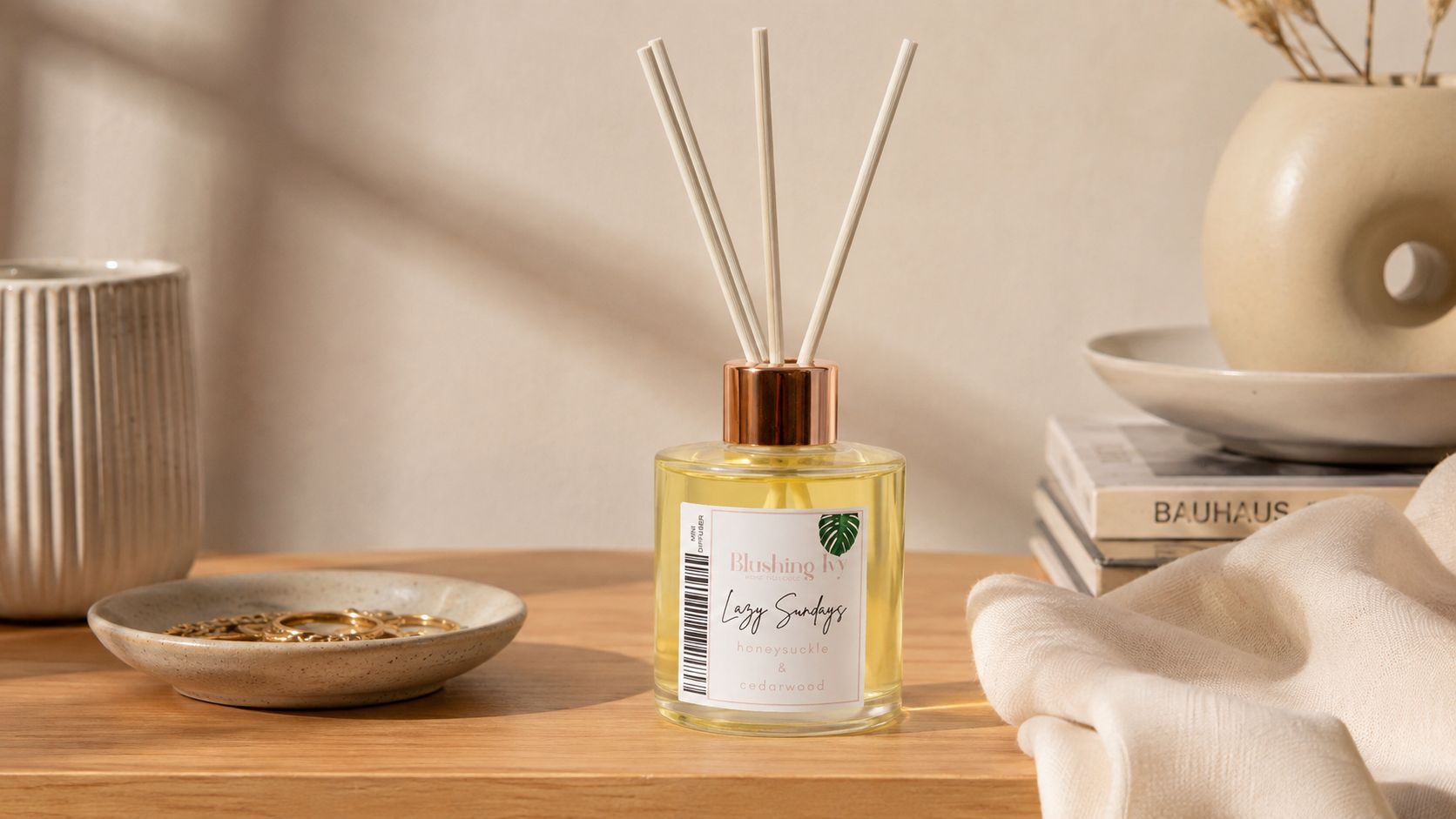
Match the reed setup to the room
Start with the supplied reeds in a modest room. Let them saturate before judging the result. If the scent remains too soft, add another reed only if the vessel allows it, then give the change time to show its effect.
Blushing Ivy's Mini Fragrance Diffusers are 140 mL vessels supplied with fibre reeds. Their compact format suits smaller in-between areas where a subtle, welcoming aroma works better than a room-filling throw.
| Reed Type | Throw Strength | Oil Consumption | Best For |
|---|---|---|---|
| Fibre reeds | Even, reliable release | Moderate to faster, depending on count | Consistent everyday scenting |
| Rattan reeds | Softer, slower release | Generally gentler | Smaller rooms and understated fragrance |
| Thicker reeds | Stronger projection | Faster | Rooms needing more noticeable scent |
| Fewer reeds | Subtle background aroma | Slower | Bedrooms, powder rooms and compact spaces |
Use fresh reeds when changing fragrance. Old reeds retain traces of the previous oil and may become saturated or clogged, muting the new scent. For a closer look at choosing and maintaining them, keep Blushing Ivy's guide to reed diffuser sticks handy. In air-conditioned spaces, start conservatively, because moving air can spread scent well while also increasing oil loss. A balanced setup gives you noticeable throw without sacrificing longevity too quickly.
Flipping Frequency and Scent Bursts
Flipping reeds is the quickest way to refresh a tired diffuser, but flipping too soon or too often is where people waste oil. Fresh reeds need time to absorb the fragrance all the way through. Australian care guidance recommends waiting 24–48 hours before judging the initial performance, then flipping the reeds regularly to refresh scent. Artes' Australian diffuser care guidance also recommends keeping the bottle away from heat, direct sunlight, fans and air-conditioning vents.
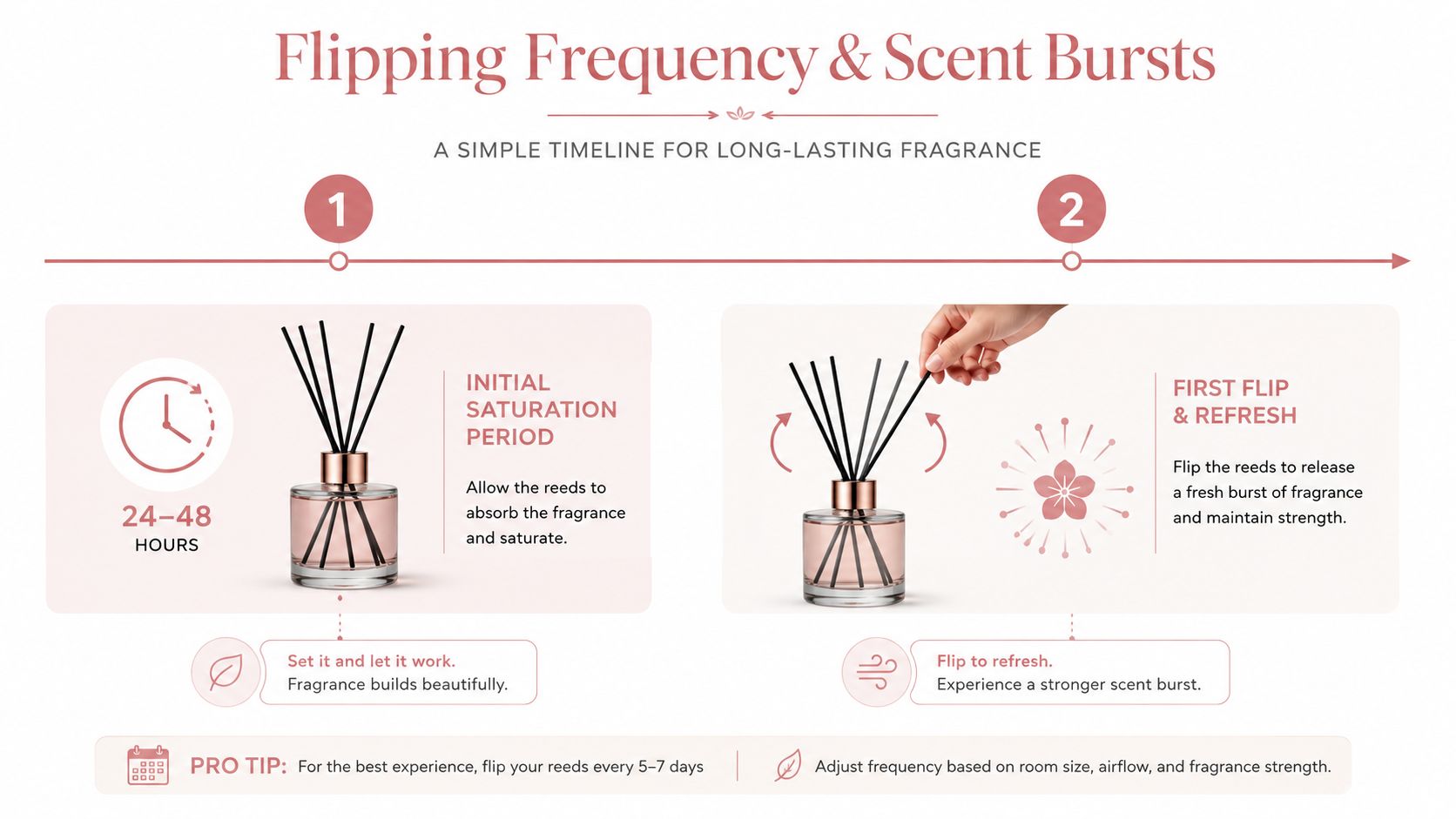
Use the flip as a refresh, not a panic button
Once the reeds have saturated, lift them carefully and turn them over above a piece of paper towel or an old cloth. Saturated reeds drip, and fragrance oil can mark timber, painted surfaces, varnish and some stone finishes. Put them straight back into the bottle, then wipe the neck if any oil has collected there.
For everyday care, weekly flipping is a sensible starting point. Australian guidance also supports flipping more often when you want a stronger throw, while Scarlet & Grace's diffuser guide notes that weekly or fortnightly flipping is enough for a subtler result.
A flip creates a scent burst because the saturated ends are suddenly exposed to air. That's handy before guests arrive or when you want the entryway to feel freshly dressed. It isn't a free boost, though. Every flip encourages faster evaporation, so daily flipping is a short-term intensity tactic, not the best routine for a bottle you want to enjoy for as long as possible.
If flipping only helps briefly, replace the reeds instead of reaching for more oil. The channels may have reached the end of their useful life.
Room Placement for Australian Homes
Queensland sunshine is beautiful, but it's not gentle on fragrance oil. Direct sunlight and heat increase evaporation, which can make a diffuser smell stronger for a short period while reducing its lifespan. An Australian FAQ identifies air conditioners, heaters, direct sunlight, room size and placement as factors that can affect both fragrance strength and longevity. Evoke My Senses' reed-diffuser FAQ is especially useful for Australian homes dealing with warm rooms and changing airflow.
Keep the vessel away from sunny windowsills, glass doors, heaters and outdoor-facing walls that heat up during the day. You want some gentle air movement, not a constant blast from a ceiling fan, ducted vent or air-conditioning return.
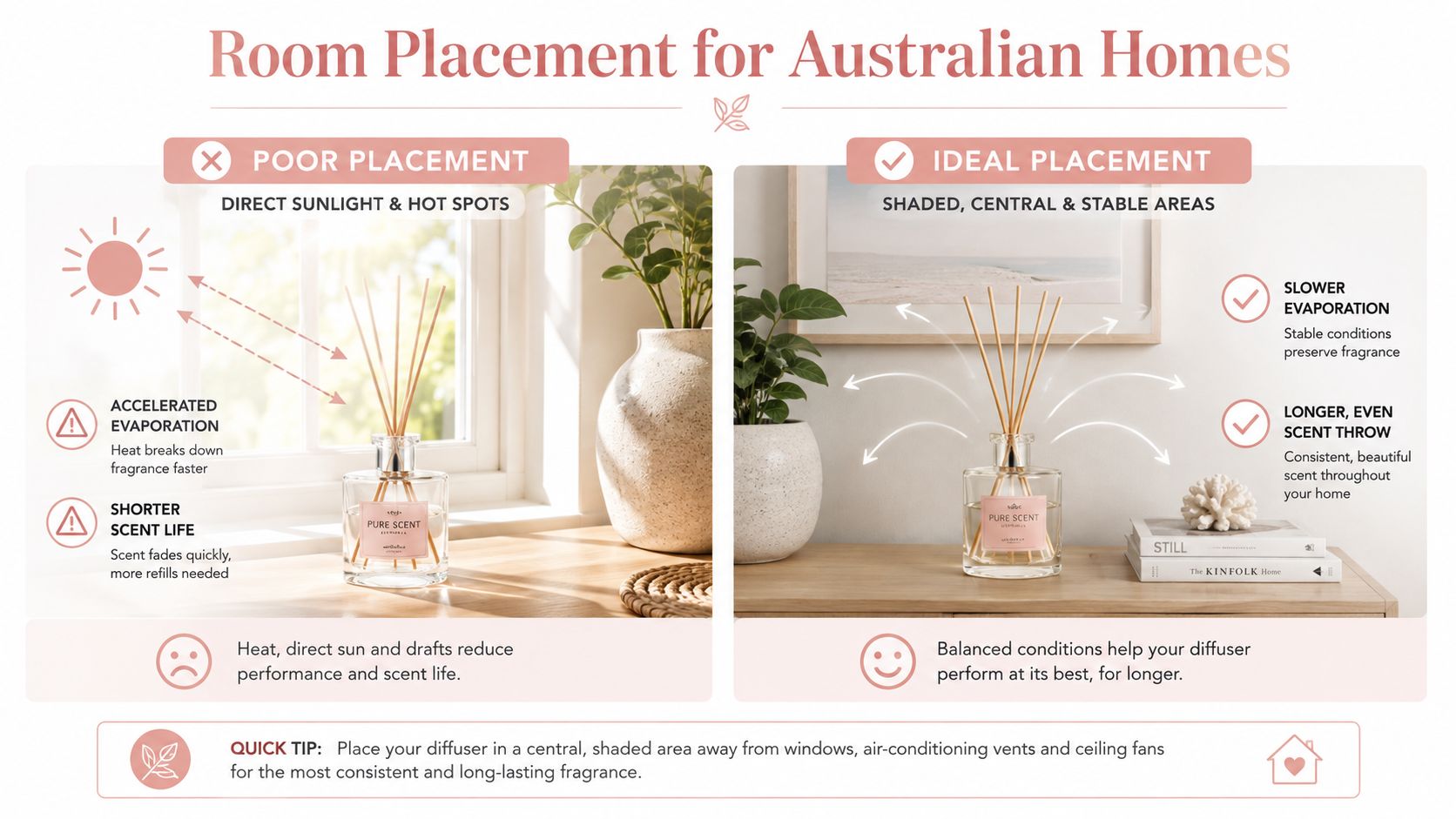
Test a walk-through zone
Hallway consoles, entry tables and the space near a linen cupboard often work beautifully because people naturally move through them. A diffuser doesn't need to sit in the middle of a windy room. It needs enough open space around the reeds for fragrance to escape and travel.
Try these placement rules:
- Choose gentle movement: Place the bottle where normal household air movement can carry the scent, but avoid a direct vent or fan path.
- Keep it shaded: A bright room is fine, but direct sun on the bottle isn't.
- Lift it safely: A stable surface around waist to chest height can help scent disperse, provided children and pets can't reach it.
- Avoid the doorway blast: A busy entrance can provide airflow, but an open door may carry fragrance straight outdoors.
- Respect room size: Australian coverage guidance suggests a 50 mL diffuser suits about 100–180 square feet, while a 130 mL diffuser suits roughly 180–300 square feet, depending on enclosure and ventilation. Sosa Home & Body's room-size guide provides those benchmarks.
For smaller spaces beyond the main living areas, the Wild Heath Society Car Diffuser is designed for cars and can also be used in wardrobes or powder rooms. Its fragrance choices include mature profiles such as Whisky Bar, Barbershop and Campfire, with care required around plastics and interior surfaces.
Oil, Formula and Refill Decisions
The liquid inside the bottle determines how easily fragrance travels up the reeds. Industry guidance places typical reed-diffuser fragrance loads around 15–25% in low-viscosity carriers such as isopropyl myristate or dipropylene glycol, while commercial blends can range from 10–30% depending on the fragrance materials and carrier solvency. This reed-diffuser dilution guide explains why formulation is a balancing act rather than a matter of pouring in more fragrance.
A thinner carrier generally moves through reeds more readily and can produce quicker throw. The trade-off is faster oil use. A thicker carrier can give a slower, steadier release, but it may struggle to travel through the reeds if the formula is too viscous.
| Carrier | Wick Speed | Throw | Longevity |
|---|---|---|---|
| Low-viscosity carrier | Faster | More immediate | Often shorter |
| Medium-viscosity carrier | Balanced | Steady | Balanced |
| Thicker carrier | Slower | Softer and gradual | Often longer |
Don't rescue tired oil with random top-ups
Topping up an almost-empty bottle usually disappoints. Old oil may have oxidised or partially evaporated, while the reeds are already saturated with the original blend. Fresh oil poured over it can create an uneven fragrance, with stale undertones still lingering in the vessel.
Replace the full volume instead. Clean and dry the bottle, use fresh reeds, and start the diffusion cycle again. Don't add water, cooking oils or untested alcohol drops. Alcohol or booster additions only make sense when a professional has balanced the complete formula for safe, stable diffusion.
If you make fragrance products yourself, keep a simple note of the blend, oil age, room, reed count and perceived strength. That turns experimentation into useful observation rather than kitchen-bench guesswork. For a clearer discussion of essential oil versus fragrance oil, Blushing Ivy's fragrance guide offers helpful context.
Maintenance and Safety Essentials
A stronger-smelling diffuser isn't useful if it leaves an oily ring on your beautiful timber shelf. Keep the bottle on a tray, coaster or stable ceramic plate, and inspect the vessel regularly for cracks, leaks or a loose neck.
If a spill happens, don't rub it across the surface. Lay paper towel over the oil, lift slowly to absorb it, then clean the residue with mild soapy water. Test the cleaning method on an inconspicuous area first, especially with timber, stone, painted joins and varnished furniture.
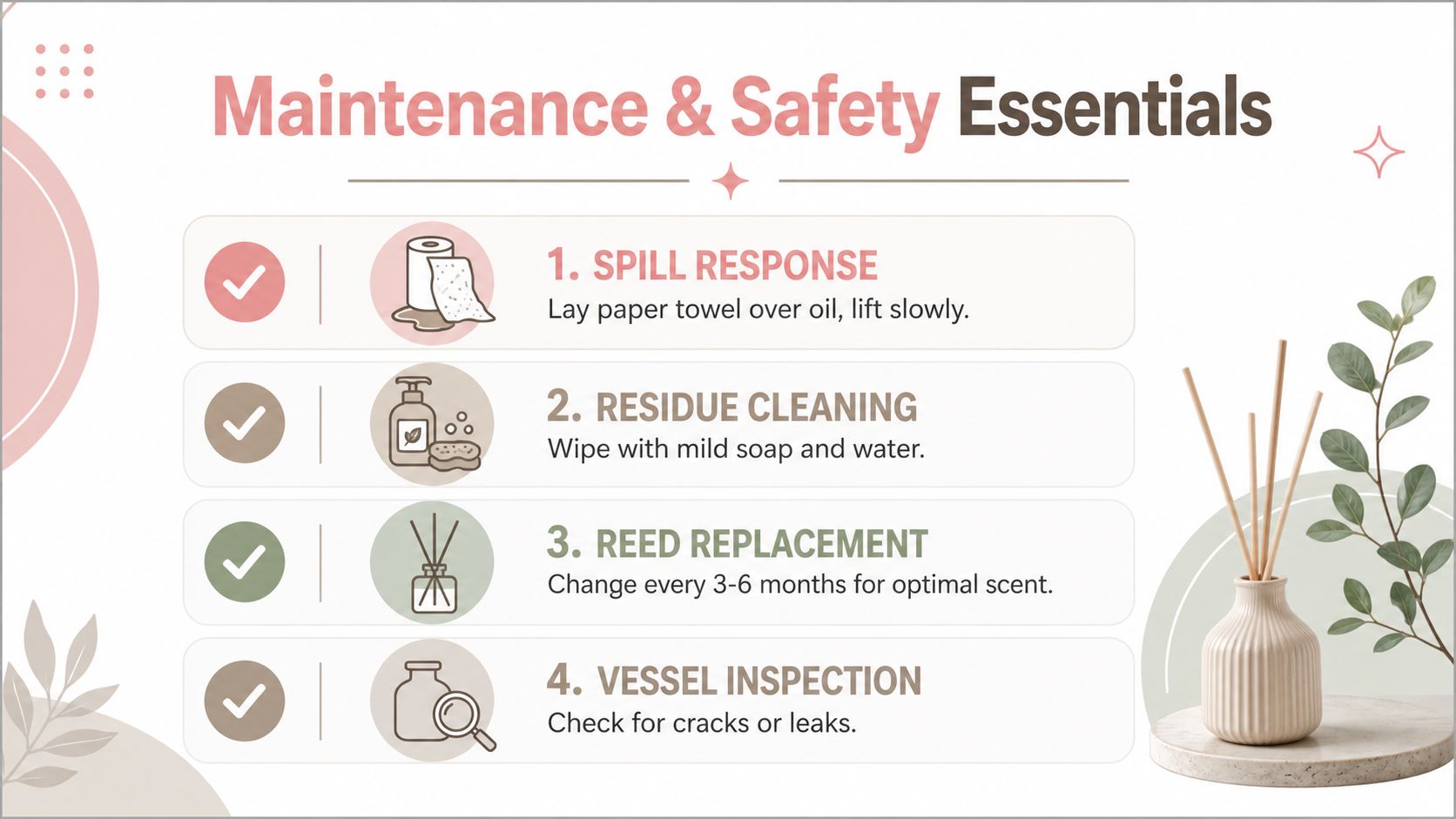
A small checklist prevents most problems
- Inspect the reeds: Replace them when they're frayed, blackened, dusty or no longer lifting oil effectively.
- Refresh thoughtfully: Change reeds when the scent fades rather than endlessly adding more oil to the same tired set.
- Protect vulnerable noses: Keep diffusers away from children and pets, and avoid placing strongly fragranced products where sensitive family members sleep.
- Control the surface: Use a tray or coaster under every bottle, particularly on timber shelving.
- Handle drips carefully: Turn reeds over above paper towel or cloth, never directly over furniture.
- Finish cleanly: At the end of the diffuser's life, rinse the glass with warm water, recycle the vessel where accepted and compost natural reeds if your local system allows it.
Blushing Ivy's guidance on whether reed diffusers are safe is a useful companion for households with children, pets or sensitive surfaces. Keep every diffuser stable, out of reach and away from anything that could be damaged by oil.
A Warmer, Longer-Lasting Scent From Here
A stronger diffuser is not just a fuller handful of reeds. In a warm Australian home, the goal is balance: enough throw to notice the fragrance, without placing the bottle in a position that burns through the oil too quickly.
Start with the room. Move the diffuser away from a sunny window and direct air-conditioning before adding more reeds. Heat and moving air can push fragrance through the space, but they can also speed evaporation. Give the scent time to settle, then judge it as you enter the room, not with your nose pressed over the bottle.
Keep the routine simple. Match the diffuser size to the space, use an appropriate reed count, flip the reeds on a steady schedule, and protect the vessel from harsh sun and strong airflow. These choices support a noticeable, longer-lasting scent instead of turning the bottle into an evaporation experiment.
A smaller diffuser suits a hallway, powder room, linen cupboard or other in-between space. A diffuser with fibre reeds can give these areas a soft, steady welcome, especially when you use fewer reeds for a gentler result. It should not be expected to scent an entire open-plan home.
If the room still feels flat, review the fragrance profile. Bright citrus and clean, airy scents often feel more immediate. Creamy, powdery and grounding blends create a quieter atmosphere. Choose according to the room and the mood you want, rather than adding oil or reeds blindly.
Blushing Ivy Home Fragrance makes Australian-made, handcrafted soy candles, reed diffusers, room and car fragrances, and gift sets. Visit Blushing Ivy Home Fragrance to explore fragrance options, find a gentler diffuser for a smaller room, or request personalised scent advice.