
How to Use Incense Sticks: A Blushing Ivy Guide
You know that little moment when you get home, drop your keys, and the house just feels a bit flat? Not bad, exactly. Just tired. That's often when incense shines. One small ritual, one soft curl of scent, and the whole room starts to feel gentler.
Learning how to use incense sticks isn't complicated, but there is a lovely art to it. It's less about setting fire to a stick and more about creating a pause in your day. A slow morning with tea, a reset after work, a few quiet minutes before journalling or meditation. If that's your kind of thing, you might also enjoy this read on meditation and incense rituals.
Table of Contents
- Welcome to the World of Incense
- Choosing Your Scent and Setting the Scene
- The Gentle Art of Lighting Your Incense
- Placement Burn Time and Safety First
- A Note on Ventilation and Conscious Choices
- Extinguishing and Storing Your Incense Sticks
Welcome to the World of Incense
Incense has a way of making an ordinary corner of the house feel intentional. A bedside table becomes a wind-down space. The kitchen bench, once the dinner rush is over, becomes somewhere to exhale for a minute. That's why so many people fall in love with it. It adds atmosphere without needing a big production.
What I love most is that it suits real life. You don't need a perfect home, a dedicated meditation room, or an hour to spare. You just need a safe spot, a few quiet minutes, and a scent that feels right for the mood you want to create.
Incense works beautifully when you treat it like a ritual, not a rush job.
There's also something reassuring about how simple it is. A standard incense stick typically burns for about 30 to 60 minutes, while some sticks last 50 to 90 minutes depending on thickness and composition, according to this practical incense guide. That makes it a lovely natural timer for a bath, a tidy-up, reading a chapter, or sitting still for once.
If you've ever wondered why your stick goes out, burns too fast, or feels a bit overwhelming in a small room, you're not doing anything silly. Those are the exact little details that make the experience better once you know them.
Choosing Your Scent and Setting the Scene
Before the match or lighter comes out, start with the feeling you want in the room. Scent is part mood, part memory. The same incense can feel bright and energising in the morning, then soft and grounding in the evening.
Match the scent to the moment
If you want the house to feel calm after a noisy day, choose something warm, rounded, and comforting. A blend like sandalwood and vanilla can feel a bit like a slow walk along the coast at dusk. Fresh citrus notes can suit the start of the day when you want the room to feel cleaner, lighter, and more awake.
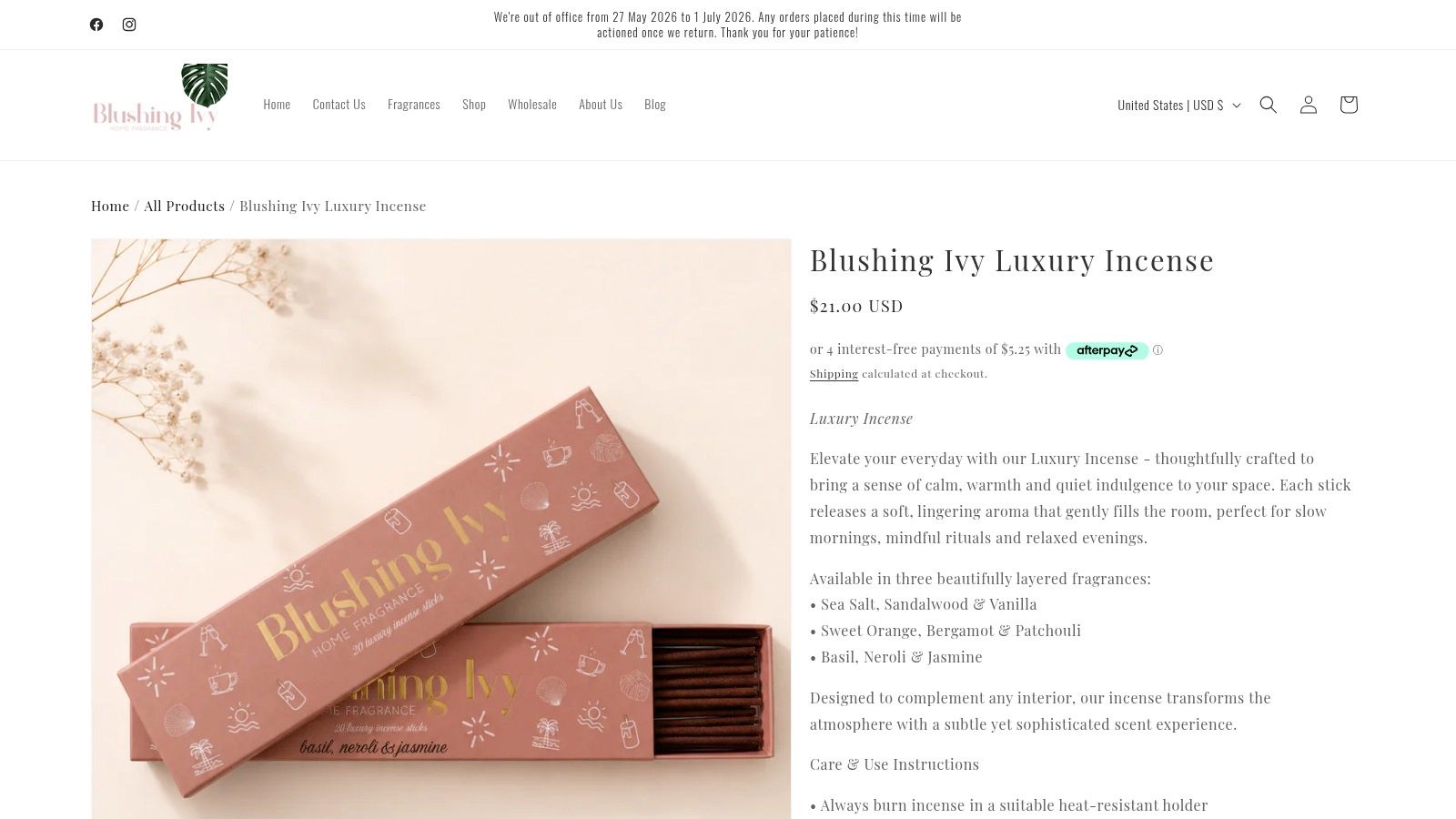
Blushing Ivy Luxury Incense is available in three layered fragrance options. Sea Salt, Sandalwood & Vanilla, Sweet Orange, Bergamot & Patchouli, and Basil, Neroli & Jasmine. It's designed to gently fill the room and is intended for slow mornings, mindful rituals, and relaxed evenings.
For readers who love fresh, clean, botanical scents, this piece on using eucalyptus essential oil at home is a nice companion read too.
Choose the right spot before you light
A good incense spot does two jobs. It needs to be safe, and it needs to let the fragrance drift naturally through the room.
A few easy checks help:
- Pick a stable surface. A wobbly shelf edge or cluttered side table isn't ideal.
- Use a proper holder. It should catch ash and keep the stick secure while it burns.
- Watch the airflow. You want gentle movement in the room, not a strong draft that makes the stick burn unevenly.
- Think about the room size. In a smaller bedroom or study, one stick is usually plenty.
A little preparation changes everything. Instead of fussing once it's lit, you can settle in and enjoy it.
The Gentle Art of Lighting Your Incense
Getting the lighting right is where most confusion happens. The good news is it's easy once you know what you're looking for.
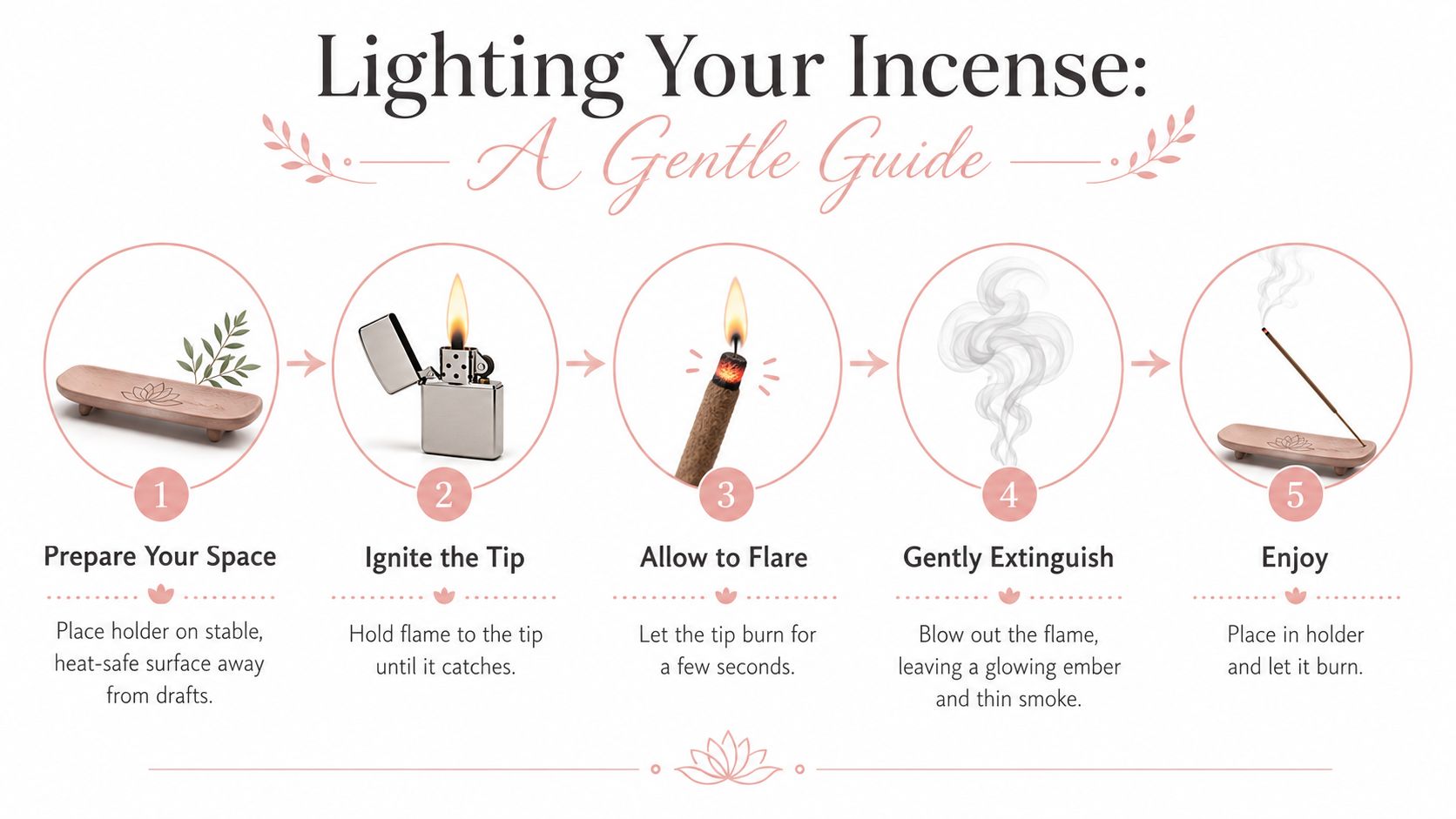
A visual guide can make it click faster.
A simple lighting method that works
For reliable ignition, place the stick in a stable, heat-resistant holder, light the coated end, then keep the flame on it for about 5 to 15 seconds before blowing it out. A correctly lit stick should show a cherry-red ember and continue to smoulder without an open flame, as explained in this guide on how to light an incense stick.
If you're more of a visual learner, this short video is handy:
Try it like this:
- Set the stick in the holder first if that feels steadier for you.
- Light the coated tip with a match or lighter.
- Let it catch properly for a few seconds. Don't rush this part.
- Gently blow out the flame so only the ember remains.
- Check that it keeps smouldering before you walk away.
What a properly lit stick looks like
This is the bit people often second-guess. If there's a flame still flickering away, it hasn't settled into its proper burn yet. If the tip looks pale and cool straight after you blow it out, it probably hasn't lit enough and may go out.
Practical rule: Look for a softly glowing red tip and a thin trail of smoke, not a bright flame.
If your incense keeps self-extinguishing, under-lighting is usually the culprit. Relight it, hold the flame there a touch longer, and make sure the tip is fully charred. Once you've seen that little ember once, you'll know exactly what to look for every time.
Placement Burn Time and Safety First
A good incense ritual starts with where the stick rests while it burns. If the holder is steady, the ash is contained, and the area around it is clear, you can settle into the moment instead of half-watching it from across the room.
Why placement matters more than people think
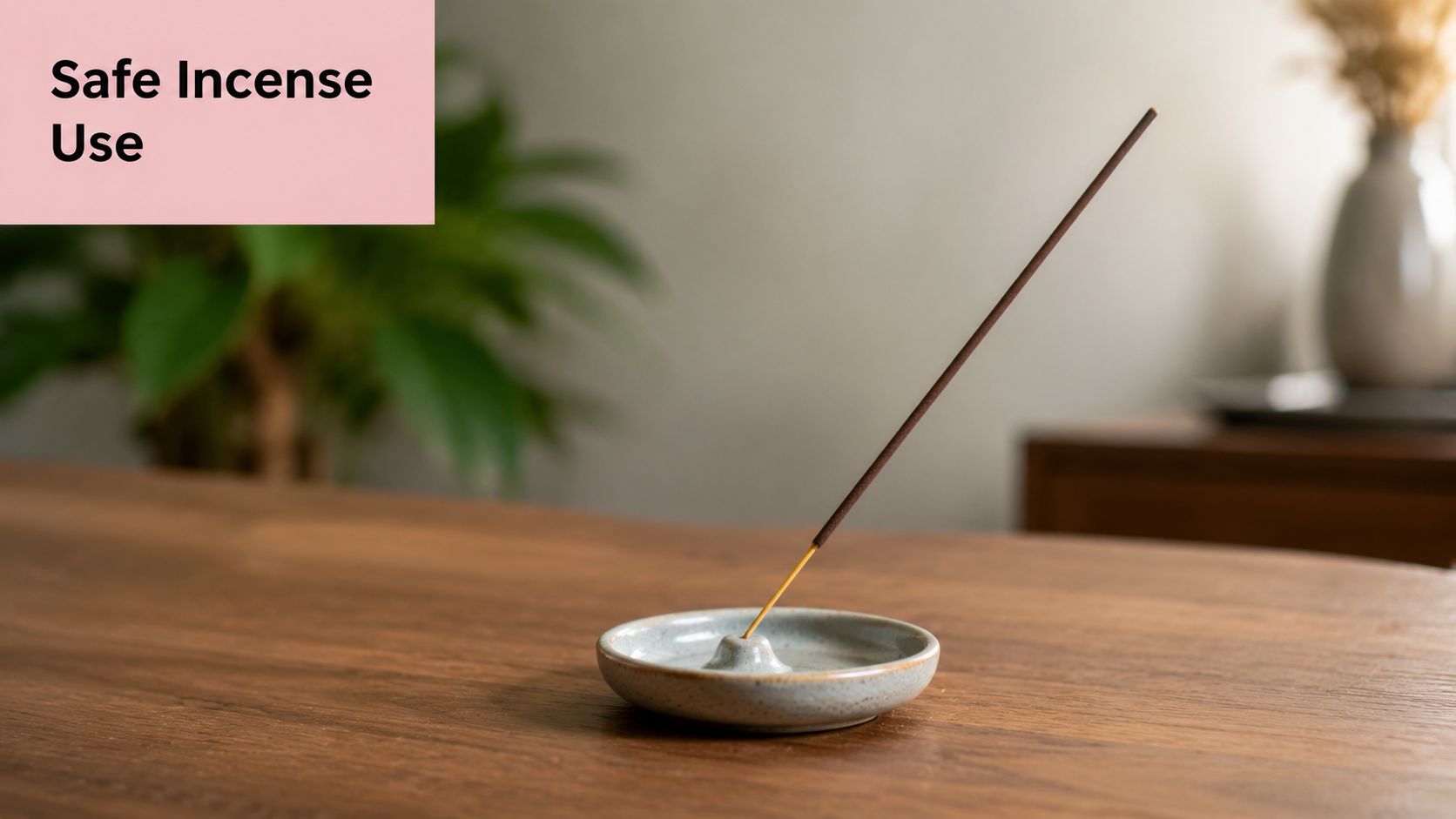
Your holder does more than prop the stick up. It catches hot ash, keeps the incense stable as it shortens, and helps the burn stay even. A wobbly setup is a bit like putting a candle on a cushion. It might seem fine for a minute, but it is not a risk worth taking.
Place incense in a stable, non-combustible holder on a fire-resistant surface. Keep it away from curtains, books, paper, bedding, and dried botanicals. If children or pets share your home, choose a spot they cannot brush past or knock over.
Angle matters too. This explanation of incense stick angle notes that burning a stick upside down can make it burn faster. In everyday use, that means less time with the scent and a stronger hit of smoke all at once. Upright, or only slightly angled, is usually the calmest and cleanest setup.
A simple checklist helps:
- Keep the stick upright or only slightly tilted so ash falls into the holder, not onto the table.
- Avoid fans, open doorways, and strong breezes because moving air can make the burn uneven and scatter ash.
- Give the holder a clear zone around it so nothing nearby can heat up or catch.
- Never leave burning incense unattended even if it seems safely settled.
A well-placed incense stick lets the ritual feel calm because the practical side has already been handled.
Use burn time as a gentle guide
Burn time is useful feedback. It tells you whether your setup suits the stick and whether the room is helping or interfering.
A standard stick often burns for somewhere around 30 to 60 minutes, and some styles can last closer to 1 hour or more depending on thickness and materials, as noted in this article on how to burn incense sticks. You do not need to time it with a stopwatch. Just notice whether it is burning at a calm, steady pace.
If the stick burns much faster than expected, the cause is often simple. Too much airflow, too much angle, or a crowded placement can change the way it smoulders. If it goes out, the ember may have been too small when you lit it.
| What you notice | What to check |
|---|---|
| Burn feels too fast | The stick may be tilted too far or sitting in a draft |
| It keeps going out | The ember may not have formed properly at lighting |
| Ash is falling outside the holder | The angle or holder fit may be off |
| Smoke feels too strong for the space | Use a larger room, shorter session, or consider fragrance diffusers and fragrance oils for smoke-sensitive days |
If you are ever unsure, choose the safer option and put it out. Incense is meant to soften a room, not create background worry. That small pause is part of mindful use too.
A Note on Ventilation and Conscious Choices
This is the part many thoughtful Australian households ask about, and rightly so. A beautiful ritual still needs to make sense for the space you live in. A breezy Queensland home, a compact apartment, and a closed-up room in winter all behave differently.
Good airflow changes the whole experience
In Australia, Cancer Council Australia says burning incense is “safe in normal amounts” and notes that the practical safety issue is dose and ventilation, not merely the presence of smoke. It recommends using incense only in situations with good ventilation, which you can read in its advice on incense and respiratory cancer questions.
That doesn't mean creating a gusty crosswind that strips all the scent out of the room. Usually, it means a room with some natural airflow, a window open, or enough air movement that smoke doesn't build up.
A good rule of thumb is to be sensible and responsive:
- Small room. Use one stick and give the room some fresh air.
- Closed-up home. Save incense for a better-ventilated moment.
- If smoke feels too heavy. Put the stick out and try again another time with more airflow.
A thoughtful option for smoke-sensitive homes
Some homes suit other fragrance formats better on certain days. If you love scent but want something without a lit stick, fragrance diffusers and fragrance oil options can be a lovely alternative.
That's part of using incense mindfully. Not forcing it into every setting, but choosing it when the room, the mood, and the airflow all line up nicely.
Extinguishing and Storing Your Incense Sticks
You don't have to let an incense stick burn all the way down every time. If you've had your moment and you're ready to move on, extinguish it carefully by pressing the lit tip into ash or a non-flammable surface until the ember is fully out. Check that there's no glow and no smoke before leaving it.
For storage, keep your incense in a cool, dry place away from direct sunlight. Dry storage matters because moisture can affect how evenly a stick burns. It also helps protect the fragrance, so when you do light one, the scent still feels full and balanced.
If you enjoy rotating your home fragrance with the seasons, a candle can be a nice partner to incense. Monochrome Natives Candle - Cedarwood and Vanilla features cedarwood, white musk, vanilla, and patchouli, and the travel tin contains 100% pure soy wax with a stated burn time of 35+ hours.
The nicest incense rituals are the ones that feel easy. Safe holder, good airflow, a scent that suits the moment, and no rush. That's really it :)
If you're ready to create your own slow little ritual at home, have a wander through Blushing Ivy Home Fragrance. You'll find Australian-made home fragrance designed for real homes, real routines, and those small feel-good moments that make a space feel like yours.