
Luxury Candles Australia: A Scent & Style Guide
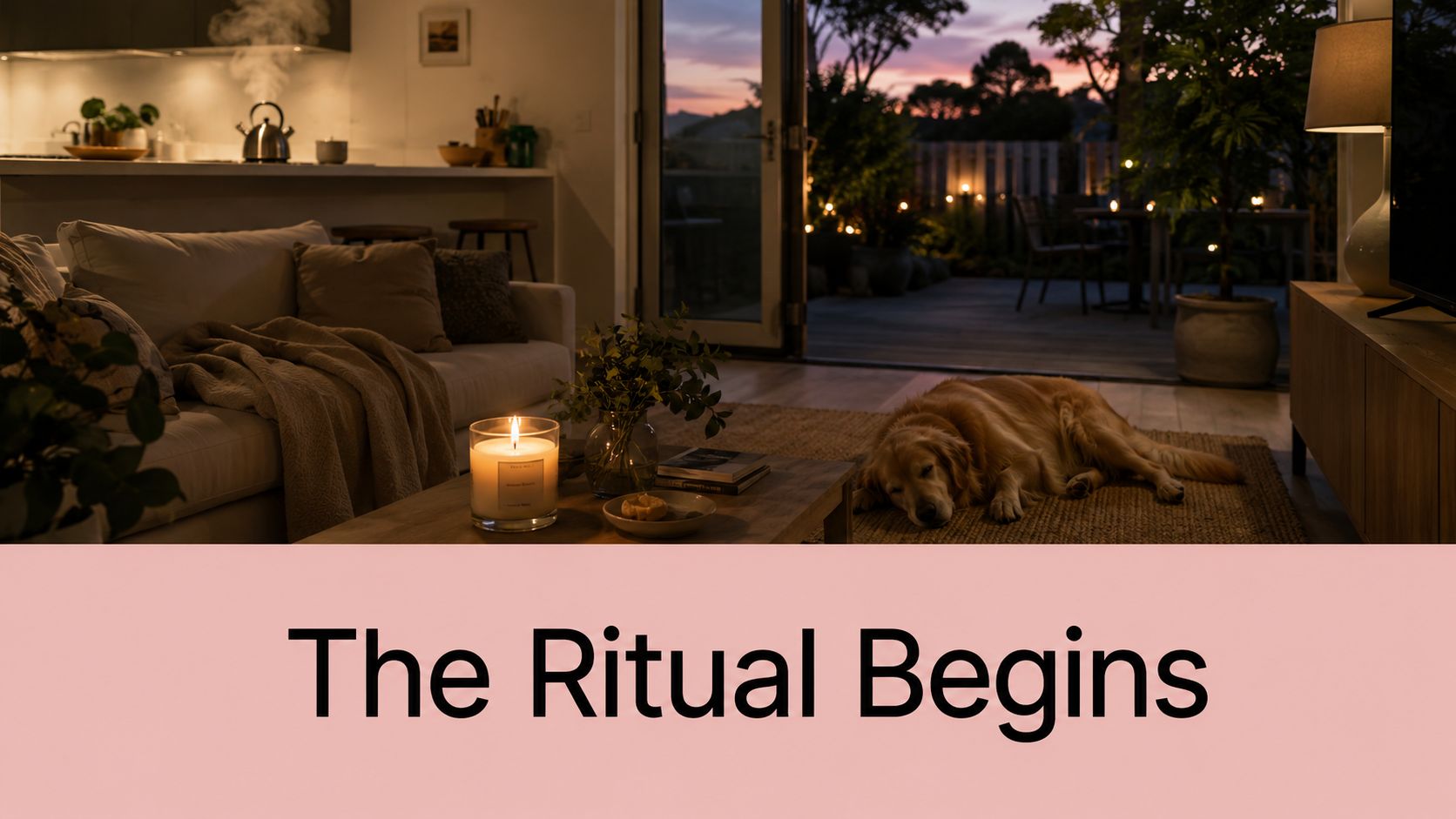
Some evenings call for a glass of wine, some call for a shower and bed, and some call for the little ritual that tells your nervous system the day is done. The back door's open, the kettle's on, the dog's asleep on the rug, and you strike a match because the room feels ready for softness. That's where luxury candles Australia really earns its keep, not as a status object, but as the thing that changes how your home feels the second the wick catches.
If you've ever stared at a beautiful jar and wondered whether you're paying for the candle or the packaging, you're not alone. A lot of Australian luxury candle content talks about style, not substance, which is why so many shoppers still feel unsure. By the time you finish reading, you'll know what matters, what to skip, and how to choose a candle that suits your home, your gifting list, and your standards.
Table of Contents
- That First Light at the End of a Long Day
- What Makes a Candle Luxe in Australia
- The Case for Soy and Essential Oil Based Scents
- Choosing Scents and Sizes for Every Room
- Care, Safety and Sourcing the Aussie Way
- Gifting Luxury Candles Without Overthinking It
- Candles, Diffusers, Sprays and Incense Compared
- A Little Local Love and How to Find Your Match
That First Light at the End of a Long Day
The nicest candles are rarely the flashiest ones. They're the ones that make a room feel settled, like the cushions have been fluffed, the windows have been shut against the breeze, and you can finally sit down without your brain running off in ten directions.
That's why I don't judge a candle by its label alone. In the Australian market, premium candles are a real category, not a tiny indulgence. One report estimates Australia's luxury candle segment at USD 50.75 million in 2024, with growth to USD 115.53 million by 2033 and a 9.54% CAGR over 2025–2033, while another placed candle revenue at AU$119.80 million in 2023, up 3.1% year on year, with a further 3.60% CAGR projected through 2027 (Deep Market Insights).
For me, that tells a simple story. Australian shoppers aren't buying candles only because they're cute on a coffee table. They're buying into home fragrance as part of daily life, and they want the scent to do something real.
Practical rule: if a candle only looks expensive, keep walking. If it's built well, you'll feel it in the burn, the scent throw, and the way the room changes.
What Makes a Candle Luxe in Australia
Start with the wax
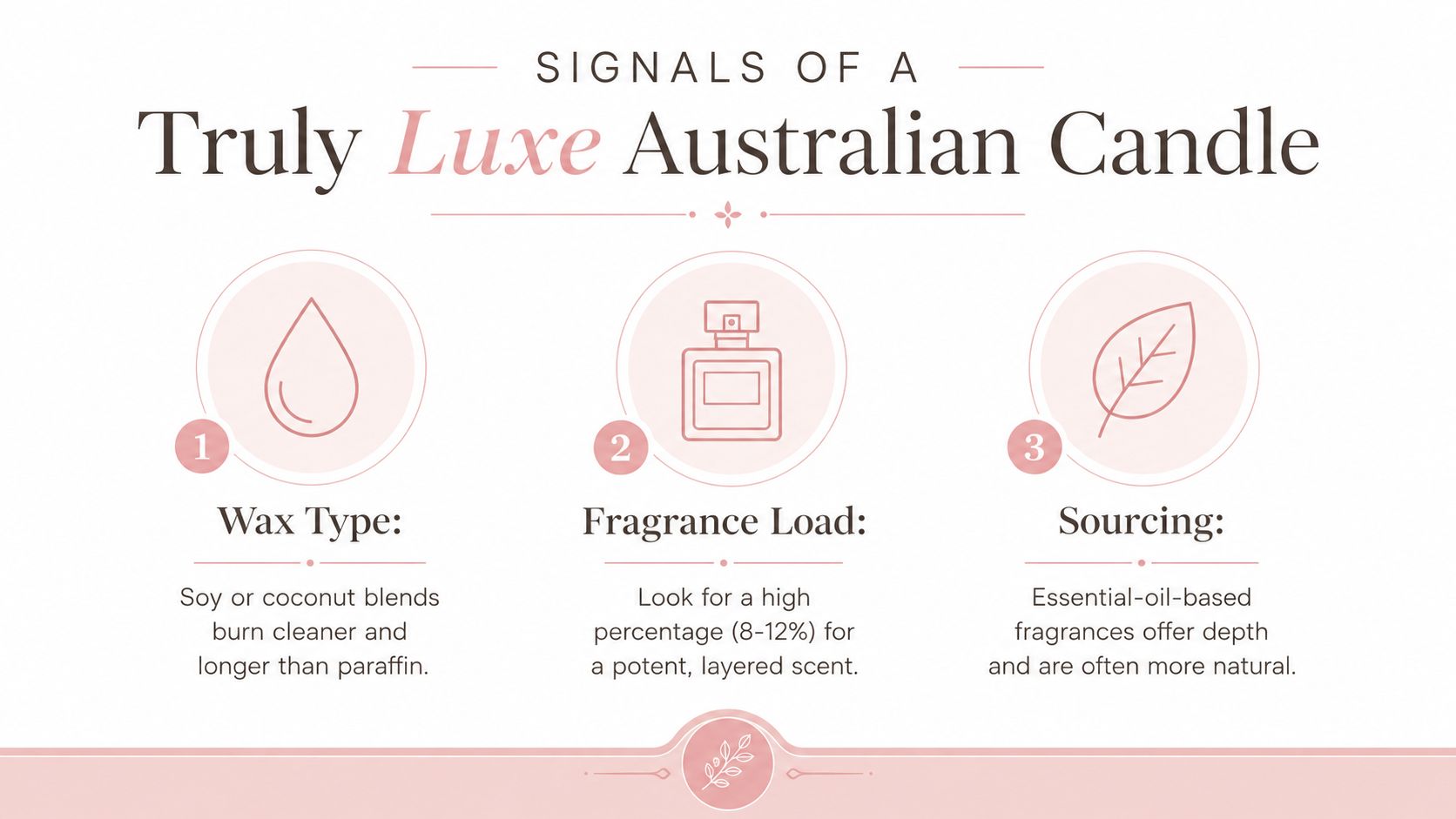
Wax is the base of the whole experience. Natural waxes like soy, coconut, vegetable, and beeswax usually burn more slowly and create less soot than paraffin, which is why many Australian shoppers check the wax type first. That single detail already tells you a lot about how a candle is likely to behave in your home.
A premium candle should make that information easy to find on the product page. If the brand hides the wax type, treat that as a warning sign. If it clearly says soy or a soy-led blend, you're more likely to get a slower, cleaner burn that suits long evenings at home.
Then look at the wick and vessel
Wick matching matters more than plenty of shoppers realise. A candle can have a beautiful fragrance and still burn badly if the wick is wrong for the wax and vessel. Good makers test those combinations carefully, and that shows up in the way the candle melts, pools, and releases scent.
The vessel matters too. A heavy, reusable jar or glass container usually points to better heat management and more thoughtful presentation. A flimsy vessel often signals the opposite. If you want a clear way to judge what sits behind the price tag, this guide to Glasshouse candles versus Australian artisan brands is worth reading before you buy.
Read the label like a buyer, not a browser
Use this quick checklist when you're comparing luxury candles in Australia:
- Wax type listed clearly. Soy or another natural wax should be easy to spot.
- Wick material named. Cotton wicks are a strong sign of thoughtful construction.
- Burn care included. Good brands explain how to get an even melt pool.
- Vessel quality visible. Reusable glass or ceramic feels more considered.
- Fragrance origin stated. Australian-made fragrance often points to local formulation and tighter brand control.
You can also look at a product like Classic Soy Candle, which pairs 100% soy wax with lead-free cotton wicks and Australian-made, essential oil-based fragrance. That combination tells you much more about value than a glossy box ever will.
The Case for Soy and Essential Oil Based Scents
Soy has earned its place in Australian homes because it behaves well. It generally burns cooler and slower than heavier wax types, which means you get a gentler room glow and a longer stretch of scent without the candle feeling shouty. That suits the way most of us use candles, on the couch after dinner, while the laundry's still on the line, or when the house needs to feel calmer in the evening.
The fragrance side matters just as much. Essential-oil-based fragrance oils usually feel more layered, less one-note, and closer to the way real botanicals unfold in the air. You notice it most with native-inspired profiles, eucalyptus, lemon myrtle, banksia, bush florals, and honeyed notes that don't smell like a generic sweet shop. They feel local because they are rooted in a local scent language.
There's a clear market reason this matters too. Australia's broader candle market is big enough to support premium positioning, with one industry report valuing it at AUD 130.57 million in 2025 and projecting AUD 200.84 million by 2035 at a 4.40% CAGR. Another study estimated consumption at 99K tons in 2024, up 2.1% that year, and put the market's value at $1.1B in 2024, with projections of 117K tons and $1.5B by 2035 (Expert Market Research). That kind of scale supports serious makers, not just pretty jars.
My take: if you want a candle that feels calm, clean, and worth relighting, soy plus essential-oil-based fragrance is the safest place to start.
If you'd like a deeper look at wax choices, this Blushing Ivy guide to soy wax candles in Australia covers the basics in plain English. And if you're comparing premium brands, keep an eye on what's in the candle, not just how luxe the branding looks.
Choosing Scents and Sizes for Every Room
Match the room to the mood
Living rooms want presence. A warm, welcoming scent with a bit more throw works beautifully here, especially when you've got guests over or you're trying to make a shared space feel pulled together. Bedrooms want the opposite, softer, quieter, and less likely to overpower linen or skin care already in the room.
Bathrooms are where fresh, spa-like scents behave best. Kitchens often suit citrus, herbaceous, or clean green notes because they sit well alongside cooking smells instead of fighting them. Home offices do better with something focused and unfussy, the sort of scent that says “I'm working” without making you feel trapped in a perfume cloud.
Choose the size for the job
Small vessels, including travel tins, are ideal for a bathroom, bedside table, or guest room. They give you fragrance without turning the space into a full-blown scent statement. Mid-sized candles work well in bedrooms and smaller living areas where you want atmosphere without overshooting the room.
Large vessels and multi-wick candles are your centrepieces. They suit open-plan living, long entertaining nights, and big rooms where a single wick would struggle to spread scent evenly. Home Beautiful notes that candles wider than 7.5 cm usually need more than one wick to prevent tunnelling (Home Beautiful), which is exactly why larger vessels often feel more polished when they're designed properly.
Think in scent families, not just notes
Citrus feels bright and easy in the kitchen. Herbaceous blends feel crisp and tidy in workspaces. Soft florals can make a bedroom feel washed and serene, while warmer amber, vanilla, or woody profiles are lovely when the weather cools and you want the house to feel wrapped up.
For a candle that suits a classic, easygoing home, the Classic Soy Candle is a straightforward option because it comes in a variety of fragrances and a simple, giftable format. If you're shopping for a mood rather than a room, start there and let the scent do the talking.
Care, Safety and Sourcing the Aussie Way
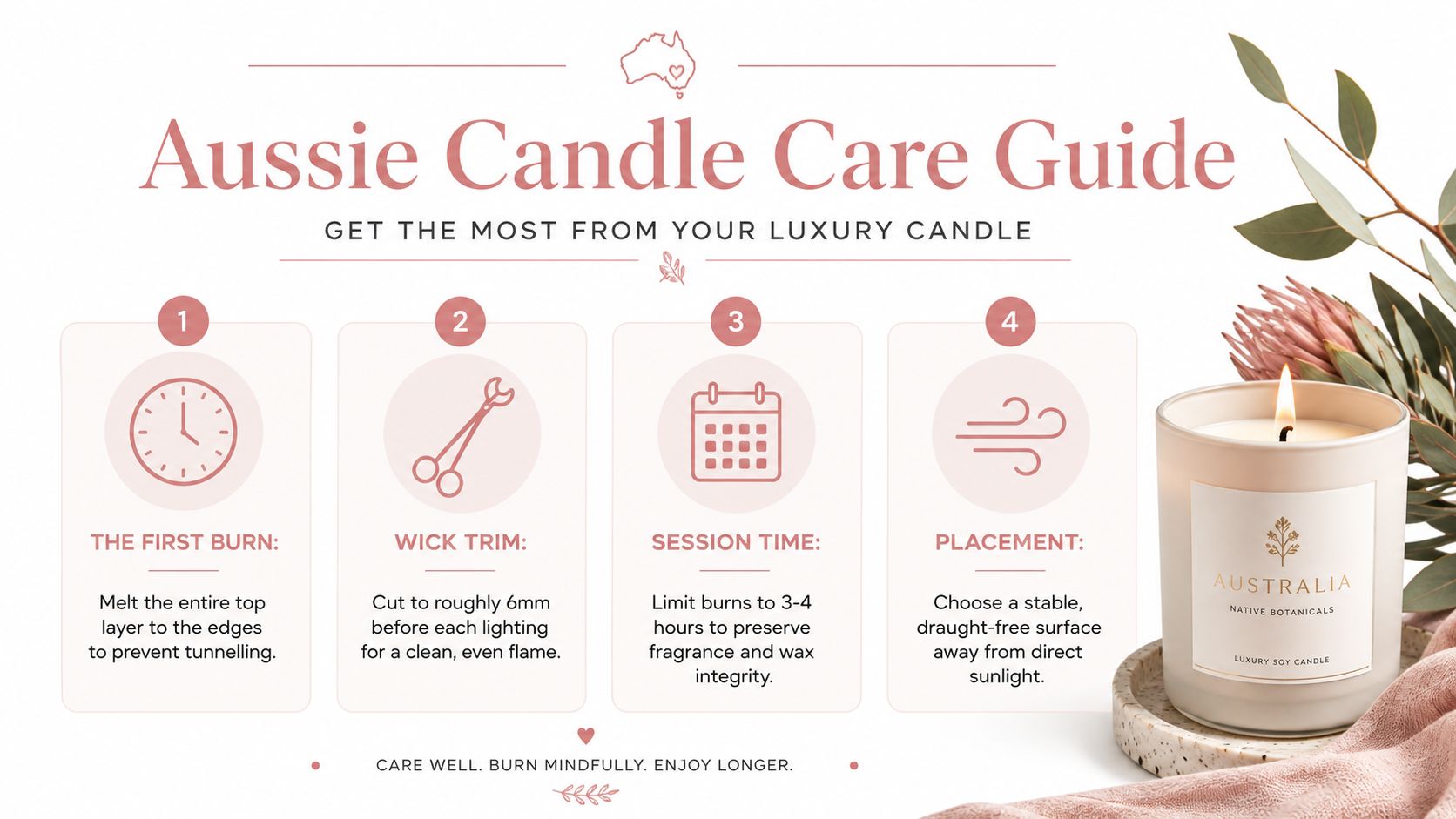
The first burn sets the tone. Let the wax pool reach the edges before you blow it out, or the candle will start tunnelling and you'll spend the rest of its life fighting a narrow hole through the middle. Trim the wick before each burn, keep the flame out of draughts, and stop leaving it going just because the room feels cosy.
Good candle care is simple and consistent. Trim the wick to about 6 mm before lighting, then keep each burn session to around 3 to 4 hours so the candle stays cleaner, burns evenly, and avoids overheating. Those habits make a real difference to how a luxury candle performs, especially if you want it to last well instead of burning off fast and unevenly.
Australian-made candles often give you a clearer view of what you're buying. Small-batch makers usually work with lead-free cotton wicks, vegan-friendly soy wax, and locally made fragrance because those ingredients are easier to manage in-house, and easier to stand behind. “Australian-made” tells you where the product was made, but the better question is whether the maker is open about the wax, wick, and scent blend, and whether they explain how to care for it properly. Refillable vessels are another strong sign, because a candle should earn a second life as a jar, not go straight into the bin. For a closer look at that approach, Blushing Ivy's Australian-made candle guide is a useful read.
Keep candles on a stable surface, well away from children, pets, and anything that can catch. A pretty flame still needs common sense.
If you want a candle that feels considered from the start, look for brands that explain their materials plainly and show care in the finish. That's the difference between something that just smells nice and something that behaves like a proper luxury candle in an Australian home.
Gifting Luxury Candles Without Overthinking It
Candles make easy gifts because they do two jobs at once. They feel personal, and they don't create clutter. That's why they work for Mother's Day, housewarmings, teacher gifts, birthdays, and those “I saw this and thought of you” moments that are the best kind.
The trick is to match the scent to the occasion, not just the recipient's favourite colour. A coastal or fresh scent feels breezy and easy for a summer birthday. Warm amber, vanilla, or something woody suits a winter housewarming when you want the new place to feel settled. Fresh eucalyptus feels like a clean reset for a spring move-in, especially if the person loves a bright, open home.
Presentation matters more than people admit. A simple kraft box, a ribbon, and a handwritten note can turn a candle into a thoughtful present. Gift sets make it easier still, especially if you're buying for someone who likes options but doesn't want to fuss.
Gift rule I stand by: if you'd happily keep it yourself, it's probably good enough to give.
When in doubt, go for something useful and beautiful rather than overly novelty-driven. That keeps the gift feeling calm, not gimmicky. And if you're buying for someone who already has everything, fragrance is usually safer than another decorative object collecting dust.
Candles, Diffusers, Sprays and Incense Compared
Candles are for ritual. They're what you light when the day's easing off and you want warmth, glow, and a little moment of reset. Reed diffusers are the steady ones, scenting hallways, bathrooms, and open-plan spaces without asking for attention.
Room and linen sprays are the instant fix. They're brilliant when the house needs a quick refresh before guests arrive or when the sofa, bedding, or entryway needs a lift in seconds. Car diffusers are the small, practical option for commutes, school runs, and weekend drives, while natural incense suits slower rituals, meditation, and mornings when you want the house to feel still.
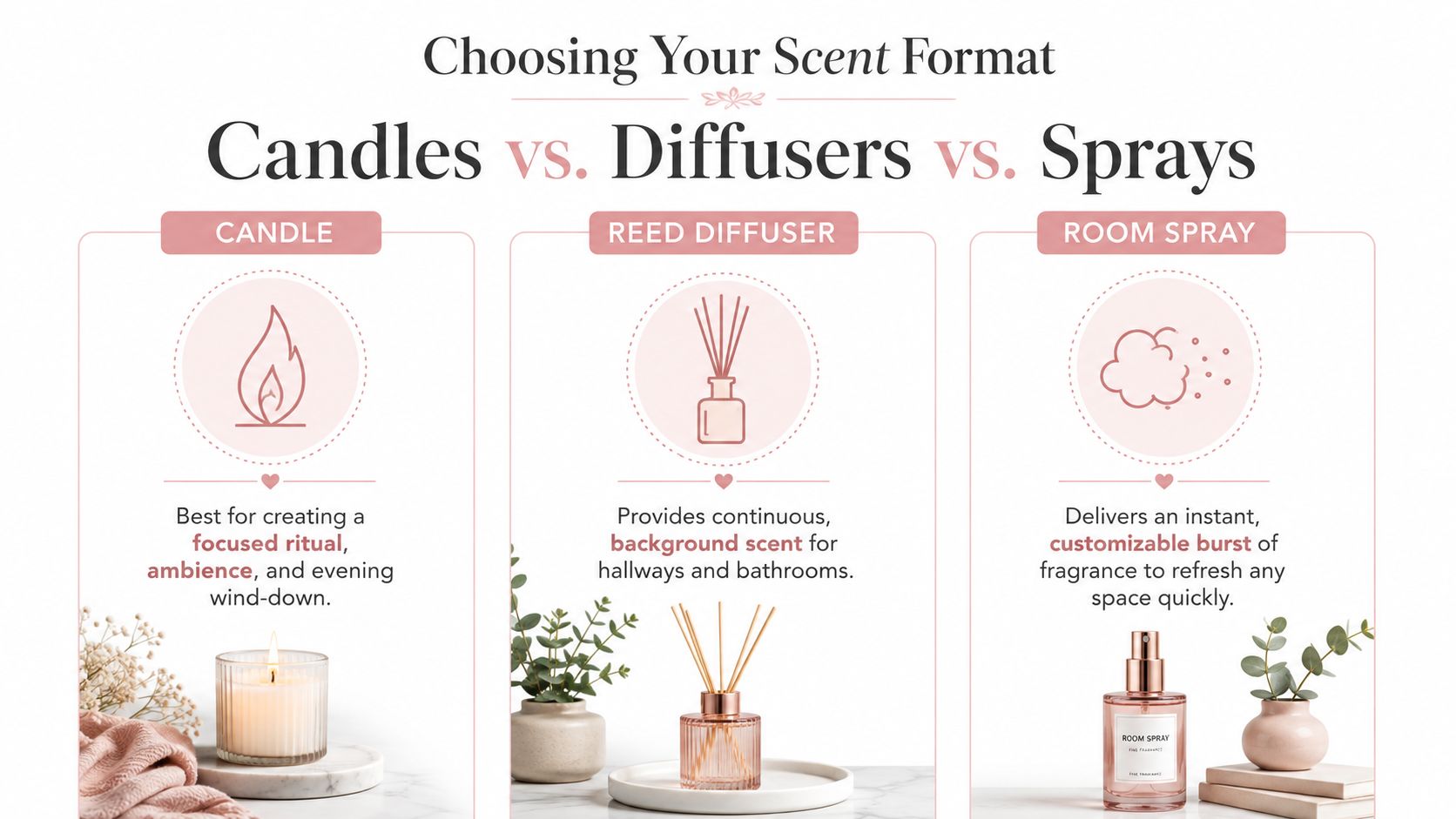
The simple way to choose is this. Flame for moments, diffusers for all day, sprays for now, incense for mindfulness, car diffusers for life on the move. That's a cleaner decision tree than trying to make one product do everything.
If you like your home fragrance in more than one format, that's where a brand like Blushing Ivy fits neatly, because it offers candles, diffusers, sprays, car fragrance, and incense without forcing you into a single mood. Different rooms deserve different tools, and frankly, your pantry does not need to smell like your bedroom.
A Little Local Love and How to Find Your Match
If you want a starting point that feels distinctly Australian, look at brands that understand local fragrance and local gifting habits. Blushing Ivy Home Fragrance does that with ranges like the Classic Soy Candle, the Australiana Fairytale Candle, and the Wild Heath Society range, which has a more masculine, refined edge. The line also includes reed diffusers, room and linen sprays, scented car diffusers, natural incense, and gift sets, so you can match the format to the moment instead of forcing the moment to fit the product.
That's the difference between a candle that just looks premium and one that is. Look at the wax, the wick, the vessel, the burn care, and where the fragrance comes from. Then choose the scent that makes your house feel like home, not a showroom.
Wholesale buyers should also pay attention to makers who can support boutique retail without making the process painful. That matters when you're curating for a store, a gift nook, or a seasonal display and need products that feel considered from the shelf to the unboxing.
If you're ready to choose with a bit more confidence, start by exploring Blushing Ivy Home Fragrance. You'll find the kind of home fragrance that suits everyday living, thoughtful gifting, and the lovely little rituals that make a house feel like yours.