
Non Toxic Room Spray Guide for Australian Homes
You know that moment after you've vacuumed, folded the washing, and the house finally feels calm, then you reach for a room spray and suddenly wonder what's floating through the air? That instinct is a good one. A non toxic room spray isn't just about making a room smell lovely, it's about choosing something that fits the way your home really works, with kids, pets, linen, soft furnishings, and all the everyday breathing that happens in between.
That matters more in Australia than a lot of people realise. Australians spend about 90% of their time indoors (reference), so the products you spray at home are part of your indoor environment, not just a finishing touch. For many of us, that's the difference between buying a scent and buying something that belongs in the chemistry of the house.
Table of Contents
- Why Your Room Spray Choice Matters More Than You Think
- What Non Toxic Actually Means in Australia
- Ingredients to Embrace and Those to Avoid
- How to Read Product Labels Like an Expert
- Keeping Everyone Safe Including Your Pets
- A Simple DIY Room Spray Recipe to Try
- Why Blushing Ivy Room Sprays Meet the Mark
Why Your Room Spray Choice Matters More Than You Think
You've done the hard part. The benches are wiped, the floors are clean, and the lounge room has that fresh, sorted feeling that makes you want to put the kettle on and enjoy it for five minutes before someone drops crumbs on the couch again. That is usually when room spray comes out, because fragrance can make a home feel finished.
But once you start looking at the bottle itself, the choice means more than the scent. A spray does not just vanish into the air and become harmless magic. It becomes part of the air your family breathes, which is why indoor chemical emissions are treated as a real exposure issue in home-environment guidance, not a small side note.
The air in your home is part of the product
That sounds a bit serious, but it is really just practical. If a spray is heavy on solvents or vague on ingredients, it is doing more than freshening a room. It is changing the indoor chemistry of the space where you relax, sleep, and sometimes nap with the dog at your feet.
A lot of shoppers get caught here. The scent might be lovely, but the story on the front of the pack does not always match what is inside. A careful choice looks at what the spray is made from, how much of it ends up in the air, and whether the formula suits real-life use in a family home.
In homes with children or pets, that matters in a very ordinary way. Little lungs are closer to floors, soft furnishings hold onto scent, and pets spend time sniffing the very places people spray most often. A room spray that seems light and pleasant at the shop can behave very differently once it is used every day in a closed room with the windows shut.
Practical rule: if a spray is meant to be used often, it should be easy to understand, light on unnecessary extras, and clear enough that you would feel comfortable using it in a room you actually live in.
What Non Toxic Actually Means in Australia
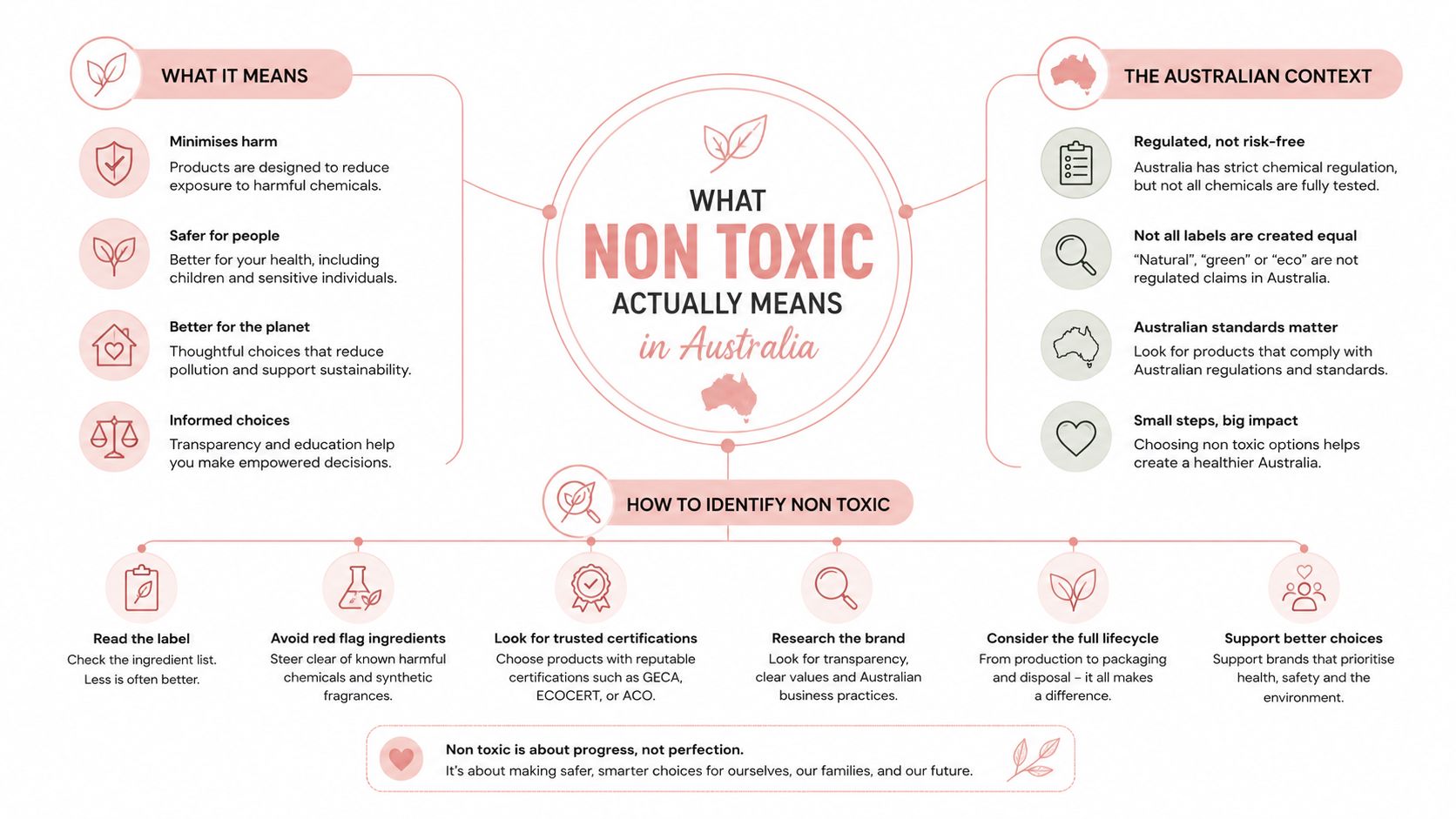
If you're standing in the aisle or scrolling a product page, “non toxic” can sound reassuring without telling you much. In Australia, the term has more weight than a nice label, because the Australian Industrial Chemicals Introduction Scheme (AICIS) began on 1 July 2020 and regulates industrial chemicals used in products sold here, including many fragrance and spray ingredients (reference).
The label has to mean something
Australian Consumer Law also comes into play here, because it prohibits misleading claims. So when a brand uses words like “non-toxic”, “natural”, or “safe”, those claims need to be supportable, not just calming to read.
For room spray shoppers, that usually means looking for ingredient transparency, lower-emission design, and formulations that rely on sensible carrier systems such as water, ethanol, or plant-derived solvents where appropriate. A product can still smell beautiful while being made with cleaner formulation choices, which is the point. The trust comes from how it is put together, not how softly the packaging speaks.
A bottle should make its ingredients easy to read, the way a recipe does. If you cannot tell what is doing the work, or the label hides behind vague fragrance language, you are left guessing about what ends up in the air.
If you are shopping a product like Room & Linen Spray, the useful questions are simple. What is in it, how is it dispersed, and does the brand give you enough information to judge whether it suits your home and the people, or pets, living in it.
Ingredients to Embrace and Those to Avoid
A room spray label gets easier to read once you know what to look for. The simplest bottles are often the clearest ones. A short formula with named ingredients usually gives you more useful information than a long stretch of wellness language.
Separating function from fog is key. Some ingredients do one job well, like carrying scent or keeping the spray mixed. Others are there because they are cheap, strong, or hidden behind broad terms that say very little about what is in the bottle.
A quick ingredient comparison
| Ingredient Type | Examples | Safety Notes |
|---|---|---|
| Better carriers | Water, ethanol in small amounts, plant-derived solvents | Help disperse scent without making the formula needlessly heavy |
| Useful scent ingredients | Essential oils | Can suit a more transparent, low-fragrance approach when used carefully |
| Stabilising helpers | Emulsifiers, solubilisers | Keep oils mixed through the spray so it doesn't separate or leave a messy residue |
| Ingredients to question | Phthalates, formaldehyde, methylisothiazolinone, benzisothiazolinone | These are repeatedly flagged as irritants or sensitizers in safety guidance |
| Vague label terms | “Fragrance” on its own | Can hide a broad mix of undisclosed chemicals, which makes informed choice harder |
The technical balance matters too. An Australian SDS for a room spray product lists ethanol at <10% and an emulsifier at <5%, which shows how lower-alcohol spray systems still need help keeping oils evenly dispersed (reference). That is different from a high-solvent spray that relies heavily on fast evaporation and can increase inhalation exposure.
For fragrance quality, this guide on essential oil purity is worth reading before you buy anything marketed as natural. It helps separate oils that are well handled from ones that only look clean on the front of the label.
How to Read Product Labels Like an Expert
A good label should answer your questions quickly. If you have to guess what “fragrance” means, or you need a marketing claim to do the heavy lifting, that's not transparency. It's decoration.
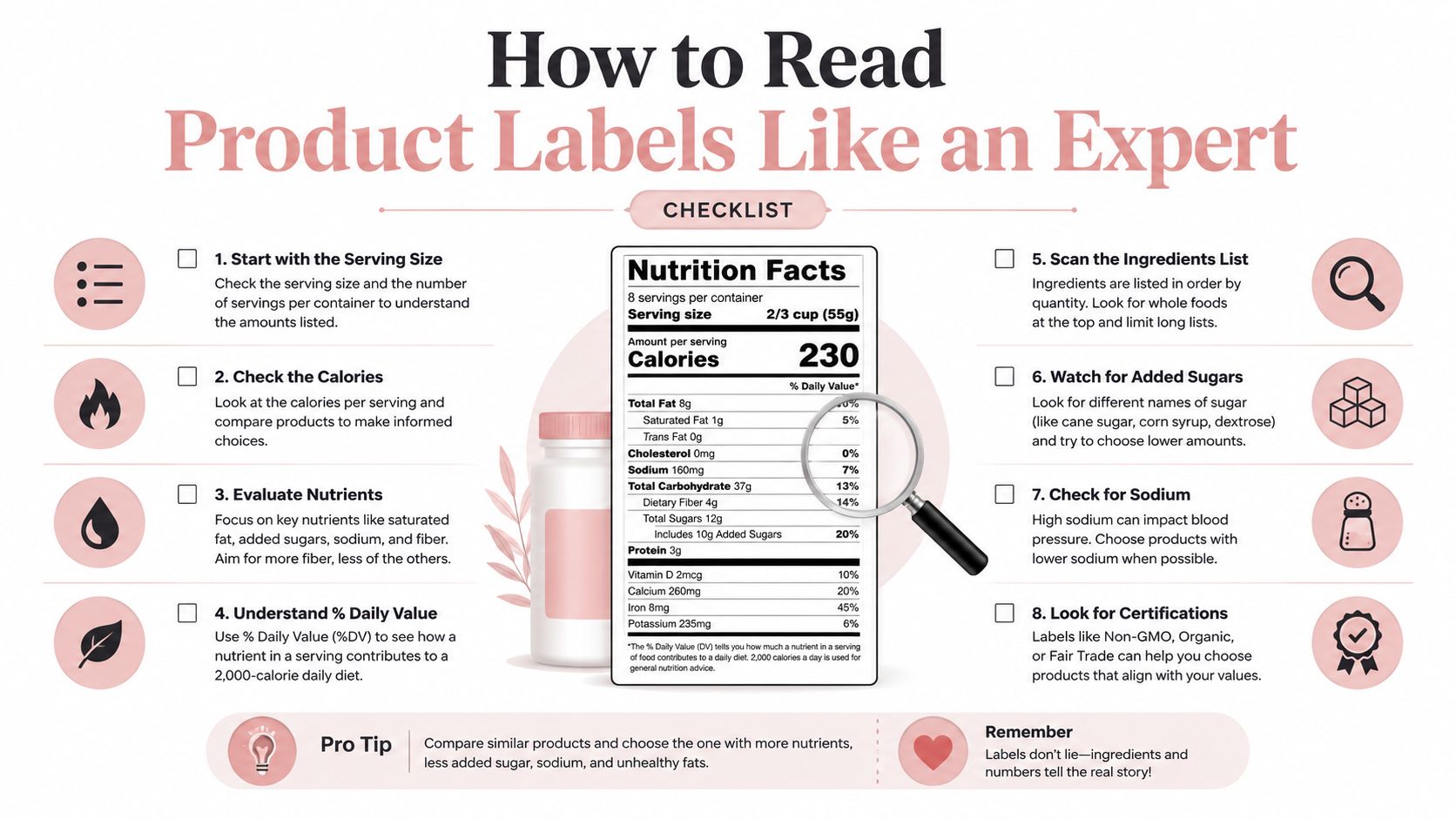
The easiest place to start is the ingredient list itself. When a brand names essential oils, purified water, solubiliser, or another clear carrier, you can at least see the structure of the formula. When the label leans on one vague fragrance term and a lot of feel-good adjectives, you know less than you should.
What to check first
- Look for full ingredient names. Clear naming helps you judge whether the spray fits your standards.
- Treat “fragrance” as a question mark. It may hide a broad mix of undisclosed chemicals.
- Check whether the spray is made with essential oils or only says “with essential oils.” Those aren't the same thing.
- See whether the carrier is obvious. Water, ethanol, and solubilisers are easier to assess than mystery blends.
- Read the usage directions. Controlled application usually signals a more practical formulation.
A product like Wild Heath Society Room Cologne shows how a formula can stay simple on paper, with purified water, an eco friendly solubiliser, and premium fragrance, while still being presented clearly.
If the label can't tell you what the product is doing, don't expect the scent to tell you either.
Keeping Everyone Safe Including Your Pets
A home doesn't have just one kind of nose in it. You might have a child who wants to spray everything twice, a partner who's sensitive to strong smells, and a cat who has very firm opinions about the laundry basket. Real-home safety means thinking about all of them together.
That's where the “non-toxic” conversation gets more useful. Essential-oil-based sprays can still irritate sensitive users, especially in smaller rooms or when a fragrance lingers on linen and soft furnishings where pets sleep. The ingredient list is only part of the picture, because exposure context matters just as much.
Use the spray, don't flood the room
The safest habit is simple. Use a light mist, keep the room ventilated, and don't spray directly onto surfaces your family touches often unless the product specifically says that's fine. Airing out a room is boring advice, but it works because it lowers the concentration of whatever you've just introduced into the space.
For households with pets, that matters even more. A pet-friendly label is reassuring, but it still pays to use any spray thoughtfully around bedding, cushions, and enclosed spots where air doesn't move much. The same applies to children and anyone with asthma or a strong sensitivity to scent.
The guidance around reed diffusers is also worth keeping in mind, which is why are reed diffusers safe can be a helpful comparison point when you're deciding whether you want a passive scent format or a controlled spray.
Simple household rule: if you can smell it strongly at the doorway, you've probably used too much.
A Simple DIY Room Spray Recipe to Try
If you like making things yourself, there's a straightforward baseline recipe that gives you a real room spray rather than scented water. Use 2 tablespoons of vodka or witch hazel, add 20 to 30 drops of essential oils, then fill a 4 oz bottle with distilled water (reference).
Why each part matters
The alcohol helps disperse the oils, which is why a spray made only with water usually feels weak or separates faster. Distilled water dilutes the blend so it's gentler and more usable. The essential oils give the scent character, but they should stay in a low enough concentration that the spray still feels like a room mist, not a strong perfume cloud.
DIY also comes with trade-offs. These sprays need shaking before each use, and they can separate over time, especially in warmer weather. In an Australian summer, that's not a small detail. Heat makes stability matter more, so a homemade spray may need more attention than a professionally blended one.
That doesn't make DIY a bad choice. It just means the bottle needs a bit of care, and your expectations should match the formula.
Why Blushing Ivy Room Sprays Meet the Mark
At Blushing Ivy, we keep room fragrance practical and clear. Our Room & Linen Spray is made with essential oil-based, Australian-made fragrance, comes in recyclable 120ml bottles, and is designed to be used with a light mist rather than a heavy blast. The idea is simple, controlled fragrance for everyday spaces.
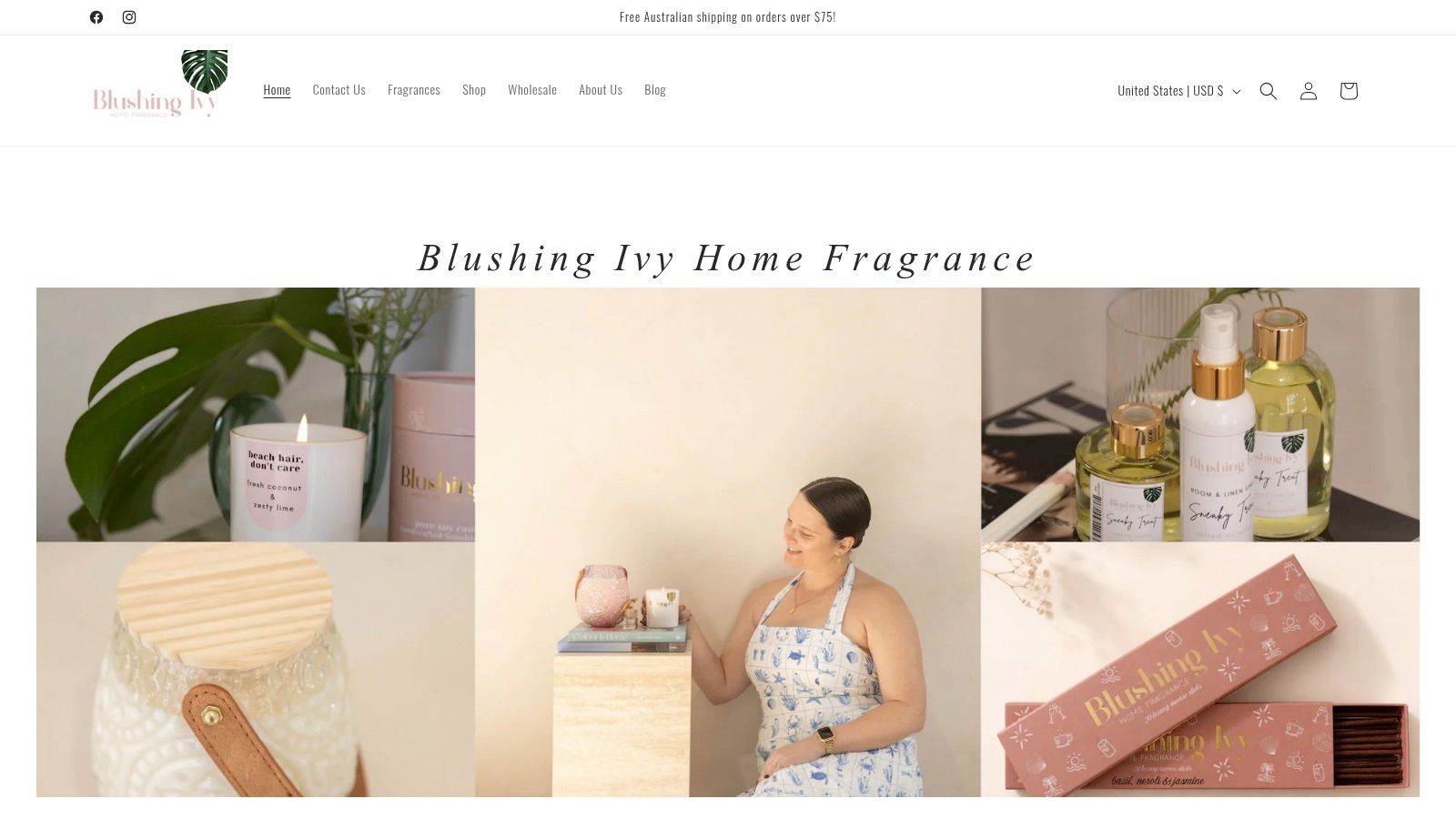
That approach matters because it keeps the solvent system lean and avoids the sort of high-solvent formulas that can make a room feel overloaded. It also keeps the focus on transparency, which is what shoppers in Australia need when they're choosing something for family spaces, not just for a quick burst of scent.
If you want room fragrance that feels thoughtful, transparent, and easy to live with, have a look at Blushing Ivy Home Fragrance. You'll find Australian-made scents for homes, gifting, and everyday freshness, all made with the same care we'd want in our own Sunshine Coast spaces.