
Rose Quartz Crystals: Meaning, Uses and Styling Guide
You're wandering through a weekend market when a soft pink stone catches the light from a stall. It looks pretty enough to take home, but then the practical questions arrive. What are rose quartz crystals made of, why do people associate them with love, and will that lovely blush colour work on your bedside table?
Rose quartz is one of those stones that sits comfortably between mineral collecting, meaningful gifting and everyday home styling. You don't need to be a dedicated crystal enthusiast to enjoy it. A small polished piece can add warmth to a shelf, a rough specimen can bring a natural touch to a coastal room, and a stone beside a candle can make a quiet evening feel a little more intentional.
Table of Contents
- Why Rose Quartz Keeps Catching Your Eye
- What Rose Quartz Crystals Actually Are
- A Short History and the Meanings People Hold Dear
- Where Rose Quartz Sits Beautifully in an Australian Home
- How to Cleanse and Care for Rose Quartz
- Spotting Genuine vs Treated Rose Quartz
- Pairing Rose Quartz with Home Fragrance and Gifts
- Choosing Your Piece Without Overpaying
Why Rose Quartz Keeps Catching Your Eye
Perhaps you first noticed rose quartz on a friend's coffee table, tucked beside a stack of books and a vase of gum leaves. Or maybe it appeared in a gift box, pale pink against tissue paper, looking both delicate and surprisingly substantial in your hand. The appeal is immediate. The colour feels gentle, but the stone itself has enough presence to hold its own among ceramics, timber and glass.
That combination makes rose quartz especially easy to bring into an Australian home. It suits a bright Sunshine Coast apartment, a warm Queenslander, a coastal cottage and a compact city bedroom without demanding that you redecorate everything around it. The stone can look polished and modern, earthy and organic, or sentimental, depending on the form you choose.
A useful starting point: buy rose quartz because you enjoy its colour, texture and symbolism, not because you feel you need to believe a particular promise about it.
There's also plenty to learn beneath the pretty surface. Rose quartz is a pink variety of quartz, connected to the same broader mineral family as clear rock crystal and smoky quartz. Australian references recognise it as a gemstone variety, with documented occurrences including Western Australia and the Harts Range in the Northern Territory. The Australian Museum's quartz guide places these colour varieties within the quartz family.
This guide keeps both sides of the story in view. You'll learn what rose quartz crystals are, why people hold their meaning dear, how to style them with home fragrance, how to care for them and how to compare pieces without assuming the highest price is automatically the right choice.
What Rose Quartz Crystals Actually Are
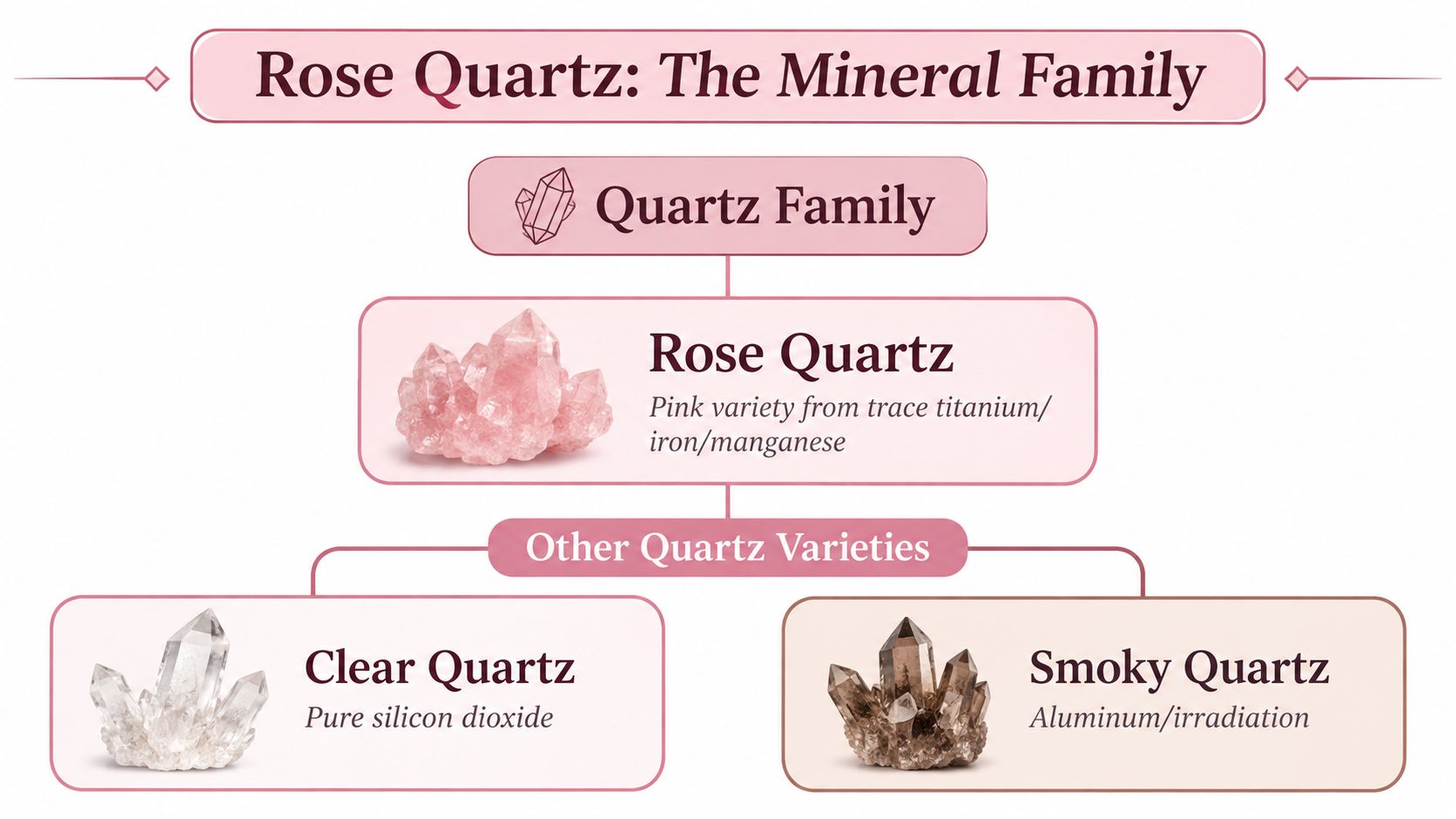
Let's make the geology simple. Rose quartz is quartz with a pink colour, rather than a completely separate mineral species. Clear quartz is commonly called rock crystal, brownish quartz is smoky quartz, and the pink form is rose quartz. The colour changes what we see, not the stone's place in the quartz family. The Australian Museum explains this colour-based classification.
A glass analogy helps. Clear glass and pink glass can share the same basic material, while a small amount of colour changes the appearance. Rose quartz works in a similar visual way. Trace elements and impurities, including titanium, iron and manganese, have been associated with its pink colour, although the exact colouring mechanism can vary through the material. A geology reference discusses these possible trace impurities and the difference between massive and crystal forms.
The practical properties
Rose quartz often appears massive and translucent, meaning it forms in broad pieces rather than neat, pointed crystals. Some specimens are cloudy or milky, while others allow a softer glow through the stone. That haziness isn't automatically a flaw. It's part of the look many people love.
For daily handling, the key fact is its Mohs hardness of 7, as reported in gemological summaries such as this rose quartz mineral reference. That makes it suitable for jewellery, polished palm stones and decorative pieces, although hardness doesn't make a stone impossible to chip or scratch. Rough treatment can still mark an edge or damage a polished surface.
The stone also has a specific gravity of around 2.66, a measure that helps explain why a small piece can feel pleasantly weighty rather than light and plasticky. Angara's rose quartz guide provides this specific gravity figure.
The Australian connection
Australian rose quartz is documented in pegmatite settings, including Western Australia and Harts Range in the Northern Territory. Mineral references also describe Australian material as often paler than premium international rough, so hue saturation, translucency and fractures matter when suppliers assess stock. This mineral reference discusses Australian occurrences and the appearance of local material.
That gives rose quartz a nice place in Australian mineral history. It's relevant as a collectible and lapidary material, even though it isn't generally treated as a major Australian mining commodity. The stone you see in a shop may be locally finished, imported rough that has been polished here, or imported as a completed decorative object, which is why origin questions are worth asking.
A Short History and the Meanings People Hold Dear
Rose quartz has gathered meaning because its appearance speaks a language people already understand. Soft pink tends to suggest tenderness, affection, gentleness and care. Across different eras and crystal traditions, people have connected the stone with love, compassion, emotional warmth and the heart.
Those associations don't need to be treated as medical facts to remain meaningful. Someone might keep a polished stone near a journal as a reminder to speak more kindly to themselves. Another person might give rose quartz to a friend moving into a new home, not as a promise that the stone will change their life, but as a small symbol of affection and encouragement.
Symbolism without the grand promises
Modern crystal culture often calls rose quartz a love stone. That phrase can sound a little broad, especially when it's used to suggest guaranteed emotional or physical outcomes. A more useful interpretation is symbolic. Rose quartz can represent self-kindness, friendship, family connection, romantic affection and a softer approach to everyday life.
The stone's popularity in meditation corners and bedside spaces makes sense in that context. Holding a smooth object can give a ritual something physical to centre on, while placing a meaningful item where you'll see it can act as a visual cue to pause. The benefit comes from the person's attention and intention, not from treating a mineral as a substitute for professional care.
Keep the meaning personal: a crystal can be a beautiful reminder, a thoughtful gift or a calming object without needing to carry an impossible job description.
That balance is part of rose quartz's charm. It can be loved by someone who enjoys metaphysical traditions, someone who collects Australian minerals, or someone who likes a blush-pink object on a sunny shelf. You're allowed to appreciate the symbolism and the geology at the same time.
For gifting, the stone works particularly well when the message is gentle rather than overly romantic. It can suit a birthday, a housewarming, a friendship gesture or a quiet “I thought of you” moment. The meaning comes from the relationship and the way you present it.
Where Rose Quartz Sits Beautifully in an Australian Home
Rose quartz looks happiest when it has a little breathing room. A handful of tiny tumbles in a glass bowl can soften a timber coffee table, while one larger piece can anchor a console without making the room feel themed. In a light-filled coastal home, the pink can pick up the warmth of woven baskets, white linen and sandy neutrals. In a darker room, it becomes a small blush accent that catches the eye.
Easy placements to try
- On a bedside table: Choose a small cluster or polished stone beside a book, hand cream or a ceramic dish. Keep the arrangement simple so it feels lived-in rather than staged.
- On a vanity: A smooth heart or palm stone adds a tactile detail among perfumes, brushes and jewellery.
- In a reading corner: Let a carved piece sit near a floor lamp, a soft throw and your favourite chair. The setting gives the stone a quiet, personal role.
- On a console: A statement bowl, lamp or bookend can balance a hallway vignette, especially beside timber, neutral artwork or dried botanicals.
- In a gift presentation: Wrap a small stone with blush tissue, ribbon and a handwritten note. It's a lovely way to make a simple present feel considered.
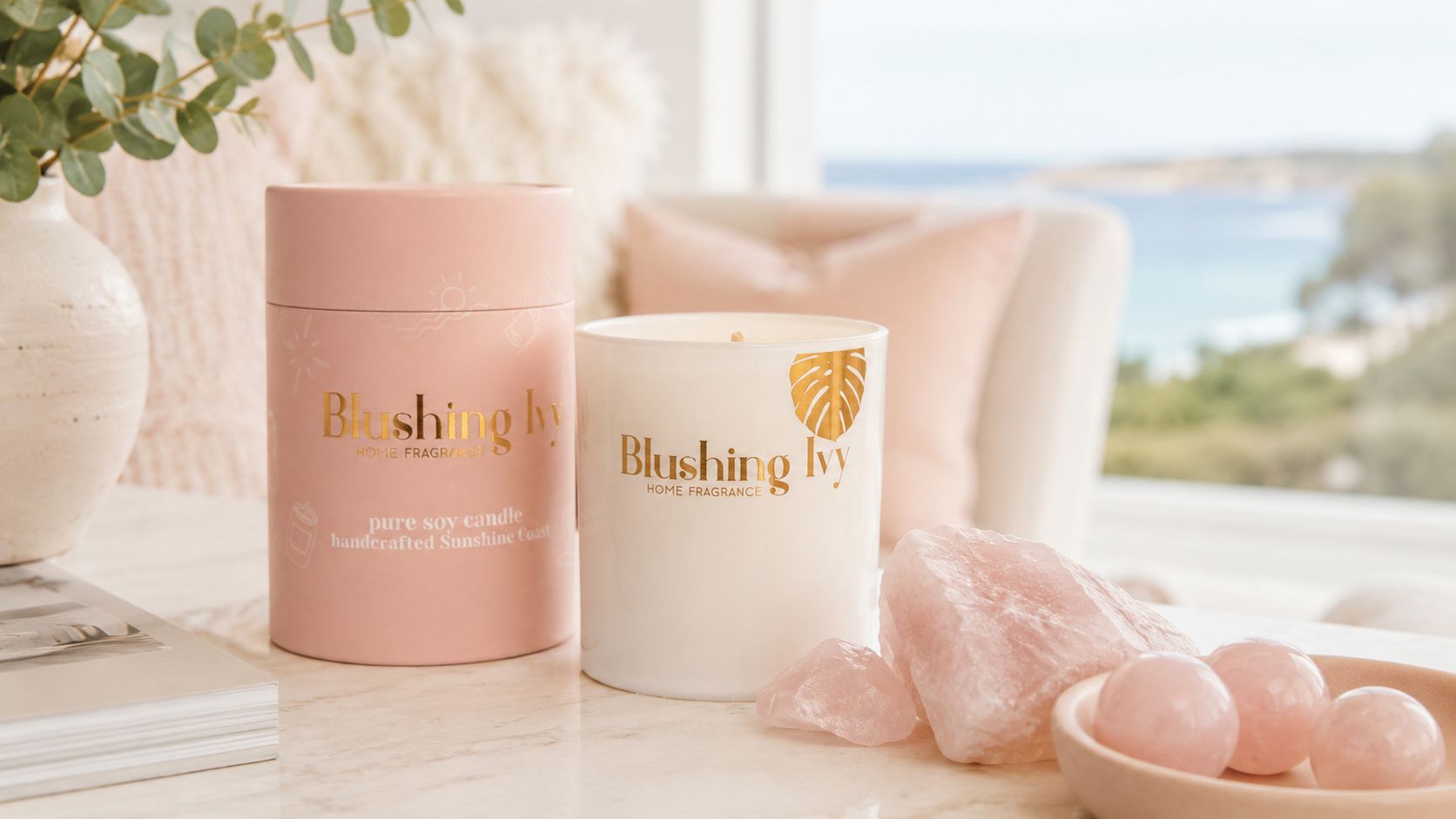
Scent adds another layer. Place rose quartz near a softly glowing candle, a reed diffuser or a linen spray, and the arrangement starts working through sight, touch and fragrance together. The stone's cool, smooth surface contrasts beautifully with the warmth of candlelight, while a natural scent can make the space feel settled without adding visual clutter. For more ideas on using fragrance throughout a home, explore this home fragrance diffuser guide.
A Classic Soy Candle can sit neatly beside a small rose quartz piece. The Coastal range uses an opaque white glass container with gold foil detailing, and the candles are made with 100% soy wax and Australian-made, essential oil-based fragrances. If you're styling one at home, remember the practical candle basics too. Keep the wick between 2 and 5 millimetres, keep the candle away from draughts, children and pets, and never leave it burning unattended.
The nicest styling usually isn't the most elaborate. Start with one piece, add one useful object and introduce scent only if it supports the mood you want. A little pink stone beside a candle can be enough.
How to Cleanse and Care for Rose Quartz
Rose quartz doesn't need an intimidating care ritual. Treat it much like a favourite ceramic ornament or polished stone, with gentle cleaning, sensible placement and care around edges. Its Mohs hardness of 7 makes it reasonably durable for everyday use, but a hard surface can still chip a point or dull a polish.
A simple cleaning routine
- Dust first. Use a soft, dry cloth to remove dust from flat surfaces, grooves and carved details.
- Rinse briefly. If the piece needs more attention, use lukewarm water for a quick rinse rather than leaving it submerged.
- Dry completely. Pat the stone dry, then make sure moisture hasn't collected underneath before placing it on timber, painted furniture or fabric.
- Return it thoughtfully. Give it a stable spot where it won't be knocked by books, jewellery or daily traffic.
Avoid harsh chemicals, abrasive cleaners and rough brushes. Prolonged exposure to strong sunlight may affect the appearance of some pink materials, so a position with soft, indirect light is a sensible choice, especially for a treasured specimen. Rough handling is more likely to cause everyday damage than normal gentle contact.
Cleansing as a personal ritual
Some people enjoy placing rose quartz on a windowsill overnight, resting it near other crystals or keeping it beside a candle during meditation. These practices can be meaningful as rituals, but they're personal choices rather than maintenance requirements. You don't need to follow a complicated system to care for the stone correctly.
If smoke or incense forms part of your routine, this guide to palo santo incense offers context for using fragrance mindfully. Keep any burning incense or candle on a stable, heat-safe surface with good ventilation, and never leave a flame unattended.
A practical rule keeps everything uncomplicated:
Clean the stone for its surface, and cleanse it for your own ritual. Those are two different jobs.
That distinction helps you enjoy rose quartz without worrying that one missed moonlit windowsill has somehow ruined it.
Spotting Genuine vs Treated Rose Quartz
Shopping for rose quartz can be confusing because natural pieces don't all look alike. One may be pale and milky, another more saturated and translucent, while a third has visible veils or small fractures. Variation alone doesn't mean a specimen is fake.
A buyer at a weekend market can start with a few observations. Genuine quartz generally feels cool when first picked up and warms gradually in your hand. It should have a satisfying weight for its size, and natural material may show cloudy areas, uneven colour, tiny fractures or internal features rather than a perfectly uniform bubblegum pink.
Five useful checkpoints
- Look at the colour. Natural rose quartz can be uneven, soft and milky. Colour pooling in cracks or worn areas may indicate dye.
- Study the inside. Subtle veils and fractures can be natural. Perfect clarity, especially in an inexpensive piece presented as ordinary rose quartz, deserves questions.
- Feel the surface. Quartz is cool to touch and tends to warm slowly. Resin usually warms more quickly.
- Watch for bubbles. Round air bubbles are more consistent with coloured glass than natural quartz.
- Ask about treatment and origin. A reputable seller should be able to explain whether the material is natural, enhanced or imported as a finished item.
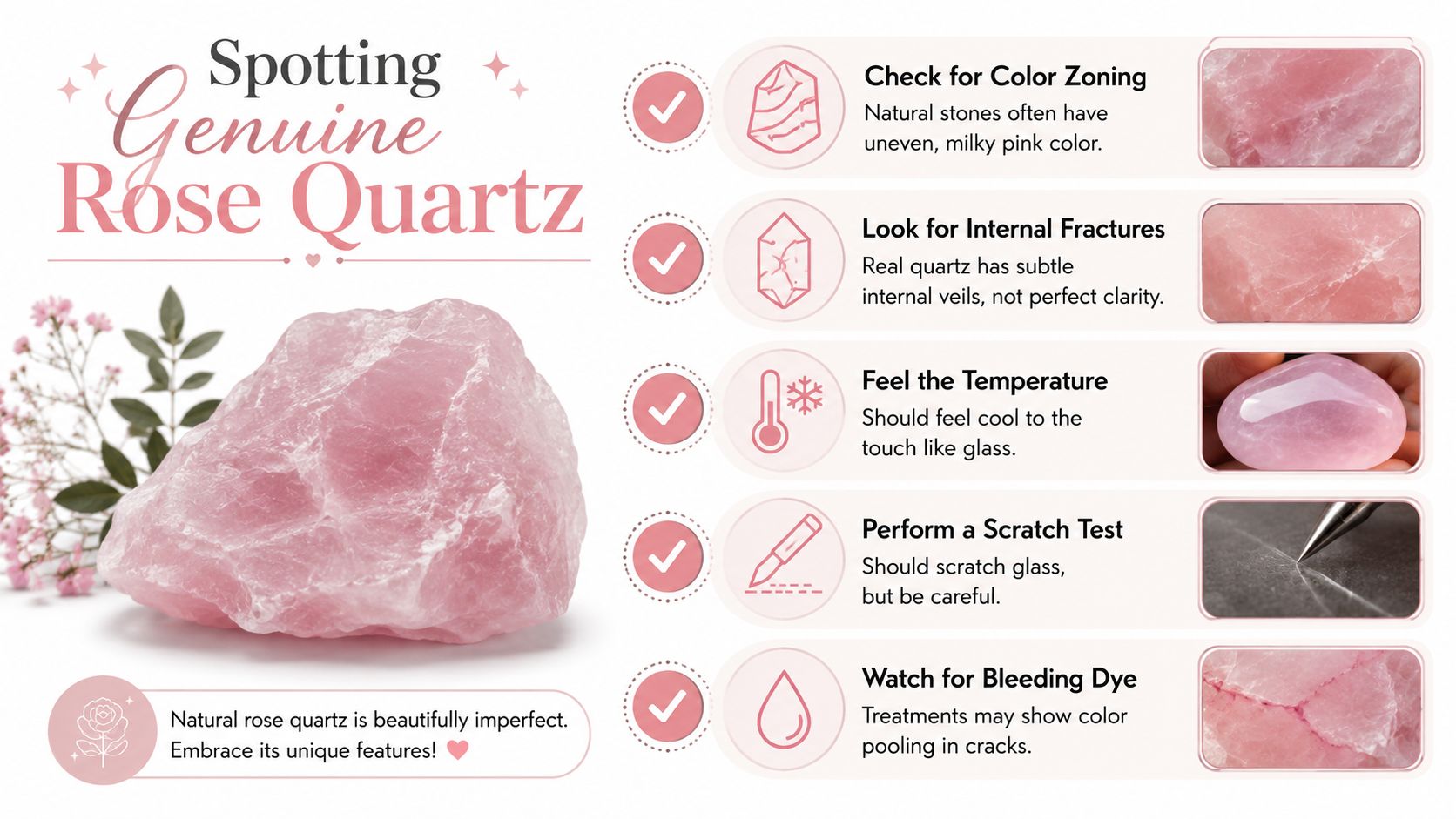
A scratch test is sometimes suggested because quartz has a Mohs hardness of 7, but it's not a test I'd recommend on a polished ornament, jewellery or a shopkeeper's stock. Scratching glass can damage the item you're holding, and a scratch test won't tell you everything about treatments or mixed materials. Use it only with clear permission on a loose, inexpensive specimen, and remember that hardness testing is best handled by someone who understands the risks.
Dyed stones and treated pieces aren't automatically worthless. The important point is honest description. If a supplier explains that colour has been enhanced, you can decide whether the appearance suits your purpose and whether the price makes sense.
This video gives another visual introduction to the identification process:
For online shopping, ask for clear photographs in natural light, close-ups of the surface and details about the stone's origin. If the listing uses grand claims but says little about the material itself, slow down and compare the description with the actual piece.
Pairing Rose Quartz with Home Fragrance and Gifts
Rose quartz and home fragrance make sense together because both contribute to atmosphere. The stone brings colour, texture and symbolism, while fragrance changes the feeling of a room in a more immediate, sensory way. Together, they can turn an ordinary corner into a small ritual, without making the space feel overly decorated.
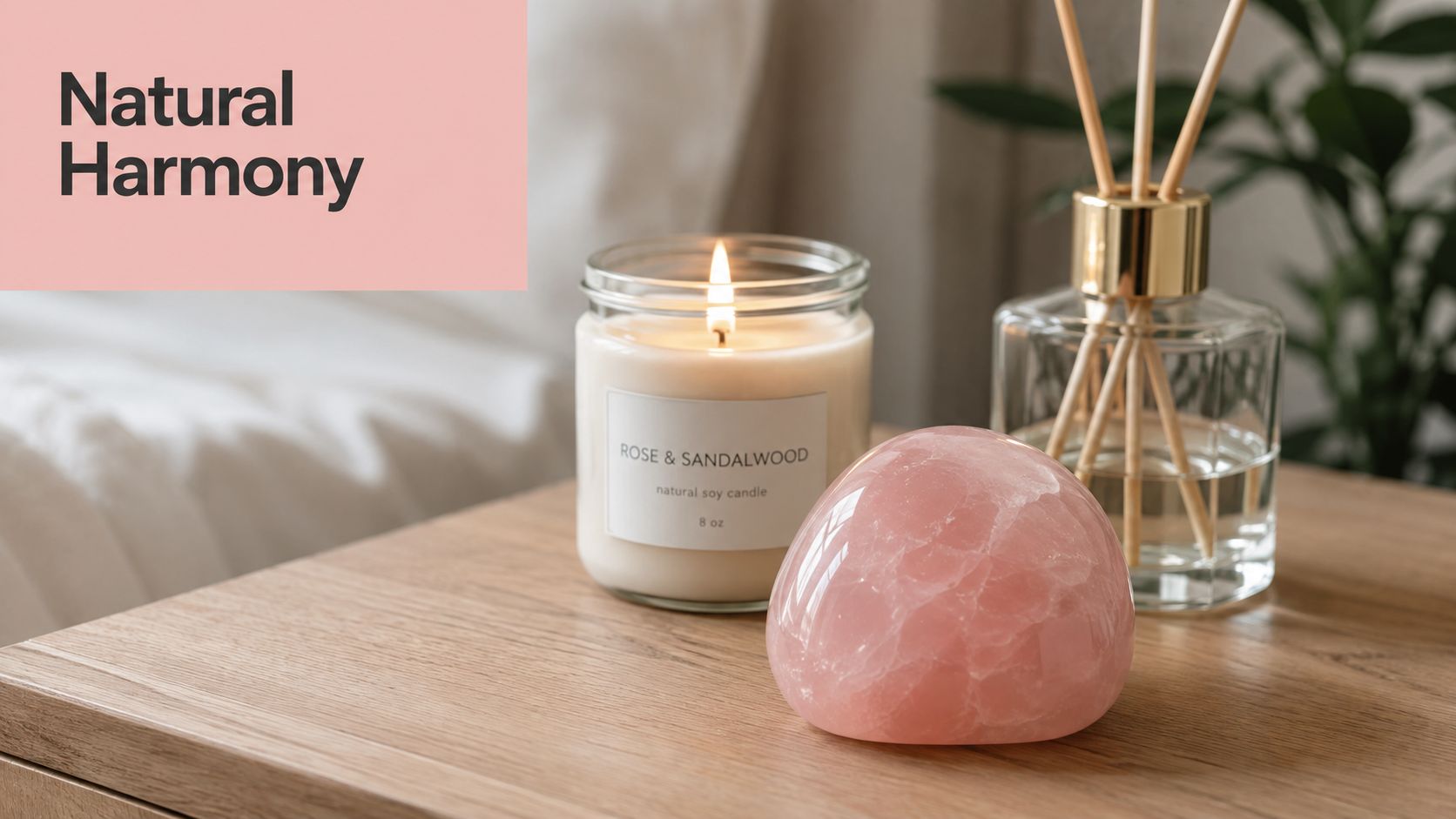
Try a rose quartz cluster beside a soy candle on a hallway console. The pink catches the candlelight, while a warm fragrance creates a welcoming moment for anyone arriving home. In a bedroom, a small polished stone beside a Room & Linen Spray can suit fresh sheets, soft lamps and the end-of-day exhale that comes after the dishes are finally done.
Build the mood around the room
- For a calm bedroom: Use one small stone, uncluttered bedding and a gentle fragrance. Keep the arrangement practical and away from fabric that could catch heat.
- For a coastal living room: Pair pale rose quartz with white glass, woven textures and a fresh scent that recalls salty air and open windows.
- For an earthy reading nook: Add timber, linen, dried foliage and a deeper fragrance. The stone's pink becomes a soft counterpoint to brown and green tones.
- For a thoughtful gift: Combine rose quartz with a candle, a note and simple packaging. The recipient can keep the stone as a lasting object after the fragrance has finished.
A gift doesn't need to explain the recipient's entire personality. Rose quartz works beautifully for birthdays, Mother's Day, housewarmings and “just because” presents because its symbolism is open enough to feel personal without becoming too specific. A fragrance gift set can make the moment feel complete, and these fragrance gift set ideas offer a useful starting point when you're choosing for someone else.
If you're gifting to someone who prefers a richer, more refined atmosphere, the Wild Heath Society range offers a more masculine and elegant direction. A darker candle beside blush-pink stone can look surprisingly elegant, especially with timber, leather or matte black accents.
Keep the styling safe. Crystals should sit beside, not on top of, candles, and fragrance products need room to operate as intended. Pretty doesn't have to mean precious or fussy. The best arrangement is one you'll enjoy seeing and smelling every day.
Choosing Your Piece Without Overpaying
The most expensive rose quartz isn't automatically the best rose quartz for your home. A collector may value unusual colour, size or provenance, while you may want a small polished stone that looks lovely beside your books. Those are different buying goals, and neither is wrong.
Australian retail listings show a broad spread, from small chip bottles priced at about AU$5 to statement bowls and lamps priced from roughly AU$159 to AU$999.95. An Australian rose quartz collection illustrates this retail range. The difference reflects more than the mineral itself. Size, shape, polish, translucency, workmanship, presentation and decorative appeal all influence what a shopper is being asked to pay.
Match the piece to the job
- For a daily companion: Choose a small tumble or palm stone that feels comfortable and has a colour you enjoy.
- For home styling: Look for a stable bowl, lamp or statement form with an appealing silhouette. Visual impact may matter more than deep colour.
- For a meaningful gift: Prioritise finish, packaging and the recipient's taste. A modest, thoughtfully chosen piece can feel more special than an oversized object with nowhere to go.
- For collecting: Ask about locality, treatment, rough quality and what makes the specimen unusual before paying a premium.
The useful question isn't “Is this the most valuable piece?” It's “Does this piece do what I want it to do at home?”
Origin can add interest, but it doesn't automatically improve durability or guarantee a better experience. Some of the finest rose quartz is associated with Brazil, with other notable sources including India, Madagascar and Sri Lanka, while Australian material has its own place in local mineral collecting. This Australian retailer discusses international origins and supply-chain questions.
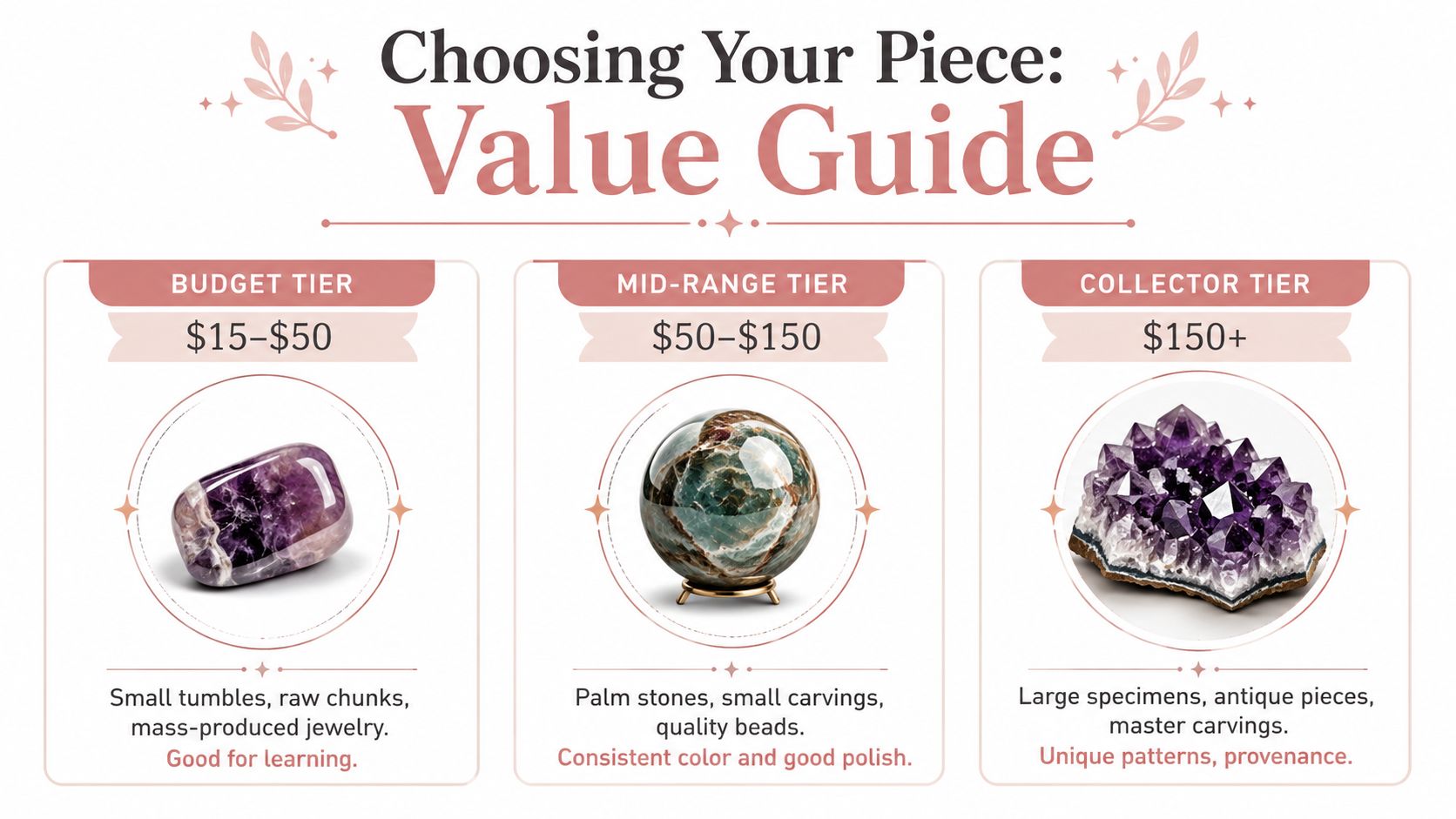
Before buying, compare photographs, ask whether the stone is treated and check the measurements. If you're choosing for a shelf, measure the space first. There's no joy in bringing home a magnificent lamp that blocks the artwork or a bowl that leaves no room for your keys.
Blushing Ivy Home Fragrance offers Australian-made, handcrafted candles, diffusers, room fragrances and gift sets that can sit naturally alongside rose quartz styling. Visit Blushing Ivy Home Fragrance to explore a scent for your own quiet corner or choose a thoughtful sensory gift for someone you love.