
Scented Candles Australia: A Friendly Buying Guide
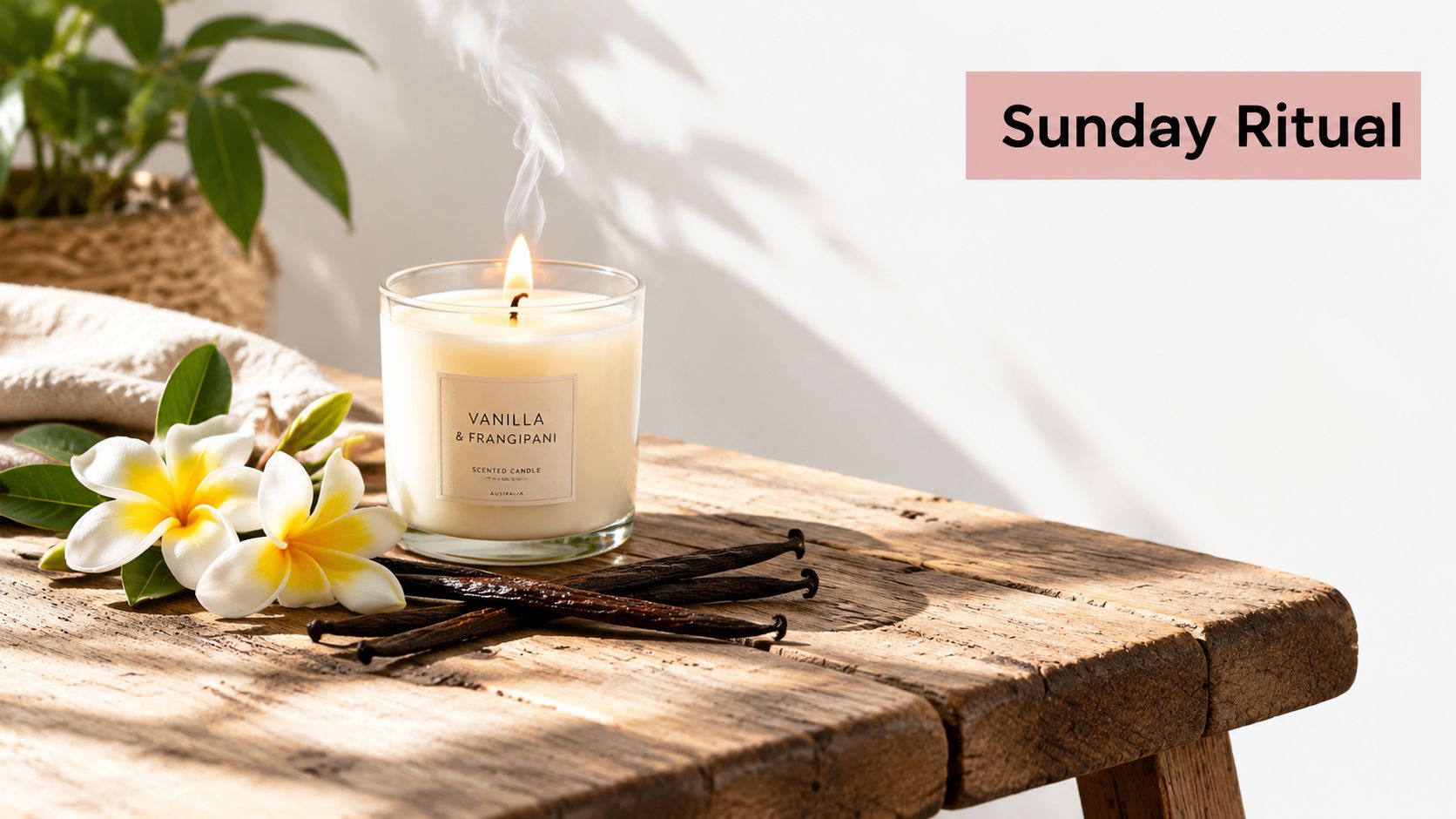
A quiet Sunday morning, sunlight pooling across the timber bench, and the soft crackle of a wick as frangipani and warm vanilla begin to drift through the room. Whether you're in a hinterland cottage near the Sunshine Coast or a breezy coastal apartment, that little flame can make home feel wonderfully settled.
That's the charm of scented candles in Australia. They're practical, decorative, wonderfully giftable, and tied to the places we love, from salt-washed beaches to eucalyptus forests and warm winter kitchens. Australia's candle market was valued at USD 316.9 million in 2025 and is projected to reach USD 627.1 million by 2034, according to IMARC's Australia candles market overview. There's plenty of choice, but more choice can also make the shelf feel a little like a fragrance maze.
So, let's make it simple. We'll look at candle formats, waxes, Australian scent families, scent throw, candle care, safety, sustainability, and thoughtful gifting. No dramatic sales pitch, just useful information to help you find the glow and fragrance that suit your home.
Table of Contents
- Setting the Scene for Scented Candles in Australia
- Candle Types and Wax Explained Simply
- Scent Families Inspired by the Australian Landscape
- How to Choose the Right Candle for Your Space
- Candle Care and Safety Tips That Actually Matter
- Sustainability and Natural Soy Wax Choices
- Gifting Ideas and Occasions to Celebrate
- Finding Your Signature Scent and Wrapping Up
Setting the Scene for Scented Candles in Australia
A candle can mark a transition in your day. You light one while the kettle boils, after the children have gone to bed, or just before guests arrive and you realise the house needs a tiny bit of atmosphere and a lot less evidence of hurried tidying.
Australia has a lively candle category, with premium fragrance and imported products playing a significant role. One market analysis estimates that imports supply 60–75% of candle volume, while scented candles represent roughly 55–65% of retail value, with scented products growing at 7–10% annually. Those figures come from IndexBox's Australia candles market analysis, and they help explain why shoppers now see everything from simple tins to elaborate gift-ready vessels.
Fragrance is part of the rhythm of home
A candle isn't only about how it looks on a coffee table. A coastal blend can make a city flat feel open and airy. A native floral can bring a little bushland softness into a bedroom. A smoky wood fragrance can turn an ordinary living room into the sort of place where you'd happily linger over one more cup of tea.
A useful starting point: choose the feeling you want first, then choose the fragrance family that creates it.
That approach is often easier than trying to decode every note on a label. If you want something uplifting, look towards citrus, green leaves, or sea spray. For a grounded mood, sandalwood, amber, vanilla, and woods may feel more at home.
The rest comes down to practical details. Wax affects the way a candle burns, the vessel influences how heat moves, and the wick helps control the flame. Good care then protects the experience, while thoughtful gifting turns a candle into something personal rather than a last-minute supermarket rescue.
Candle Types and Wax Explained Simply
Candle shopping gets easier once you separate format, wax, and wick. A jar candle is handy for everyday rooms, a tin travels well, a pillar makes a visual statement, melts work with a warmer, and tealights are useful for small areas or entertaining. None is automatically superior. The right choice depends on where you'll use it and how much fragrance you want around you.
Soy wax is a little like a slow-cooking casserole. It tends to melt more gently and evenly, and its naturally pale colour lets the fragrance and vessel do the talking. Paraffin is more like a fast-food fryer, often chosen for its strong performance and affordability, but it can produce more soot when a candle is poorly wicked or cared for. Beeswax is the heritage slow-burner, naturally distinctive and often more expensive.
The small details change the result
Cotton wicks are familiar and versatile. Wood wicks can create a gentle, audible crackle, while ECO-style cotton wicks are designed to support a controlled flame. Wick size matters because a wick that's too large may create excess heat, while one that's too small may struggle to melt the wax evenly.
Fragrance load also affects scent throw, meaning how much fragrance you notice. Dye can make a candle more colourful, while undyed or lightly coloured soy wax usually looks softer and more natural. A soy blend may include other waxes, so check the wording rather than assuming every candle described as “soy” is entirely soy.
The Classic Soy Candle is made with 100% pure soy wax, lead-free cotton wicks, and Australian-made, essential oil-based fragrances. It comes in a 400g white glass vessel, with a range of fragrances and customised blush pink packaging.
| Wax Type | Burn Quality | Scent Throw | Sustainability | Typical Price |
|---|---|---|---|---|
| Soy wax | Gentle, steady burn when correctly wicked | Balanced and smooth | Plant-based option, though production still has an impact | Varies by maker and vessel |
| Paraffin | Often strong and consistent | Can be bold | Petroleum-derived | Often more budget-friendly |
| Beeswax | Slow, distinctive burn | Naturally subtle unless blended | Natural wax, with higher material costs | Often premium |
For Australian buyers, the useful question isn't “Which wax is best?” It's “What does this candle contain, how has it been made, and will it suit the way I burn it?”
Scent Families Inspired by the Australian Landscape
Australian fragrance can feel wonderfully familiar without becoming predictable. The best blends don't just list boronia, eucalyptus, or vanilla. They create a place you can almost step into.
Bush florals and native sweetness
Boronia, frangipani, kangaroo paw, and wattle bring a soft floral mood, often with honeyed or slightly green edges. Picture an open window in spring, warm air moving through linen curtains, and flowers arranged in a small ceramic vase. These scents suit bedrooms, entryways, and quiet corners where you want an uplifting but gentle presence.
For plant lovers who enjoy tending fragrant greenery at home, lavender care indoors with self-watering globes offers helpful guidance for keeping that relaxed botanical feeling going between candle-lighting moments.
Coastal fresh and native clarity
White sand, sea spray, driftwood, coconut lime, and citrus are natural companions for Australian summer living. They're bright without needing to shout, making them useful in kitchens, bathrooms, beach houses, and apartments that benefit from a clean, breezy impression.
Eucalyptus, lemon myrtle, tea tree, and sandalwood sit in a different part of the fragrance spectrum. Their profiles can feel crisp, medicinal, green, or woody, like a walk through bushland after rain. For a deeper look at one of these familiar botanicals, explore eucalyptus essential oil and its fragrance character.
Warm earth and evening comfort
Fig, vanilla, bush honey, and cinnamon leaf bring a rounder, more enveloping quality. They're lovely for cooler weather, slow dinners, and the part of the evening when you've changed into comfortable clothes and have no intention of putting on “proper” shoes again.
Smoked cedar, sun-warmed leather, and sandalwood create a more grounded living-room mood. They can also suit anyone who finds sweet florals a little too sugary. A masculine fragrance doesn't have to smell severe. It can feel polished, mellow, and intriguing.
How to Choose the Right Candle for Your Space
A pretty candle can still be the wrong candle for a room. Start with the space, then think about the fragrance intensity, vessel, wick, and how often you'll burn it.
Cold throw is the scent you notice before lighting. Hot throw is the fragrance released while the candle burns. A candle may smell delicate in the jar but become much fuller once warmed, or it may smell powerful cold and feel surprisingly restrained in the room.
Match the room before the mood
Bedrooms usually suit softer florals, lavender, vanilla, or light woods. Kitchens can handle brighter citrus, herbs, and clean green notes, especially if you want fragrance that feels fresh rather than heavy. Living areas are more forgiving, so grounding blends with sandalwood, amber, smoke, leather, or spice can create a richer atmosphere.
Room size matters, but so does airflow. An open-plan space may need more than a small bedroom, while a draughty room can scatter fragrance quickly. Vessel shape matters too. A wider opening can help release fragrance across the room, while a narrower vessel may feel more concentrated around the candle.
| Room | Suggested Candle Size | Scent Intensity | Best Scent Families |
|---|---|---|---|
| Bedroom | Small jar or tin | Subtle | Soft florals, lavender, vanilla |
| Bathroom | Small jar or tealights | Fresh | Citrus, eucalyptus, sea spray |
| Kitchen | Small to medium vessel | Light to moderate | Lemon myrtle, citrus, herbs |
| Living room | Medium to large vessel | Moderate to expressive | Woods, amber, fig, native honey |
| Open-plan area | Larger vessel or layered formats | Expressive | Sandalwood, smoked cedar, warm spice |
Test before committing
If you're unsure, begin with a smaller format or sample a scent family through another home-fragrance product. This is especially useful with bold fragrances, where one note can develop differently once the candle is lit.
You can also layer carefully. A diffuser may provide a steady background, while a candle adds a stronger moment for entertaining. Just avoid filling a small room with several competing fragrances. Your nose deserves a little breathing space too.
Candle Care and Safety Tips That Actually Matter
Candle care isn't fussy. It's the difference between an even burn and a lopsided little wax crater that looks as though it's given up on life.
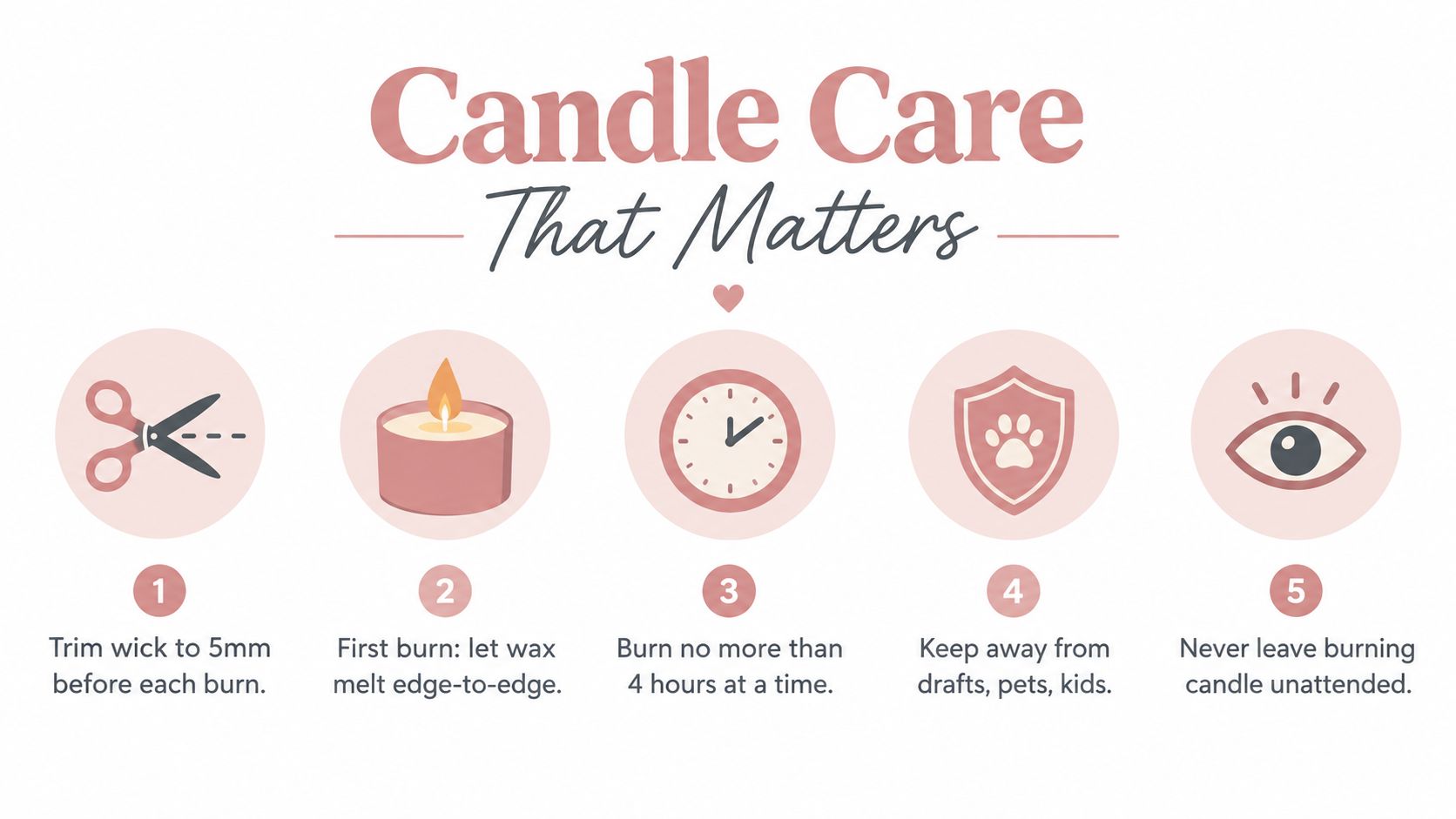
- Trim the wick: Keep it around 2–5mm before burning. A shorter wick supports a more controlled flame and helps minimise soot build-up.
- Set the first-burn memory: Let the melted wax reach the edge of the vessel on the first burn. This helps prevent tunnelling during later burns.
- Watch the surroundings: Keep candles away from draughts, curtains, busy walkways, children, and pets.
- Stay nearby: Never leave a burning candle unattended. Extinguish it before leaving the room or going to sleep.
- Extinguish gently: A snuffer can reduce smoke, and dipping the wick into the melted wax before lifting it upright can also help.
If tunnelling has already started, a foil wrap around the upper vessel can help reflect heat towards the unmelted wax. Keep the foil clear of the flame and watch the candle closely. If the candle becomes unstable, stop using it.
Australia's product safety guidance says poorly made candle holders and decorations that can ignite from candle heat are permanently banned from supply. That's a good reason to choose a stable, heat-resistant setup and leave plenty of clearance around the flame. The Australian candle wick trimmer guide is also a useful reference for keeping trimming simple.
Here's a visual reminder of safe burning in action:
Australian rules also ban candle wicks containing more than 0.06% lead by weight, whether the wick is sold inside a candle or separately, as explained by Product Safety Australia's lead-wick ban. Candles must also be designed so they don't spontaneously relight after being extinguished under the safety standard described in regulation 8 of the Trade Practices regulations.
Sustainability and Natural Soy Wax Choices
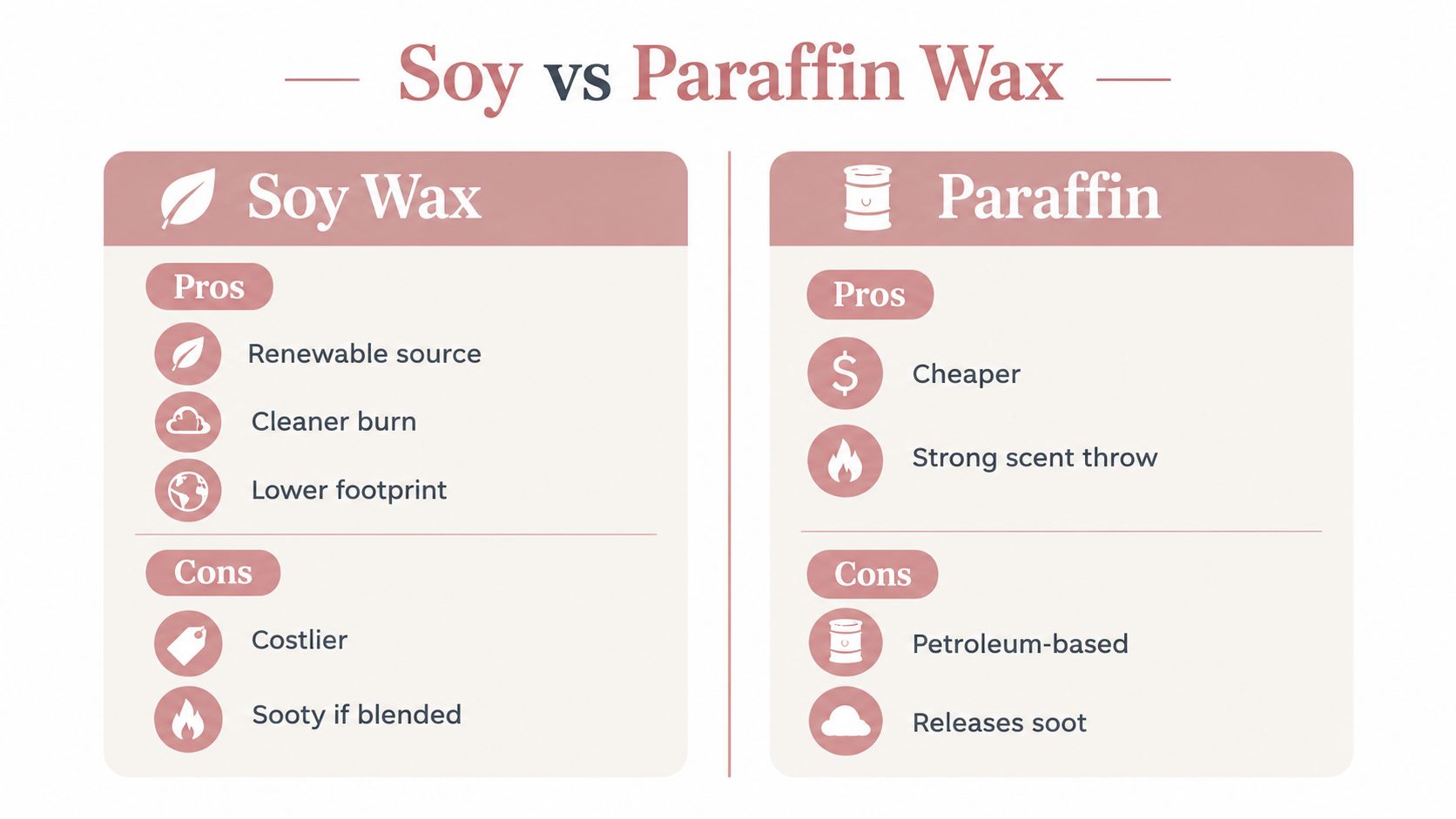
Soy wax appeals to many Australian shoppers because it comes from a plant-based source rather than petroleum. It can offer a softer, slower-burning experience, while paraffin is widely used for its affordability and strong fragrance performance. Neither choice makes a candle impact-free. Wax production, fragrance materials, packaging, transport, and disposal all matter.
Australian-made production can shorten some supply-chain steps and gives small makers closer control over pouring, wick testing, vessels, and presentation. For a small-batch studio, that hands-on process can make it easier to notice inconsistencies before products reach a customer. It also supports local work and keeps more of the making story close to home.
Look beyond the word natural
The word “non-toxic” on a candle label has no legal weight by itself. It doesn't prove what wax, wick, or fragrance materials are present, as explained in this Australian guide to non-toxic candle claims. Ingredient information and chemical classification are more useful, particularly for shoppers who want to understand fragrance allergens.
Australian home-fragrance businesses also need to consider the Australian Industrial Chemicals Introduction Scheme and consumer-protection requirements. Lead content in candle wicks is specifically regulated, and fragrance ingredients may need appropriate classification and disclosure under Australia's chemical framework.
A more trustworthy question: “What are the wax, wick, and fragrance materials?” is more useful than simply asking whether a candle is “chemical-free”.
Blushing Ivy's approach uses 100% natural soy wax, lead-free cotton wicks, and Australian-made, essential oil-based fragrances. Its candle vessels are designed for reuse or return for refills, which gives the container life beyond the final burn. You can read more about the reasoning behind soy wax candles in Australia.
Fragrance isn't comfortable for everyone. An Australian fragrance-free brochure from AESSRA lists possible triggers and advises people with fragrance sensitivity to avoid scented candles and reed diffusers. If someone in your household experiences fragrance-related symptoms, choose their comfort first and keep any scented product well away from shared air.
Gifting Ideas and Occasions to Celebrate
A scented candle makes a lovely gift because it feels personal without requiring you to know someone's exact size, colour preference, or whether they already own the same black jumper. The trick is to match the fragrance to the person and the occasion.
For a friend who's navigating a busy season, lavender and sandalwood can feel calming and grounded. A housewarming gift might suit bright citrus, tropical notes, or a breezy coastal fragrance. For an anniversary, rose, vanilla, amber, or a soft floral blend can create a more romantic mood without becoming overly sweet.
Follow the Australian calendar
Teacher gifts at the end of the school year, hostess gifts for a festive summer Christmas, Mother's Day morning pampering, and cosy winter birthdays all give candles a natural place. A warm gourmand fragrance can feel right in July, while coconut lime or sea spray brings sunshine to a December gathering, even if the weather has decided to be a little moody.
A candle also works beautifully for bridal showers, friendship milestones, corporate gifting, and the wonderfully underrated “I saw this and thought of you” moment. The gesture feels luxurious, but the format remains practical and easy to enjoy.
Make the presentation part of the gift
Reusable ceramic or glass vessels, kraft paper, dried botanicals, and a handwritten card can make a simple gift feel considered. Pair a candle with a matching room spray, bath soak, diffuser, or another small self-care item when you know the recipient enjoys layering fragrance throughout the home.
For a broader approach to building a thoughtful gift collection, how to create a female gift hamper offers useful ideas for combining practical and pampering pieces. The most memorable hampers usually include a little variety rather than five versions of the same scent.
A note describing why you chose the fragrance adds warmth. “This reminded me of your beach walks” says far more than “I panicked in the gift aisle”, even if both statements are technically true.
Finding Your Signature Scent and Wrapping Up
Finding a signature scent isn't a test you can fail. It's more like building a small wardrobe for your home. You might want fresh citrus for mornings, Australian florals for spring, creamy vanilla for quiet evenings, and smoky woods when friends come over.
Start with familiar scent families. If you already enjoy lemon myrtle tea, eucalyptus, or citrus cleaning products, a bright botanical candle may feel easy to live with. If your favourite memories involve timber, bushland, warm baking, or old leather chairs, explore sandalwood, honey, vanilla, cedar, and amber.
Keep the practical details in view:
- Choose the wax thoughtfully: Soy wax is a plant-based option with a gentle burn profile.
- Match throw to the room: Small rooms often need less fragrance than open-plan spaces.
- Care for the wick: Trimming and a proper first burn help the candle perform more evenly.
- Rotate with the seasons: Fresh coastal scents can brighten warmer months, while spice and woods bring comfort in cooler weather.
- Trust your own nose: Trending lists can be fun, but your home doesn't need to smell like everyone else's.
Australian-inspired fragrance offers something distinctive. Boronia, banksia, wattle, eucalyptus, bush honey, coastal air, and warm timber can connect an everyday ritual to a real sense of place. That's part of why candles work so well as gifts. You aren't only giving a decorative object. You're offering a moment, a memory, or a small invitation to slow down.
Try layering gently with a diffuser or room spray, sample a new fragrance family in a smaller format, and share the discoveries with someone who appreciates a beautiful home. There's no need to rush towards one forever scent. Homes, like people, are allowed a few personalities.
Blushing Ivy Home Fragrance offers Australian-made, handcrafted soy candles, reed diffusers, room and car fragrances, gift sets, and the Wild Heath Society range, all created on the Sunshine Coast. Visit Blushing Ivy Home Fragrance to explore Australian-inspired scents, thoughtful gifts, and fragrance for the everyday rituals that make home feel like yours.