
Non Toxic Incense for a Calmer, Cleaner Home
After a long Australian day, there's something lovely about lighting incense while the house settles. Maybe you're on the verandah as the sun slips behind the hills, or on the sofa with a cup of tea and the windows open to a soft coastal breeze. The curling smoke feels calming, familiar and a little bit ceremonial.
Then comes the question we often avoid asking: what's in that smoke?
The phrase non toxic incense sounds reassuring, but it can mean very little unless we look at the ingredients, how the stick burns and the room around it. The honest answer is that incense creates smoke, even when it's made with more considered materials. A lower-risk approach combines transparent ingredients with short burning sessions and good ventilation.
That doesn't mean giving up the ritual. It means keeping the sandalwood, citrus or floral atmosphere while making a more informed choice for your home. If you enjoy gentle rituals before bed, you might also like this calming evening routines guide, which offers ideas for creating a slower wind-down.
Table of Contents
- The Evening Ritual That Made Us Rethink Incense
- What Non Toxic Incense Actually Means
- Why Conventional Incense Can Be a Concern
- What to Look For in a Cleaner Incense Stick
- Reading the Label Like a Sunshine Coast Shopper
- Safe Burning Habits for Australian Homes
- Incense, Diffusers and Sprays Working Together
-
Frequently Asked Questions From Our Community
- Is non toxic incense safe during pregnancy or breastfeeding?
- Can I burn it around asthma or pets?
- Is a bamboo core better than a charcoal core?
- Which certifications prove incense is cleaner?
- Can incense replace a diffuser?
- How should I dispose of ash and spent sticks?
- Where can Australians buy lower-emission incense?
The Evening Ritual That Made Us Rethink Incense
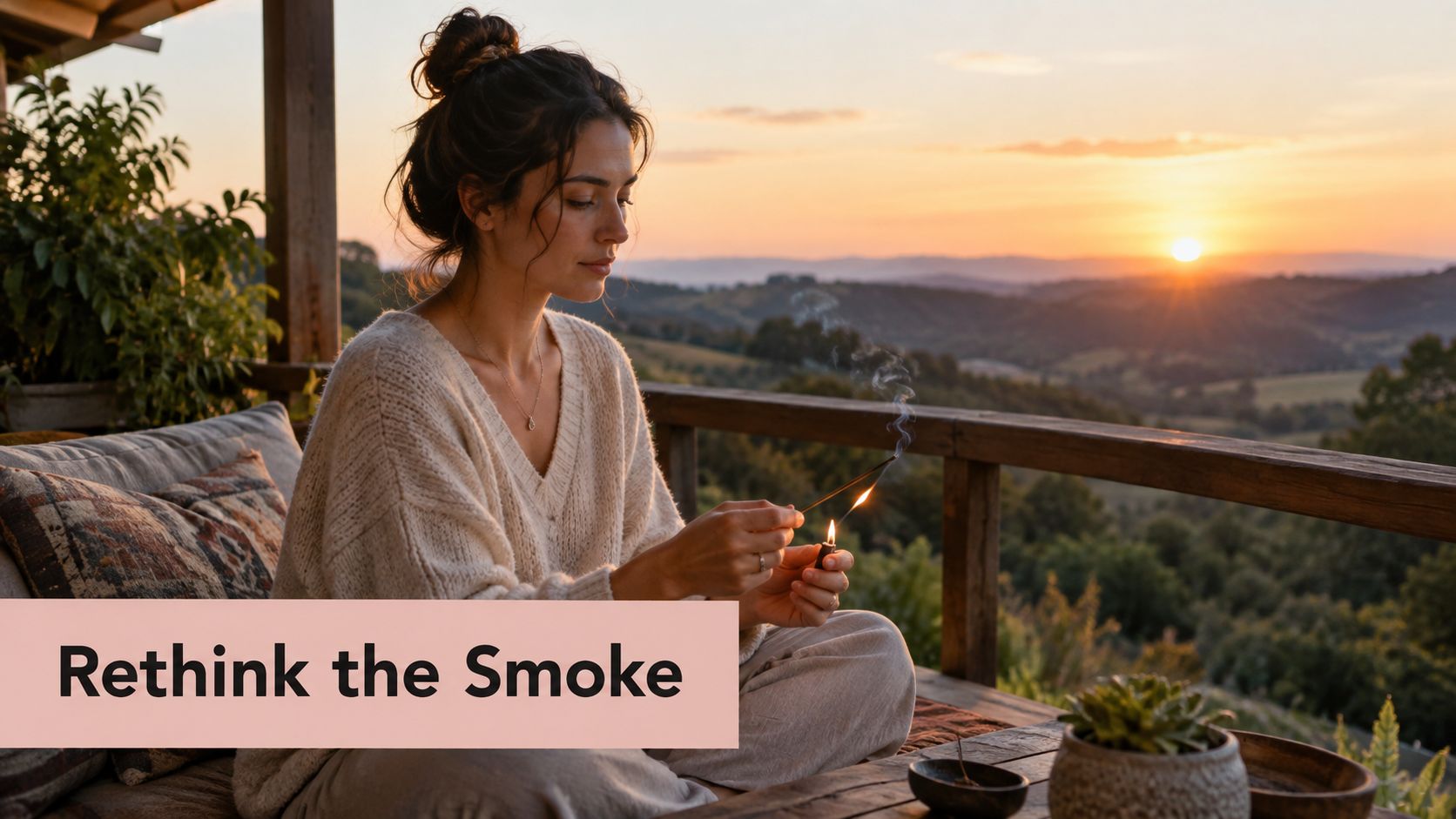
A friend once described her favourite evening ritual to me. She'd finish work, water the plants, light incense on the balcony and watch the sky turn apricot over the hinterland. It was her little pocket of calm, a way to mark the shift from “sorting everything out” to “I'm allowed to sit down now”.
The ritual itself wasn't the problem. The question was what happened after the stick was lit. Did it burn cleanly, or leave a heavy, smoky smell? Did the label explain the ingredients, or use words such as “natural” and “pure” without much detail? Was the balcony open to fresh air, or was the same incense being burned in a small bedroom with the door shut?
Those details matter because natural doesn't mean emission-free. Cancer Council Australia says burning incense in normal amounts is considered safe, while also noting that incense can increase indoor levels of polycyclic aromatic hydrocarbons, or PAHs, which are combustion by-products linked to cancer concerns. Its guidance describes the risk as very small when incense is used in moderation and suggests good ventilation for anyone wanting to minimise exposure. Cancer Council Australia's guidance and the Australian coverage of it provide a useful, balanced way to think about “non toxic” claims.
A kinder way to frame it: choose lower-risk ingredients, then use the product thoughtfully.
For a closer look at choosing and using incense in a beautiful home ritual, our guide to luxury incense sticks is a handy place to wander next.
What Non Toxic Incense Actually Means
Non toxic incense isn't a regulated promise that means zero smoke, zero particles or zero health considerations. In practical terms, it's better understood as incense made with a more transparent, lower-emission formulation and used in a way that limits indoor exposure.
A shopper-friendly ingredient check looks like this:
- Core material: Look for an untreated bamboo or wood core rather than a synthetic-looking stick or a core carrying extra charcoal.
- Scent source: Essential oils, botanicals and resins are easier to understand than a label that only says “fragrance” or “parfum”.
- Binding material: Plant-based binders such as makko powder or joss can hold incense powder together without relying on vague chemical adhesive descriptions.
- Manufacturing detail: Small-batch production, hand-rolling information and a clear ingredient list give you more to work with than a vague “clean” badge.
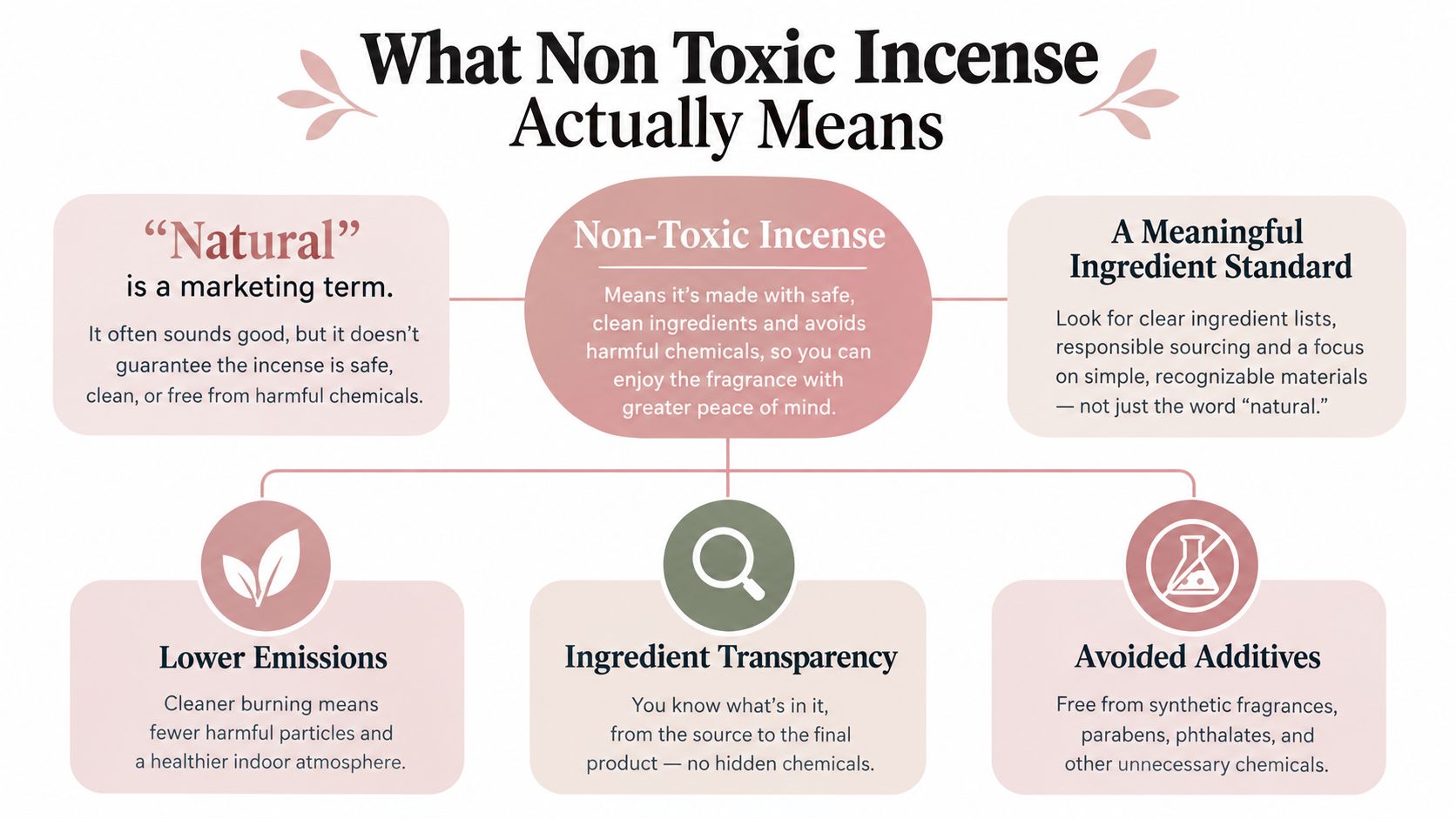
The important distinction is lower exposure, not no exposure. Burning any incense creates combustion by-products, so “non toxic” should never be used as permission to burn a stick continuously in a sealed room. It's more useful as a prompt to ask better questions about what has been added and how much smoke the product creates.
Some labels will tell you that a stick is charcoal-free, while others may name the wood, botanical powder or essential oil used. Neither label replaces sensible use, but specific information is a positive sign.
For a deeper, plain-English look at the health question, you can read is natural incense bad for you. Our Blushing Ivy Luxury Incense is available in Sea Salt, Sandalwood & Vanilla, Sweet Orange, Bergamot & Patchouli, and Basil, Neroli & Jasmine, with care instructions that recommend a heat-resistant holder, a stable non-flammable surface, supervision, and a well-ventilated area.
Why Conventional Incense Can Be a Concern
The concern with conventional incense isn't just that it smells strong. It's that burning can turn the ingredients and the stick itself into an indoor combustion source.
Research reviewed in an independent medical publication found average particulate emissions above 45 mg of particles per gram burned, compared with about 10 mg per gram for cigarettes, and another source reports that incense can produce around four times more particulate matter than cigarettes by equal weight. These figures come from the review of incense smoke and indoor air pollution, and they help explain why a natural scent can still affect indoor air.
Australian indoor-air material identifies incense as a source of fine particulate matter, including PM2.5, along with ultrafine particles, nitrogen oxides, carbon monoxide, PAHs and other toxic pollutants. PM2.5 can travel far into the lungs and bloodstream, which is why “plant-based” and “non toxic” shouldn't be treated as synonyms for “pollution-free”. You can read the Australian discussion in this NSW indoor air quality submission.
The room changes the result
Ventilation, room size and burning habits all influence exposure. A Queensland University of Technology study found that incense burning increased the geometric mean of indoor PM2.5 by 120% after adjusting for other factors. An Australian indoor-air health review also reports that peak fine-particle concentrations from candle and incense use can reach up to 15 times WHO limits in poorly ventilated homes. See the QUT study on indoor PM2.5 and incense for the research context.
That doesn't mean every occasional outdoor burn creates the same situation. It does mean people with asthma, fragrance sensitivities, migraines, children in the home, pregnant people and pets deserve a more cautious setup. Anyone noticing coughing, headaches, irritation or breathing discomfort should extinguish the incense and increase fresh-air flow.
| Component | Conventional incense | Non-toxic incense |
|---|---|---|
| Core | May include charcoal or less-transparent materials | Often focuses on an untreated bamboo or wood core |
| Scent | May use broad terms such as fragrance or parfum | Names essential oils, botanicals or resins more clearly |
| Binder | May rely on unspecified binders | Uses plant-based materials such as makko or joss where disclosed |
| Smoke | Still produces particulate pollution and combustion gases | Still produces smoke, but aims for a more considered formulation and use |
| Shopper signal | Strong scent with limited ingredient detail | Transparent ingredients, care instructions and burn guidance |
If you're concerned about several indoor sources working together, a broader home air quality screening resource can help you think beyond incense alone.
What to Look For in a Cleaner Incense Stick
A better incense choice doesn't require a chemistry degree. You can make a useful first pass by checking four parts of the product.
Start with the core
An untreated, splinter-free bamboo core is a straightforward detail to look for. Be wary of sticks with a glossy, lacquered appearance or descriptions that suggest the core carries extra charcoal. Charcoal can help a stick catch and burn, but a charcoal-free formulation is often preferred by shoppers trying to reduce unnecessary smoke and residue.
Next, look at the binder. Incense powder needs something to hold it together, and plant-based materials such as makko powder or joss powder are the kind of detail a transparent maker may disclose. If the label gives no clue about how the powder is bound, you can contact the maker before buying.
Follow the scent trail
Essential oils and resins should appear by name where possible. Eucalyptus, sandalwood, citrus oils and Australian botanicals give you a clearer picture than a broad “parfum” listing. Scent doesn't need to smell weak to be considered. A heavy artificial sweetness, harsh chemical note or thick black soot is a reason to stop and reassess.
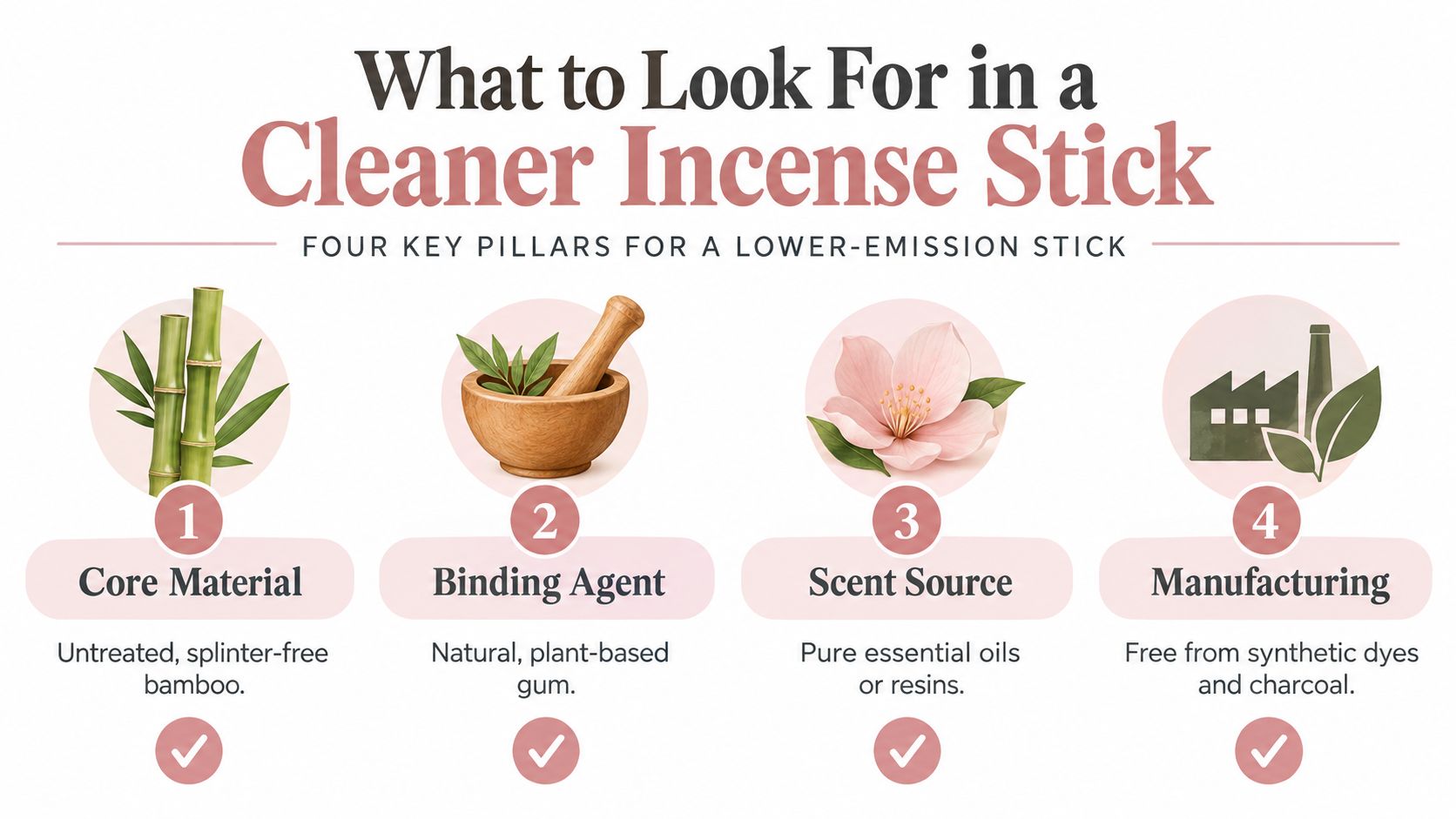
Finally, look for signs of accountable manufacturing. Small-batch makers, clear sourcing, locally distilled oils and proper care instructions can tell you more than a front-of-pack leaf illustration. A missing burn-time guide, vague ingredient language and packaging that offers no maker information are all little yellow flags.
This same ingredient-led thinking appears in Australiana Fairytale Candle - Bush Florals & Native Honey, which uses 100% pure soy wax and Australian-made, essential oil-based fragrances, with notes of eucalyptus, lemon myrtle, patchouli and sandalwood.
Quick shopper check: core, binder, scent source, maker detail.
Reading the Label Like a Sunshine Coast Shopper
Online product pages can make fragrance shopping feel like a treasure hunt, especially when the language is all “pure”, “clean” and “earth-loving” but the actual ingredients are playing hide-and-seek.
Start with the scent description. Named materials such as sandalwood, eucalyptus, native botanicals or essential oils offer more useful information than a single umbrella term. “Fragrance” or “parfum” doesn't automatically prove a product is unsafe, but it does leave you with less detail about what you're bringing into the room.
Then scan for practical claims:
- Core: Is the stick described as bamboo or wood, and is charcoal mentioned?
- Scent: Does the maker name essential oils, resins or botanicals?
- Colour: Are synthetic dyes disclosed or specifically excluded?
- Use: Does the packaging explain the holder, ventilation, supervision and ash?
- Burning: Is there guidance about how long to burn the stick?
- Packaging: Does the brand explain whether the outer packaging can be recycled?
In Queensland, humidity can make packaging feel soft and storage areas a little less forgiving. Keep incense cool and dry, away from direct sunlight, and don't store it beside an open window where sea air and dampness can affect the product.
A real-world label scan
Blushing Ivy's Luxury Incense range connects the scent experience with clear care instructions. Its three listed fragrances are Sea Salt, Sandalwood & Vanilla, Sweet Orange, Bergamot & Patchouli, and Basil, Neroli & Jasmine. The product guidance says to use a heat-resistant holder, place it on a stable non-flammable surface, keep it away from children and pets, allow ash to fall onto a heatproof surface, extinguish it fully and burn it in a well-ventilated area.
That's the kind of information you want before lighting anything. In under ten seconds, ask: what is the core, what creates the scent, what holds it together, and how does the maker tell me to burn it?
Safe Burning Habits for Australian Homes
Ingredients matter, but the room matters just as much. NSW Health groups incense with other indoor pollution sources and recommends regular ventilation and limiting the burning of incense indoors. Cancer Council Australia also points to moderation and good ventilation as sensible ways to minimise exposure.
Open a window or door, even in winter, so the air has somewhere to move. This is particularly relevant in tightly sealed homes using heating, or during bushfire periods when indoor air may already be affected by smoke. If outdoor air is poor, skip the burn rather than adding another combustion source.
Keep the ritual short and supervised
A short session is enough to create a mood. The safety infographic recommends burning for short periods, under 30 minutes, while the product guidance recommends allowing the fragrance to build gently rather than leaving a stick smouldering in the background.
Use a heat-resistant holder on a stable, non-flammable surface. Keep it away from curtains, paper, draughts, ceiling fans, children and pets, and never leave it burning while you answer the phone, duck to the shops or wander off to find your favourite mug.
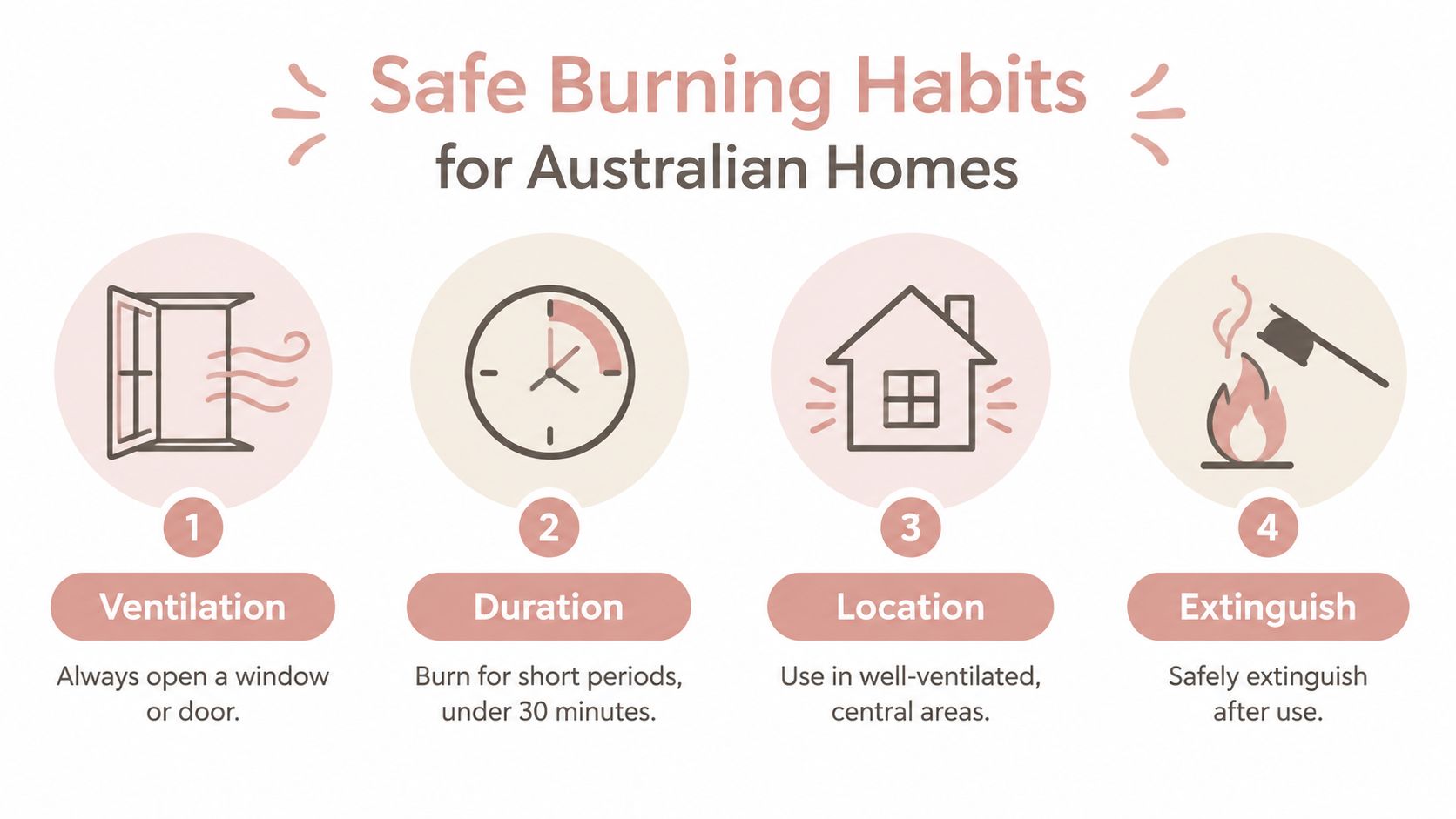
People with asthma, allergies or fragrance sensitivity may prefer to sit further from the source, use a shorter burn or choose a non-combustion option. Pregnancy and breastfeeding also call for a cautious approach. If there's any personal health concern, avoiding indoor smoke and discussing fragrance exposure with a healthcare professional is the sensible path.
Save this four-part ritual:
- Ventilate: Open a window or door.
- Time: Use a short session, under 30 minutes.
- Distance: Keep the holder away from people, pets and flammable items.
- Extinguish: Put the spent end safely into sand or another suitable fire-safe material.
More practical detail is available in how to use incense sticks.
Incense, Diffusers and Sprays Working Together
Incense doesn't need to do every job in the house. It's best treated as one part of a fragrance routine, alongside formats that don't involve combustion.
Incense sticks suit a short, intentional moment. Light one during meditation, reading or yoga with a window cracked open, then extinguish it when the ritual ends. The experience is immediate and atmospheric, but the smoke means it isn't the easiest everyday choice for a small bedroom or a fragrance-sensitive household.
Reed diffusers offer steady background scent without a flame or burning stick. They can work well in living spaces, entryways and rooms where you want an even presence rather than a sudden burst. They still add fragrance to indoor air, so placement and restraint matter, especially around anyone sensitive to scented products.
Room and linen sprays are useful for a quick refresh before guests arrive or a small mood shift after tidying. A light spritz on suitable fabric can feel crisp and cheerful, while a room spray gives you control over when scent appears instead of leaving something running continuously.
A gentle layered routine
You might anchor the hallway with a diffuser, light one incense stick during a yoga session, then use a Room & Linen Spray on the sofa before friends arrive. That rotation lets each format do the job it suits, rather than asking incense to provide constant fragrance.
Homes with pets, asthma concerns or limited ventilation may lean more heavily towards diffusers and occasional sprays. An aroma humidifier, such as the EcoQuest Purifiers aroma humidifier, is another product category to research, but it shouldn't be assumed to remove combustion particles or make smoke harmless.
The aim is simple: choose the least intrusive format for the moment, use the smallest amount that feels lovely, and give the air a break.
Frequently Asked Questions From Our Community
Is non toxic incense safe during pregnancy or breastfeeding?
There isn't a blanket yes or no that suits everyone. Incense is still a combustion source, and NSW Health advises limiting indoor burning and using regular ventilation. The cautious choice is to avoid smoke in enclosed rooms, burn only occasionally in a well-ventilated space, or choose a non-combustion fragrance format. If you're pregnant, breastfeeding or managing a health condition, ask your healthcare professional about your personal circumstances.
Can I burn it around asthma or pets?
Use extra care. Keep pets away from the holder, ventilate thoroughly and stop immediately if anyone develops coughing, irritation, headache or breathing discomfort. For asthma-prone rooms, a diffuser or occasional spray may be more suitable than burning incense, although every fragranced product can affect sensitive people differently.
Is a bamboo core better than a charcoal core?
A bamboo or wood core can be a useful sign when it's untreated and clearly described, particularly for shoppers trying to avoid extra charcoal. It doesn't make the stick pollution-free. The surrounding powder, binder, scent materials, burn intensity and ventilation still affect the overall experience.
Which certifications prove incense is cleaner?
There isn't one universal badge that can turn a smoky product into a zero-risk product. Look for a full ingredient description, named scent materials, core information, manufacturing detail and clear use instructions. A maker who answers specific questions is more helpful than a label covered in broad claims.
Can incense replace a diffuser?
It can replace it for a particular ritual, but it's not an exact substitute for everyday scenting. Incense creates a short-lived, smoky atmosphere, while a diffuser provides a steadier background presence without combustion. If you want fragrance throughout the day, use the format that requires the least exposure for your household and reserve incense for occasional moments.
How should I dispose of ash and spent sticks?
Let ash cool completely, then place it into a suitable household waste container rather than tipping warm ash into a garden bed or compost. Spent sticks should also be fully extinguished before disposal. A heatproof tray makes the whole process tidier and protects your table.
Where can Australians buy lower-emission incense?
Look for Australian makers and retailers that explain what the stick contains, how it's made and how to burn it safely. You don't need to chase an imported product with extravagant claims. A transparent product description and careful use are more useful than boutique packaging alone.
If you're curious, explore the available fragrance formats slowly. A lower-exposure home isn't scent-free. It's a home where you know what you're using, why you've chosen it and when to open a window.
Blushing Ivy Home Fragrance creates handcrafted Sunshine Coast scents across natural incense, soy candles, diffusers and room fragrances, with Australian-made, essential oil-based fragrance at the heart of the collection. Visit Blushing Ivy Home Fragrance to explore the range and choose a beautiful scent for your next calm, considered ritual.