
Strongest Incense Sticks Explained for Australian Homes
You light an incense stick after dinner, hoping for that soft, floaty background scent that makes home feel settled. Ten minutes later, the lounge room feels less like a calm retreat and more like the inside of a tiny temple with all the doors shut. The fragrance is huge, the smoke is hanging around, and suddenly you're wondering whether strongest incense sticks are what you wanted at all.
That's where a lot of us get tripped up. We search for strong incense because we want better scent throw, not because we want a room full of smoke or a fragrance that bulldozes everything else. In Australian homes, especially apartments, townhouses, and those cosy newer builds that hold air a bit more tightly, that difference matters.
It matters in the market too. Australia's incense category is heavily shaped by imports, with over 90% of market volume supplied by manufactured goods from India, China, and Vietnam, and stick incense makes up about 65 to 70% of sales by volume according to IndexBox's Australia incense market analysis. The same analysis says the home ambiance and wellness segment is expanding at an estimated 6 to 8% annually, with overall Australian incense volume projected to grow at 4 to 6% CAGR through 2035.
So yes, plenty of Australians are buying incense. The question isn't which stick shouts the loudest. It's which one gives you that lovely room-filling aroma without tipping into harsh, smoky, or too much.
Table of Contents
- Introduction Why Strongest Does Not Always Mean Best
- What Actually Makes Incense Smell Strong
- Scent Families Known For Powerful Throw
- Natural Versus Synthetic Strength and The Trade Offs
- How To Get Maximum Scent Throw At Home
- Safe Enjoyment Air Quality and Ventilation In Australia
- Finding Your Perfect Strong Yet Balanced Incense With Blushing Ivy
Introduction Why Strongest Does Not Always Mean Best
A strong incense moment can be beautiful. Think rainy afternoon, windows cracked just enough, a mug of tea nearby, and a warm woody scent curling through the room like a favourite knit. That kind of strength feels enveloping.
Then there's the other version. One stick in a small bedroom, no airflow, fragrance so dense it clings to fabric and makes the whole space feel crowded. Same product category, very different experience.
The confusion around strong scent
When someone types strongest incense sticks into Google, they're usually asking one of three things:
- Which incense lasts the longest because they don't want a scent that disappears in five minutes
- Which incense projects the furthest so the room smells fragrant, not just the corner near the holder
- Which incense smells richest with depth, warmth, and that satisfying lingering trail
Those are fair questions. But “strong” gets muddled because people often use it to mean more smell, when the product may be producing more smoke.
Practical rule: The best strong incense fills a room before it overwhelms it.
Strong throw feels different from heavy smoke
A beautifully balanced incense doesn't need to punch you in the face the second it's lit. It builds. You notice it near the doorway, then across the room, then as a soft trace on the air even after the ember is out.
That's the sweet spot. The strongest incense sticks, in the most enjoyable sense, give you presence, character, and mood. They don't force intensity for intensity's sake.
Here on the Sunshine Coast, we tend to think about fragrance as part of how a home feels. A beachy morning, a quiet reset after work, guests arriving for dinner, that lovely in-between hour when the light goes golden. Incense can absolutely play that role. You just want the kind of strength that supports the room, not dominates it.
What Actually Makes Incense Smell Strong
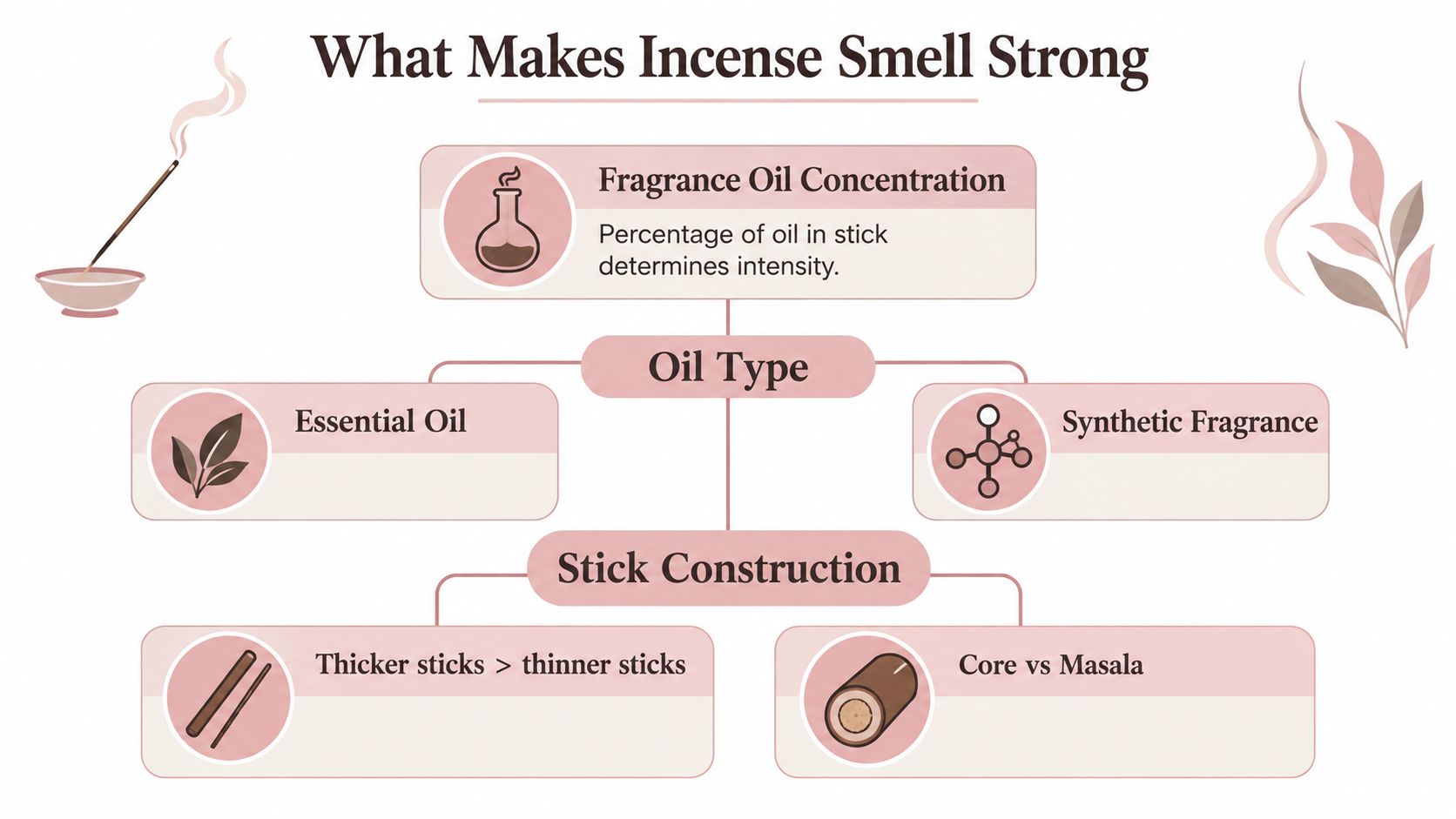
Some incense sticks smell bold from the first spark. Others stay close and whispery. That difference usually comes down to five things working together, not just one magic ingredient.
Fragrance oil concentration
Think of this like perfume. An eau de toilette and a parfum can share the same scent profile, but one clearly carries further. Incense works similarly. A stick with a higher fragrance load will usually smell stronger than one with a lighter treatment.
That doesn't automatically make it nicer, though. Too much oil can create a muddy, thick result if the formula isn't balanced well.
Oil type changes the feeling
Essential oil based blends often smell more layered. You may pick up the wood first, then spice, then a softer floral edge. Synthetic fragrance can create a bigger first impression, but sometimes the scent feels flatter or sharper as it burns.
That's why two sandalwood sticks can smell completely different. One feels creamy and smooth. Another feels loud and dry.
Stick construction matters more than people realise
A slim bamboo-core stick won't behave exactly like a denser hand-rolled or masala-style stick. Thickness, packing density, binder, and the combustible base all affect how steadily the stick burns and how much aroma it releases.
Peer-reviewed combustion research shows incense can produce substantial fine particles. One review reported average emissions of more than 45 mg PM per gram burned, while a later study found PM2.5 emission factors ranging from 7 to 31 mg g^-1^, with woody blends such as Douglas fir around 27 mg g^-1^ and lavender around 7 mg g^-1^ in that study, as outlined in this peer-reviewed review on incense emissions. In plain language, denser and woodier formulations often smell fuller, but they can also produce more visible smoke.
Stronger-smelling incense often comes from a heavier-burning stick. That's lovely in a large, airy room, and less lovely in a tiny ensuite.
Burn conditions shape the result
Incense is a bit like tea. Same leaves, different brew depending on how you steep it. If a stick burns in a draught, it can race through the fragrance unevenly. In a damp room, the scent may feel muted. In a very still room, the aroma can build quickly and linger harder than expected.
Storage can quietly weaken throw
If you keep incense in a hot car, a steamy bathroom cupboard, or right by a sunny window, the fragrance can dull over time. Cool, dry storage helps preserve what the stick is meant to release.
If you'd like a real-world example of a softer style, Blushing Ivy Luxury Incense is described as releasing a soft, lingering aroma that gently fills the room, with care notes that also recommend burning in a well-ventilated area and letting the fragrance build gradually through the space.
Scent Families Known For Powerful Throw
Some fragrance families naturally travel further than others. If you've ever wondered why one incense lingers in the hallway while another vanishes the moment you leave the room, this is usually why.
The heavy hitters
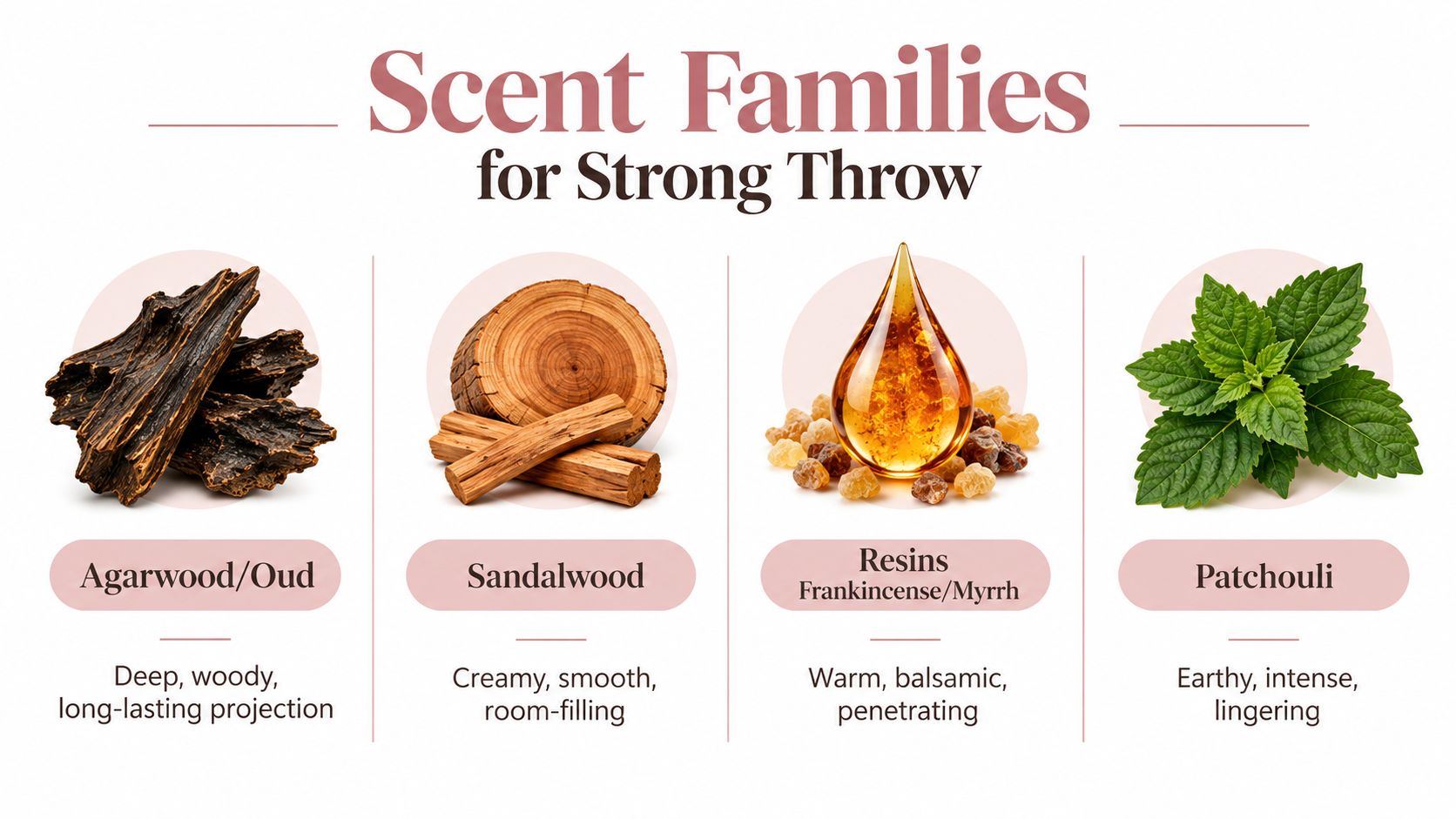
Agarwood or oud tends to project. It has that dark, resinous, almost velvety richness that settles into a room and gives it gravity. This is the sort of scent that suits evening, moody corners, and bigger living spaces.
Sandalwood is one of the easiest strong scents to live with. It's creamy, woody, smooth, and room-filling without always feeling aggressive. If you want classic incense character with a more polished edge, sandalwood often lands beautifully.
Resins like frankincense and myrrh have a warm, balsamic presence. They can feel a bit ceremonial, but in the right room they're stunning. Think slow Sunday reset, lamps on, the house finally quiet.
A short visual can help if you're choosing between these styles:
Earthy and spicy scents linger too
Patchouli is famous for hanging around. It's earthy, slightly sweet, and unmistakable. In incense, patchouli often adds body and persistence, especially when paired with citrus or amber.
Spicy ambers can also feel strong in a very satisfying way. They don't always read as smoky. Instead, they create warmth, depth, and that golden late-afternoon kind of comfort.
Lighter scents behave differently
Floral and citrus incense can still be gorgeous, but they usually read as brighter and more fleeting. Neroli, jasmine, orange, and softer herbs often feel airy rather than forceful. That can be exactly what you want in a small room, a home office, or a guest bathroom.
| Scent Family | Throw Level | Character | Best For |
|---|---|---|---|
| Agarwood/Oud | High | Deep, woody, long-lasting | Large living areas, evening mood |
| Sandalwood | High | Creamy, smooth, grounding | Everyday use, lounge rooms |
| Resins | High | Warm, balsamic, penetrating | Ritual moments, open-plan spaces |
| Patchouli | Medium to high | Earthy, intense, lingering | Creative spaces, layered fragrance |
| Citrus and light florals | Light to medium | Bright, fresh, airy | Smaller rooms, daytime use |
If you want strong without heaviness, sandalwood is often the easiest place to start.
Natural Versus Synthetic Strength and The Trade Offs
A lot of shoppers assume synthetic fragrance automatically means better performance. Sometimes it does mean a louder first impression. That doesn't always translate to a better incense experience.
Why synthetic can feel stronger
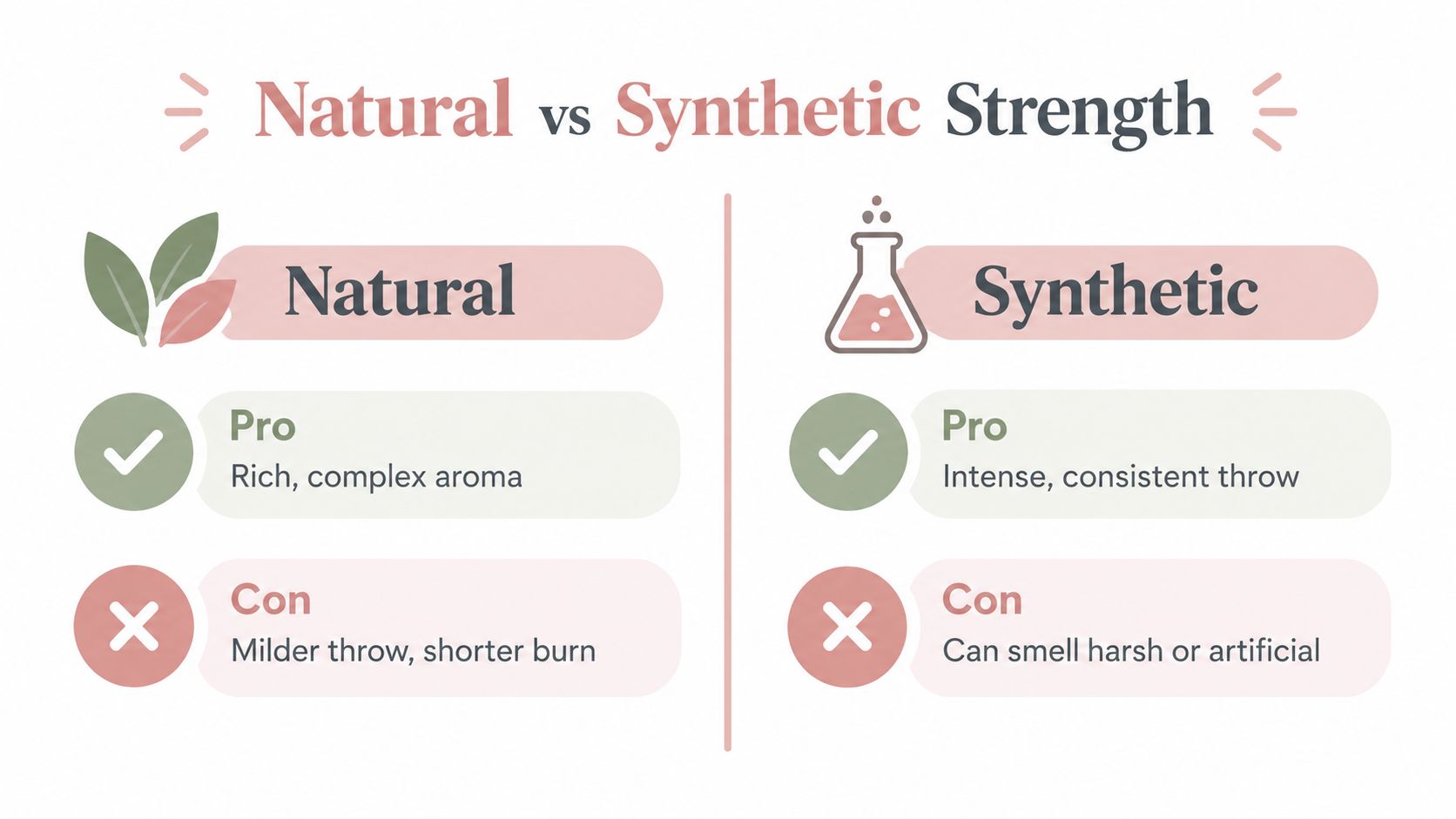
Synthetic fragrance materials can be built for punch. They often project fast, smell consistent from batch to batch, and hold onto recognisable notes in a direct way. If someone says an incense smells “really strong” from the second it's lit, this is often what they mean.
But there can be a trade-off. Some synthetic-heavy blends smell harsher as they burn, especially in enclosed spaces. The scent can feel separate from the smoke rather than beautifully woven through it.
Why natural can feel more balanced
Natural or essential oil based incense often behaves differently. The throw may develop more gradually, but the scent tends to feel rounder and more nuanced. You might notice creamy woods, bright citrus peel, green herbs, or soft florals unfolding rather than arriving all at once.
That softer opening can trick people into thinking the incense is weak. In reality, it may be more refined.
The real trade-off isn't just natural versus synthetic
The bigger issue is how much material is being burned and what that material is made of. Heavier combustible biomass and more carbon-rich blends can create a more forceful scent experience, but they can also increase smoke load. A recent Australian discussion of indoor air noted that home fragrance products such as candles and incense can worsen indoor air quality, and that burning equal weights of incense and cigarettes can produce around four times as much particulate matter as cigarettes, as reported in The New Daily's coverage of indoor air concerns.
That's why “strongest” needs a rethink. The goal isn't just power. It's power you can comfortably live with.
How To Get Maximum Scent Throw At Home
You don't always need a stronger product. Quite often, you just need a better setup. Good placement and timing can turn a modest incense stick into a lovely room-filling scent.
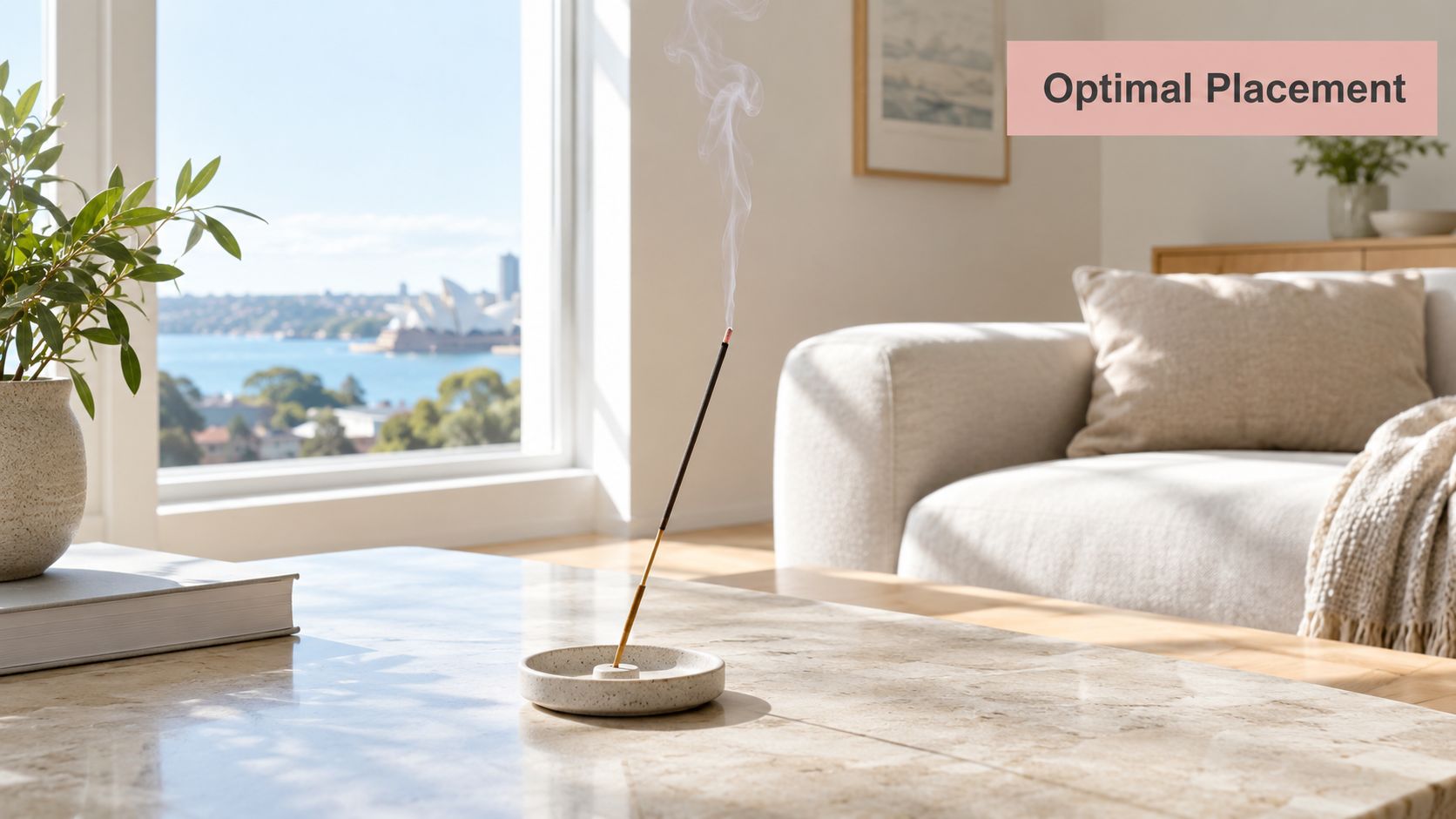
Place it where the room can catch it
Incense in the far corner behind a lamp won't perform the same way as incense placed where air can move around it gently. You want circulation, not a draught. Near a doorway between spaces often works better than right beside an open window.
Official South Australian fire guidance also says to burn incense in a sturdy, heat-resistant holder, keep it away from curtains and blinds, out of draughts, and never leave it burning while asleep or away from home, which you can read in the South Australian fire safety fact sheet.
Match the stick to the room
A dark resinous incense in a powder room is a lot. The same stick in an open-plan lounge can be gorgeous.
A simple way to consider it:
- Small rooms need lighter, brighter, or shorter burns
- Medium rooms can handle woods, herbs, and balanced blends
- Large areas suit denser woods, resins, and fuller-bodied scents
Let the scent build instead of over-burning
One of the easiest mistakes is burning a stick for too long because the fragrance seems subtle at first. Incense often needs a little time to bloom through the room.
Try this:
- Light the stick properly and let the ember settle.
- Burn for a shorter window rather than assuming longer is better.
- Extinguish once the room smells right and let the lingering aroma do the rest.
That approach is especially helpful in compact homes. It's also handy if you like a fresher feel and don't want fragrance clinging too heavily to soft furnishings.
Store it like fragrance, not like stationery
Incense hates heat, moisture, and direct sun. Keep it in a cool, dry place so the scent profile stays intact.
If you're freshening a studio, guest room, or other compact nook, I also like this practical hygiene strategy from WipesBlog.com for small-space air freshener use. It pairs well with the same idea we use for incense. Build atmosphere gently instead of blasting the room.
For more scent-performance ideas, Blushing Ivy also has a useful read on long lasting incense sticks for everyday fragrance.
Safe Enjoyment Air Quality and Ventilation In Australia
Strong incense is lovely when used thoughtfully. It's less lovely when the room traps everything in. In Australia, that matters for everyday apartment living and even more during bushfire season.
Ventilation is part of the ritual
Cancer Council Australia says burning incense is safe in normal amounts and that risks are small, but it also notes that ventilation matters and that burning incense indoors increases PAHs, as explained in Cancer Council Australia's incense guidance.
That's a sensible middle ground. You don't need to panic, and you also don't need to ignore the room you're burning in.
Burn for enjoyment, then give the room a chance to clear.
A Victorian indoor smoke study found that around 50% of households had significant indoor PM2.5 sources, including candles and incense, and that shutting windows and doors reduced outdoor smoke infiltration by about 12% to 76% depending on house age and ventilation, according to this Victorian study summary on indoor smoke exposure. The practical takeaway is simple. In a tightly sealed home, smoke can build up faster than you think.
Bushfire days need a different approach
During bushfire smoke events, the Australian Government advises avoiding indoor smoke sources such as candles and incense, keeping windows and doors shut, using recycled-air conditioning where possible, and then ventilating when outdoor air is cleaner, as outlined in the Australian Government bushfire smoke fact sheet.
That's one of those very Australian fragrance realities we can't ignore. On smoky days outside, adding smoke inside usually isn't the move.
A calm checklist for everyday use
Victorian guidance for incense also recommends adequate ventilation, keeping incense away from open windows or drafts, and not placing it under anything hanging overhead. If you'd like a broader refresher on home air habits, these VirusFAQ.com indoor air quality tips are a useful companion read.
A simple routine works well:
- Choose the room wisely and avoid very enclosed spaces
- Keep airflow gentle so the stick burns evenly
- Burn for less time than you think if the scent is already present
- Skip incense during smoke events and air out later when outdoor air improves
Blushing Ivy also shares more on this balance in its article on whether natural incense is bad for you.
Finding Your Perfect Strong Yet Balanced Incense With Blushing Ivy
By now, you can probably see that the strongest incense sticks aren't automatically the ones producing the biggest cloud. The loveliest kind of strength is measured in atmosphere. It's the scent that reaches the couch, softens the room, and still feels comfortable half an hour later.
That's why I always lean toward balanced fragrance over brute force. In a home, sophistication wins. A good incense should feel like lighting a mood, not setting off a fog machine.
What balanced strength smells like
With Blushing Ivy's small-batch Sunshine Coast approach, the appeal is in layered fragrance that feels at home in Australian spaces. The three Luxury Incense scent options each lean into a different mood.
- Sea Salt, Sandalwood & Vanilla feels airy and creamy at once, like sun-warmed skin after a coastal walk and that soft woody calm when you come back inside.
- Sweet Orange, Bergamot & Patchouli brings brightness first, then settles into something earthier and more grounded.
- Basil, Neroli & Jasmine feels fresh, green, and elegant, more like an open window at dusk than a heavy traditional incense style.
If you're choosing for gifting or for your own evening rituals, that balance is often the difference between something you burn once and something you reach for again and again.
For a closer look at that softer, room-filling style, this guide to luxury incense sticks and how they shape the home atmosphere is a lovely next read. And yes, Blushing Ivy offers free shipping over $75, with packaging that's beautifully gift-ready without feeling fussy.
Blushing Ivy Home Fragrance creates Australian-made home scents for people who want their spaces to feel calm, beautiful, and lived in, from natural incense to candles, diffusers, and everyday fragrance pieces. If you're looking for strong scent with more elegance and less overwhelm, have a wander through Blushing Ivy Home Fragrance and find the style of fragrance that suits your home.